Affiliate Disclosure: As an Amazon Associate, DailyDealsPro earns from qualifying purchases. If you buy through links on this page, we may earn a small commission at no extra cost to you. We only recommend products we believe offer value to our readers.
SPF 30 vs SPF 50: Choosing sunscreen seems simple until you’re standing in front of dozens of bottles labeled SPF 15, SPF 30, SPF 50, and even SPF 100. Many people assume that higher SPF automatically means dramatically better protection—but is that really true?
The truth is that the difference between SPF 30 and SPF 50 is much smaller than most people think. Understanding what SPF actually measures can help you make a smarter decision and avoid spending more money than necessary.
In this guide, we’ll explain how SPF works, compare SPF 30 and SPF 50, clear up common myths, and help you choose the right sunscreen for your lifestyle.
SPF 30 vs SPF 50: What Does SPF Mean?
SPF stands for Sun Protection Factor. It measures how well a sunscreen protects your skin from UVB rays, the type of ultraviolet radiation primarily responsible for sunburn.
While SPF is an important indicator, it does not measure protection against UVA rays, which contribute to premature skin aging and can also increase the risk of skin cancer. That’s why it’s important to choose a sunscreen labeled Broad Spectrum, which protects against both UVA and UVB rays.
SPF 30 vs SPF 50: What’s the Difference?
| Feature | SPF 30 | SPF 50 |
|---|---|---|
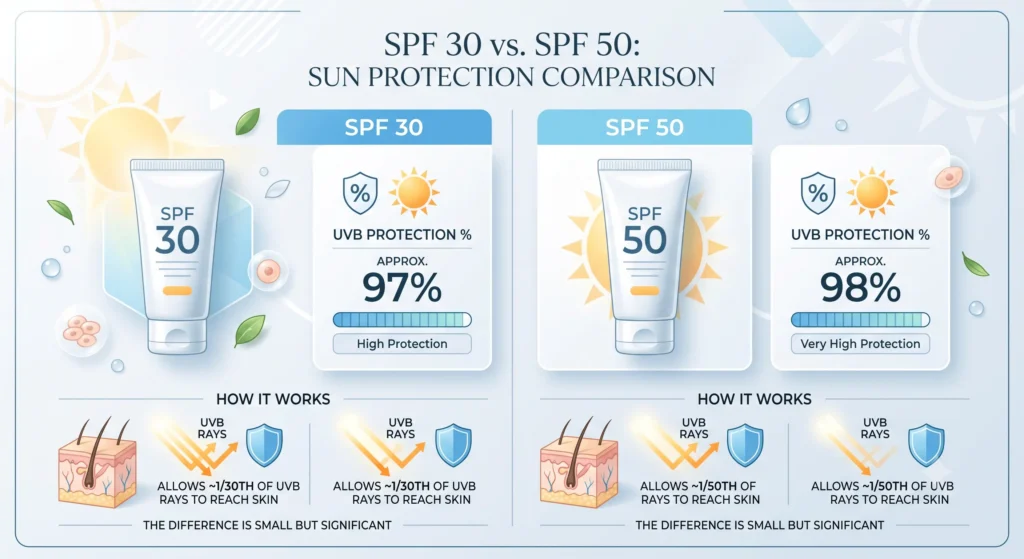
| UVB Protection | About 97% | About 98% |
| Daily Use | Excellent | Excellent |
| Outdoor Activities | Good | Better for extended exposure |
| Sensitive Skin | Good | Good |
Although SPF 50 blocks slightly more UVB rays than SPF 30, no sunscreen blocks 100% of UV radiation. Proper application and regular reapplication are far more important than choosing the highest SPF available.
SPF 30 vs SPF 50: Common Myths About SPF
Myth 1: SPF 50 Gives Twice the Protection of SPF 25
False. SPF numbers do not increase protection in a linear way.
Myth 2: You Only Need Sunscreen on Sunny Days
False. UV rays can penetrate clouds, so sunscreen is recommended even on overcast days.
Myth 3: One Morning Application Is Enough
False. Sunscreen should generally be reapplied every two hours, especially after swimming, sweating, or towel drying.
SPF 30 vs SPF 50: Who Should Choose SPF 30?
SPF 30 is an excellent choice for most people and is often recommended for everyday use. If you spend most of your time indoors, commute to work, or only have short periods of sun exposure, SPF 30 provides more than enough protection when applied correctly.
SPF 30 is a great option if you:
- Work indoors most of the day.
- Have normal daily sun exposure.
- Wear sunscreen as part of your morning skincare routine.
- Reapply sunscreen every two hours when outdoors.
- Want lightweight, comfortable daily protection.
For many people, using SPF 30 correctly is far more effective than applying SPF 50 once and forgetting about it.
SPF 30 vs SPF 50: Who Should Choose SPF 50?
SPF 50 provides slightly higher UVB protection and is often the better choice for people who spend extended time outdoors.
Consider SPF 50 if you:
- Spend hours in direct sunlight.
- Enjoy hiking, cycling, or outdoor sports.
- Have very fair or sun-sensitive skin.
- Burn easily.
- Live in areas with intense summer sunshine.
- Spend time at beaches or swimming pools.
Although the increase in UVB protection is small, SPF 50 provides a little extra safety margin during prolonged sun exposure.
SPF Isn’t Everything
Many people focus only on the SPF number, but several other factors are equally important when choosing sunscreen.
Look for products that are:
- Broad Spectrum (protects against UVA and UVB rays)
- Water Resistant if you’ll be swimming or sweating
- Suitable for your skin type (oily, dry, combination, or sensitive)
- Comfortable enough that you’ll actually wear them every day
The best sunscreen is the one you’ll apply consistently.
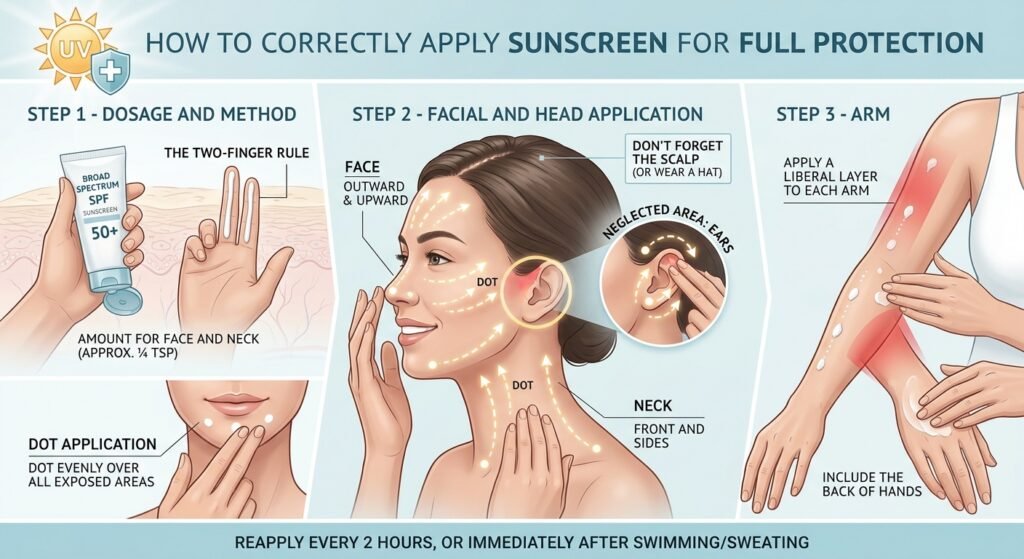
SPF 30 vs SPF 50: How Much Sunscreen Should You Apply?
Using too little sunscreen is one of the most common mistakes.
Dermatologists generally recommend:
For the Face
Approximately two finger lengths of sunscreen.
For the Entire Body
About one ounce (roughly a shot glass full) for an average-sized adult.
Applying less than the recommended amount significantly reduces the level of protection, regardless of whether you’re using SPF 30 or SPF 50.
Common Sunscreen Mistakes
Avoid these common mistakes:
❌ Applying sunscreen only once per day.
❌ Forgetting the ears, neck, and hands.
❌ Using expired sunscreen.
❌ Waiting until you’re already outside before applying it.
❌ Assuming higher SPF means you don’t need to reapply.
For the best protection, apply sunscreen 15–30 minutes before going outdoors and reapply every two hours or immediately after swimming or heavy sweating.
SPF 30 vs SPF 50: Our Recommended Sunscreens
After comparing SPF 30 and SPF 50, it’s clear that choosing a quality sunscreen is more important than simply choosing the highest SPF number.
Here are some highly regarded options to consider:
- Blue Lizard Sensitive Mineral SPF 50 Sunscreen Lotion – Excellent for extended outdoor activities.
- Neutrogena Ultra Sheer Dry-Touch Sunscreen SPF 55 – Lightweight formula suitable for daily use.
- EltaMD UV Clear SPF 46 – Popular among people with acne-prone or sensitive skin.
Tip: Compare prices, sizes, and verified customer reviews on Amazon before choosing the sunscreen that best fits your skin type and lifestyle.
SPF 30 vs SPF 50: Final Verdict
When comparing SPF 30 vs SPF 50, there isn’t a dramatic difference in UVB protection. SPF 30 blocks about 97% of UVB rays, while SPF 50 blocks about 98%. The most important factors are choosing a broad-spectrum sunscreen, applying enough product, and reapplying it regularly.
For everyday office work, commuting, and typical daily activities, SPF 30 is an excellent choice for most people.
If you spend long hours outdoors, have fair skin, or are frequently exposed to intense sunlight, SPF 50 offers a little extra protection and may be the better option.
Rather than chasing the highest SPF number, focus on building a daily sunscreen habit. Consistent use is one of the most effective ways to protect your skin from sunburn, premature aging, and long-term sun damage.
Frequently Asked Questions (FAQ)
Is SPF 50 much better than SPF 30?
No. SPF 50 provides only slightly more UVB protection than SPF 30, but both are highly effective when applied correctly.
Can I use SPF 30 every day?
Yes. SPF 30 is suitable for everyday use for most people, especially when combined with regular reapplication.
Do I still need sunscreen on cloudy days?
Yes. UV rays can pass through clouds, so daily sunscreen use is recommended regardless of the weather.
Should oily skin use SPF 30 or SPF 50?
Either can work well. The most important factor is choosing a lightweight, non-comedogenic sunscreen formulated for oily skin.
Does higher SPF last longer?
No. SPF measures the level of protection, not how long it lasts. Both SPF 30 and SPF 50 should generally be reapplied every two hours during sun exposure.
🧴 Recommended Daily Skincare Routine Starts with the Right Cleanser
Before applying sunscreen, it’s important to start with clean skin. Using a gentle facial cleanser removes excess oil, dirt, and impurities so your sunscreen can perform more effectively.
If you’re looking for a dermatologist-developed cleanser for oily or combination skin, read our complete review below.
Read our complete CeraVe Foaming Facial Cleanser Review
☀️ Looking for a Quality Sunscreen?
Understanding the difference between SPF 30 and SPF 50 is only the first step. Choosing a high-quality, broad-spectrum sunscreen from a trusted brand is equally important for protecting your skin every day.
We recommend comparing customer reviews, ingredients, skin-type compatibility, and current prices before making your purchase.