Amazon Associate Disclosure: As an Amazon Associate, I earn from qualifying purchases. If you purchase a product through links on this page, I may earn a small commission at no additional cost to you.
🏠 Small Living Room Decorating Ideas: Introduction
Decorating a small living room can feel challenging. You want the room to look stylish and comfortable without making it feel crowded. The good news is that you don’t necessarily need a larger sofa, expensive furniture, or a complete renovation. Small changes in layout, color, lighting, furniture scale, mirrors, and storage can make a noticeable difference.
🛏️ More Small-Space Decorating Ideas
If you’re also working with limited space in your bedroom, our guide to Small Bedroom Decorating Ideas (2026): 10 Best Ways to Make Your Space Feel Bigger & Cozier shares practical ideas for choosing furniture, improving storage, using mirrors, and creating a cozy bedroom without making the room feel crowded.
The goal isn’t to make your living room physically larger. Instead, you’re trying to make the available space feel:
- More open
- Less cluttered
- Brighter
- Easier to move around
- More comfortable
Here are 10 simple small living room decorating ideas you can use whether you live in an apartment, small house, studio, or compact rental.
🛋️ 10 Small Living Room Decorating Ideas
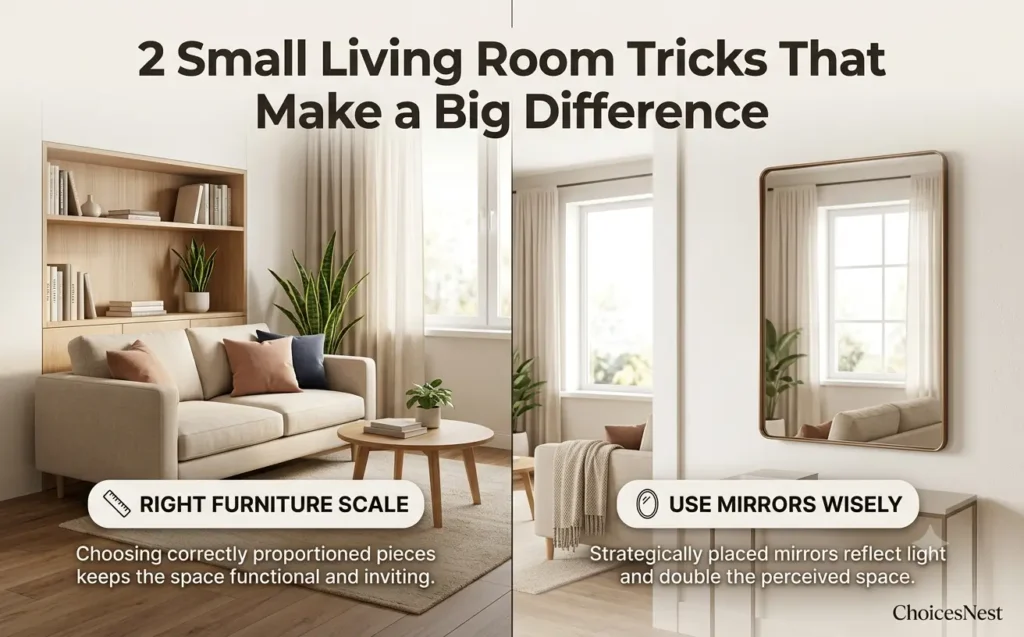
1️⃣ Choose Furniture That Fits the Room
One of the most common mistakes in a small living room is choosing furniture based only on appearance. A huge sectional might look beautiful in a showroom but overwhelm a compact room. Before buying furniture, measure:
- Room length
- Room width
- Door openings
- Window positions
- Walking paths
📊 Furniture Scale Guide
| Furniture | Small-Room-Friendly Choice |
|---|---|
| Sofa | Compact 2–3 seat sofa |
| Coffee table | Small or nesting table |
| TV unit | Slim profile |
| Shelving | Vertical shelving |
| Side table | Narrow or multifunctional |
| Seating | Lightweight accent chair |
🛒 Amazon CTA:
Browse Small-Space Living Room Furniture on Amazon
2️⃣ Use Light Colors Strategically
Light colors can help reflect available light and make a room feel more open.
Consider:
- White
- Cream
- Beige
- Soft gray
- Light taupe
- Pale blue
You don’t have to make the entire room white. A light wall color combined with slightly darker furniture can create contrast without visually overwhelming the space.
🎨 Simple Color Strategy
Light walls + medium furniture + a few darker accents
This creates visual interest while keeping the overall room relatively airy.
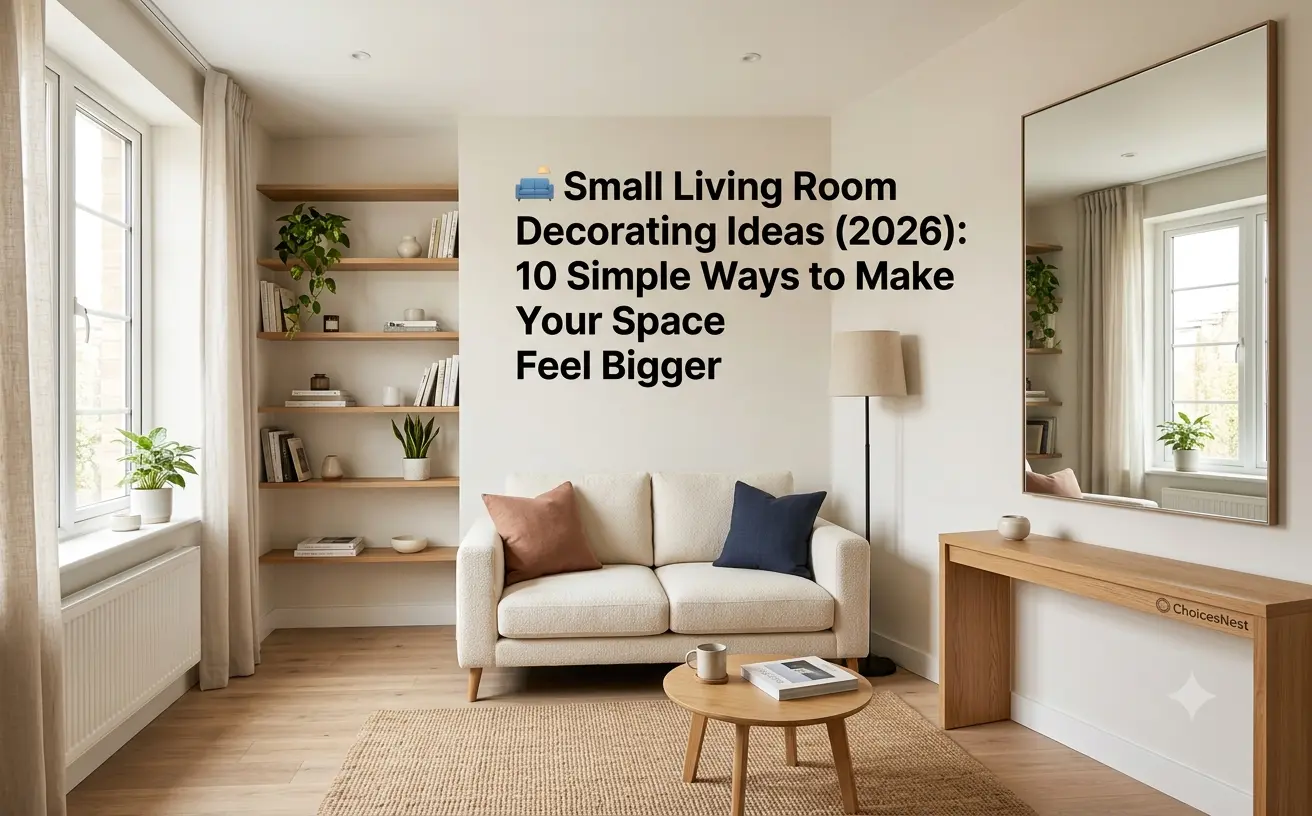
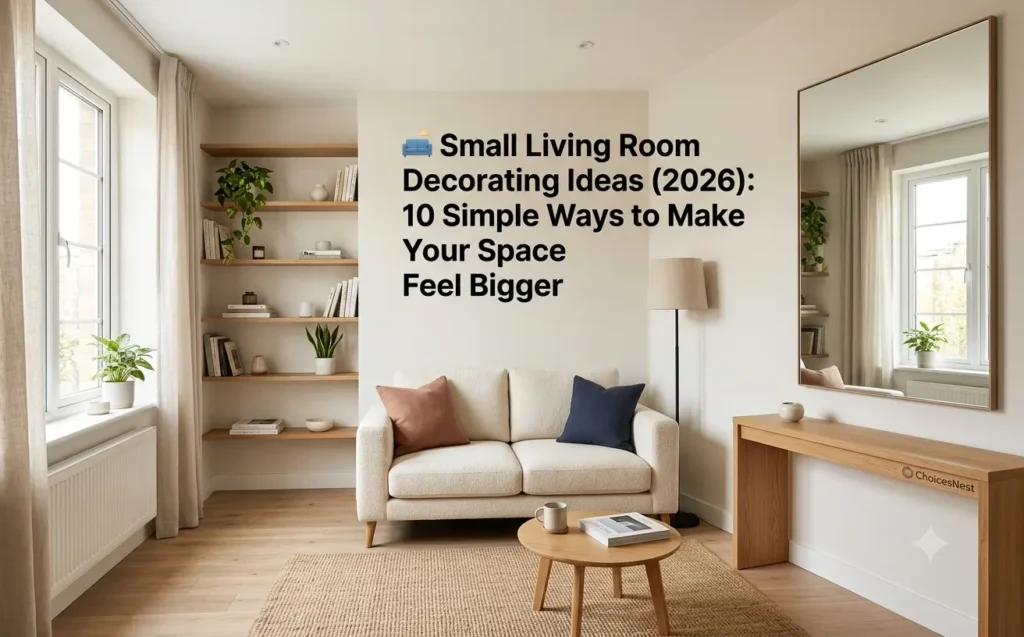
3️⃣ Add a Large Mirror
A strategically positioned mirror can make a small room feel more open by reflecting light and parts of the room.
Try placing a mirror:
- Opposite a window
- Beside a major light source
- Above a console
- On a visually empty wall
The key is placement, not simply buying the biggest mirror possible.
4️⃣ Keep the Floor Visually Open
Floor space has a major effect on how large a room feels. Furniture with visible legs can create more visual openness than bulky pieces that extend all the way to the floor. You can also avoid unnecessary floor-standing storage when vertical alternatives are available.
Think upward rather than outward.
5️⃣ Use Multi-Functional Furniture
In a small room, one item doing two jobs can save valuable space.
Examples include:
- Storage ottoman
- Lift-top coffee table
- Sofa bed
- Nesting tables
- Storage bench
Instead of asking:
“What furniture do I need?”
Ask:
“How many functions can one piece provide?”
This mindset can dramatically improve a compact space.
6️⃣ Think Vertically
When floor space is limited, your walls become valuable real estate.
Consider:
- Tall bookshelves
- Floating shelves
- Vertical artwork
- Wall-mounted lighting
- Tall plants
Vertical elements can draw the eye upward and make the room feel taller. Just avoid covering every wall with objects.
Vertical doesn’t mean cluttered.
7️⃣ Choose the Right Rug Size
A rug that’s too small can visually break up a small living room into disconnected sections. A properly sized rug can help visually connect the seating area.
📊 Rug Approach
| Room Situation | Better Approach |
|---|---|
| Very compact room | Medium rug connecting seating |
| Sofa + chair | Rug large enough to visually unite them |
| Open-plan space | Rug can define living zone |
| Tiny room | Avoid overly tiny “floating” rug |
When possible, allow at least some furniture legs to sit on the rug rather than placing a tiny rug entirely in the center.
8️⃣ Improve the Lighting
Dark corners can make a small room feel even smaller. Instead of relying on one ceiling fixture, layer your lighting.
Try combining:
Ceiling light + floor/table lamp + natural daylight
If floor space is extremely limited, wall-mounted or compact lamps can be useful. Also keep windows relatively unobstructed during the day to maximize natural light.
9️⃣ Reduce Visual Clutter
This may be the least expensive and most effective small-room decorating trick. You don’t necessarily need more decor. You may simply need less.
Try removing:
- Unused furniture
- Excess decorative objects
- Random cables
- Oversized accessories
- Items without a clear purpose
A simple rule:
Every visible item should either be useful, beautiful, or both.
🔟 Create One Clear Focal Point
A small room doesn’t need decorations competing for attention. Choose one primary focal point.
For example:
- Artwork
- TV wall
- Statement mirror
- Accent chair
- Beautiful window
- Fireplace
Then keep surrounding areas relatively simple. This gives the eye somewhere to settle instead of making the entire room feel visually busy.
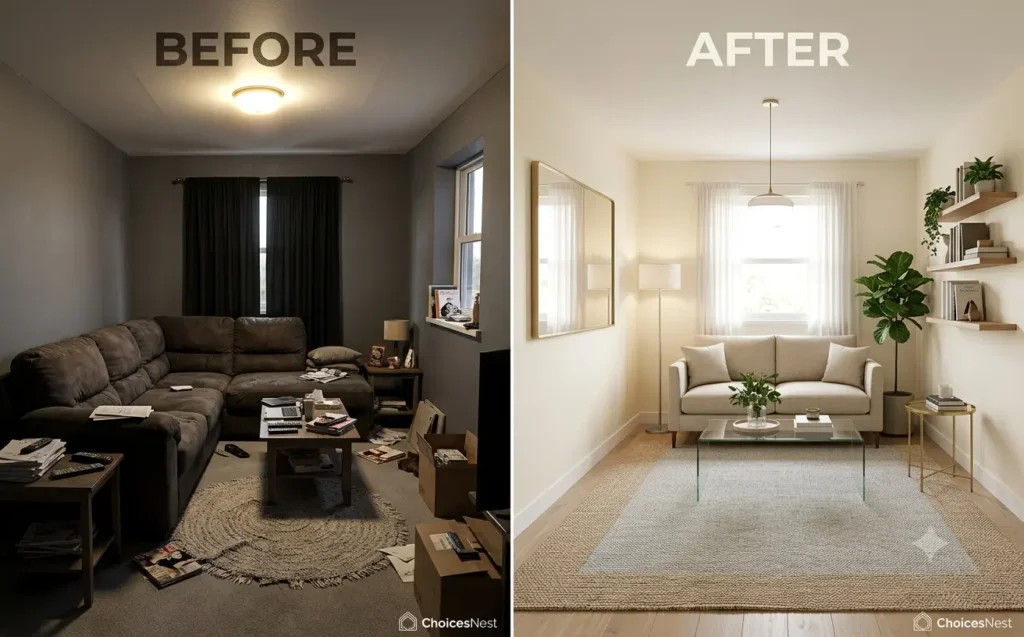
📊 Small Living Room: Quick Comparison
| Problem | Better Solution |
|---|---|
| Oversized sofa | Choose appropriately scaled seating |
| Dark walls | Consider lighter tones |
| Empty vertical space | Add vertical storage/decor |
| Tiny rug | Use a properly scaled rug |
| Dark corners | Layer lighting |
| Too many decorations | Reduce visual clutter |
| Limited storage | Choose multifunctional furniture |
| Room feels closed | Use mirrors strategically |
🍂 Common Small-Space Decor Mistakes
❌ Mistake 1: Buying furniture before measuring
Always measure your room and entry points first.
❌ Mistake 2: Using only tiny furniture
Small doesn’t mean every piece needs to be miniature. A few appropriately scaled larger pieces can sometimes look cleaner than many tiny pieces.
❌ Mistake 3: Covering every wall
Empty space is useful. Your room needs visual breathing room.
❌ Mistake 4: Using a tiny rug
A very small rug can make the seating arrangement feel disconnected.
❌ Mistake 5: Adding more storage when the real problem is clutter
Sometimes decluttering is more effective than buying another organizer.
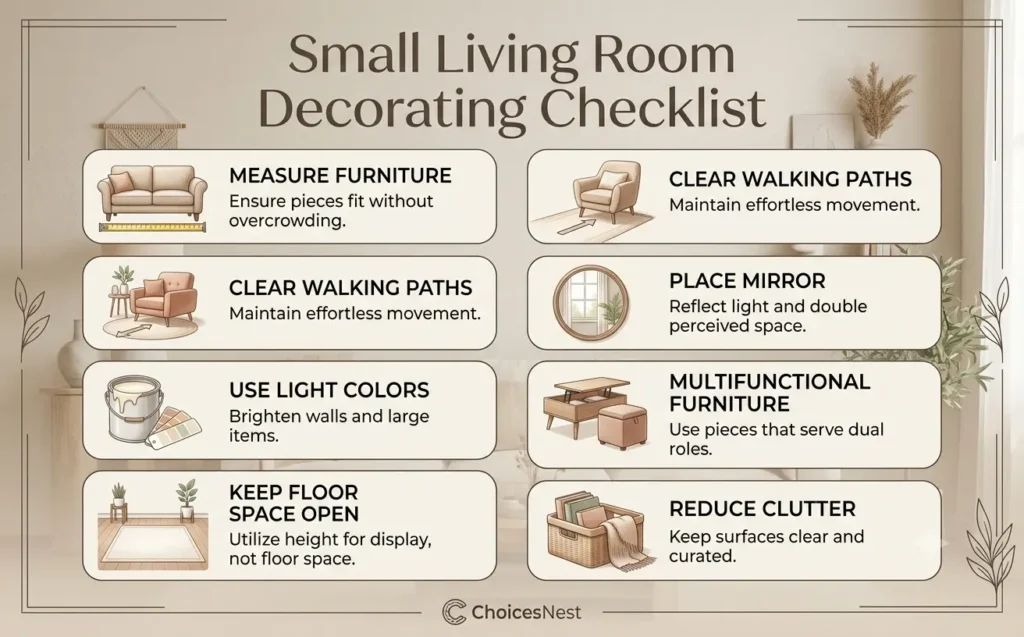
📋 Quick Small Living Room Checklist
| ✔ | Check This |
|---|---|
| ☐ | Furniture fits the room |
| ☐ | Walking paths remain clear |
| ☐ | Colors aren’t visually overwhelming |
| ☐ | Mirror reflects useful light |
| ☐ | Floor space remains visible |
| ☐ | At least one piece serves multiple functions |
| ☐ | Vertical space is used |
| ☐ | Rug connects the seating area |
| ☐ | Lighting reaches dark corners |
| ☐ | Decorative clutter is limited |
💡 Designer-Inspired Tips
You don’t need an expensive interior designer to make a small living room work better. Try these principles:
1. Measure before buying.
2. Leave clear walking paths.
3. Use vertical space.
4. Keep visual clutter under control.
5. Use mirrors where they’ll actually reflect light.
6. Choose furniture based on scale—not just style.
7. Don’t be afraid of empty space.
8. Let one area become the focal point.
The goal is not to make every corner decorative.
The goal is to make the room feel intentional.
❓ Frequently Asked Questions
What colors make a small living room look bigger?
Light shades such as white, cream, beige, soft gray, and pale blue can help reflect light and create an airy feeling.
Should a small living room have a large sofa?
Not necessarily. The sofa should be appropriately scaled to the room while leaving comfortable walking space.
Do mirrors make a small room look bigger?
A strategically positioned mirror can create the impression of additional space by reflecting light and parts of the room.
What type of furniture is best for a small living room?
Look for appropriately scaled, multifunctional, and visually lightweight furniture.
Should I use a large or small rug in a small living room?
A properly scaled rug that visually connects the seating area is generally better than a very small rug floating in the center.
🌟 Final Takeaway
A small living room doesn’t have to feel cramped. Start with the basics:
Measure your furniture → clear walking paths → use light strategically → add a well-positioned mirror → use vertical space → reduce clutter.
You don’t need to buy everything new. Sometimes the biggest improvement comes from rearranging what you already own, removing unnecessary items, and choosing a better layout. When you do buy something new, prioritize pieces that fit your space and serve a useful purpose. The best small living room isn’t the one filled with the most decorations. It’s the one where every piece has room to breathe.