
Hair Thinning vs. Hair Loss: Noticing more hair in your brush or shower can be worrying. But hair thinning and hair loss are not always the same thing. Hair thinning generally describes a gradual reduction in hair density or fullness, while hair loss can involve increased shedding, visible patches, or a noticeable change in your hairline or scalp coverage. Understanding the difference can help you better describe what you are experiencing and decide whether simple hair-care changes may help—or whether it is worth discussing the problem with a qualified healthcare professional.
In this guide, we’ll look at the main differences, common signs to watch for, and situations where professional advice may be helpful.
Important: This article provides general educational information and is not a substitute for medical diagnosis or treatment.
Affiliate Disclosure: ChoicesNest participates in the Amazon Services LLC Associates Program. As an Amazon Associate, ChoicesNest may earn from qualifying purchases at no extra cost to you.
What Is Hair Thinning?
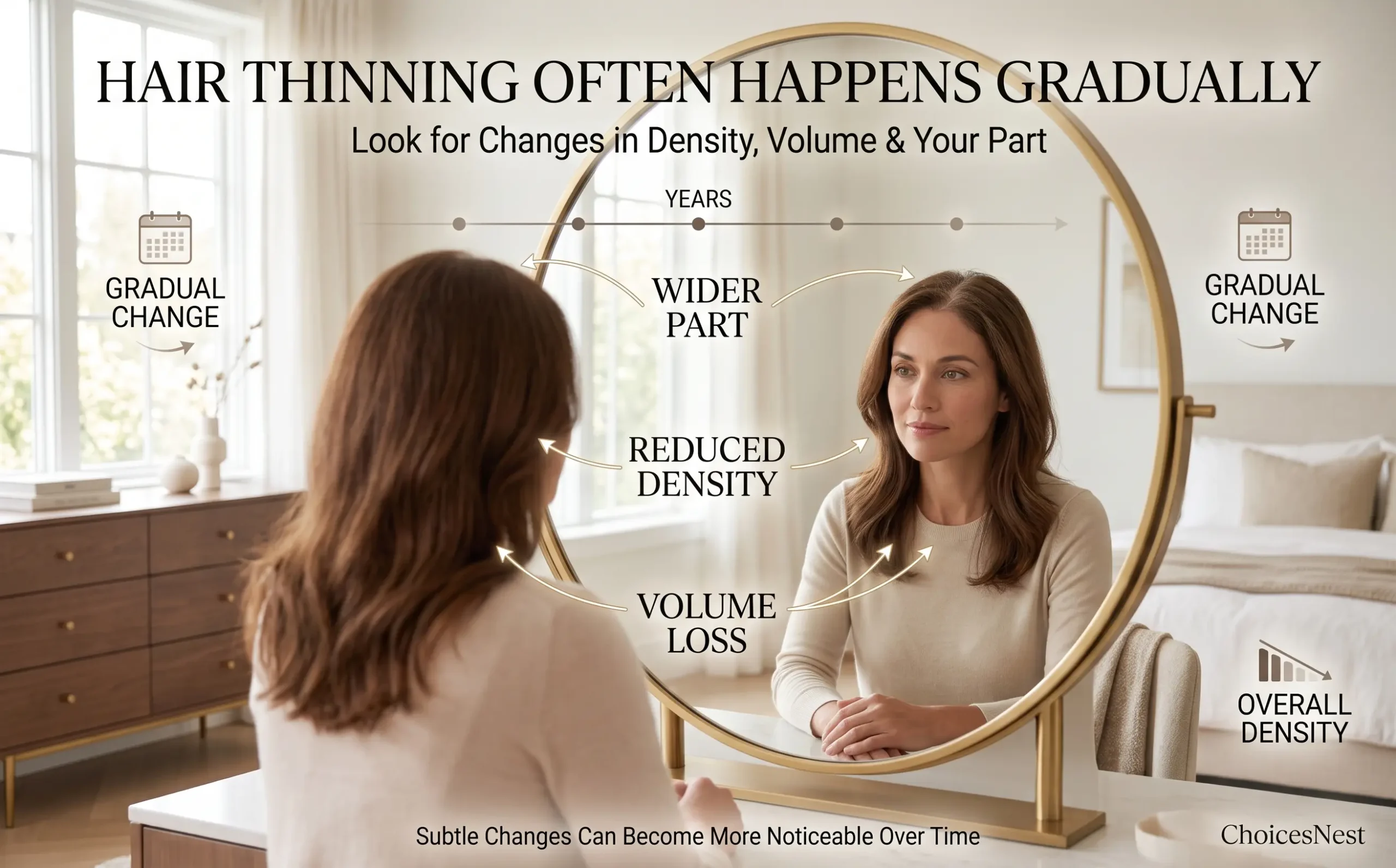
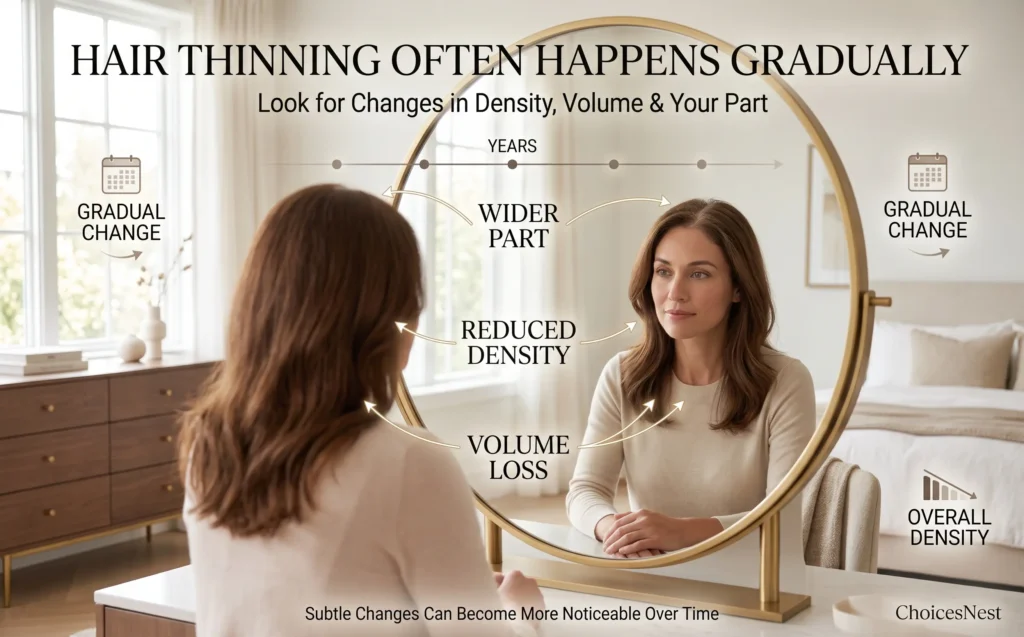
Hair thinning usually refers to a gradual reduction in the overall density or fullness of the hair. Instead of suddenly losing large amounts of hair, you may notice changes such as:
- Your ponytail feeling smaller
- More scalp becoming visible
- Hair looking less dense than before
- A widening part
- Reduced volume, especially around certain areas
Hair thinning can happen gradually, which means it may be difficult to notice at first. Some people become aware of it only after comparing recent photos with older ones. Thinning can also affect different areas in different ways. For example, some people may notice a gradually widening part, while others may see reduced density around the hairline or across a larger area of the scalp.
What Is Hair Loss?
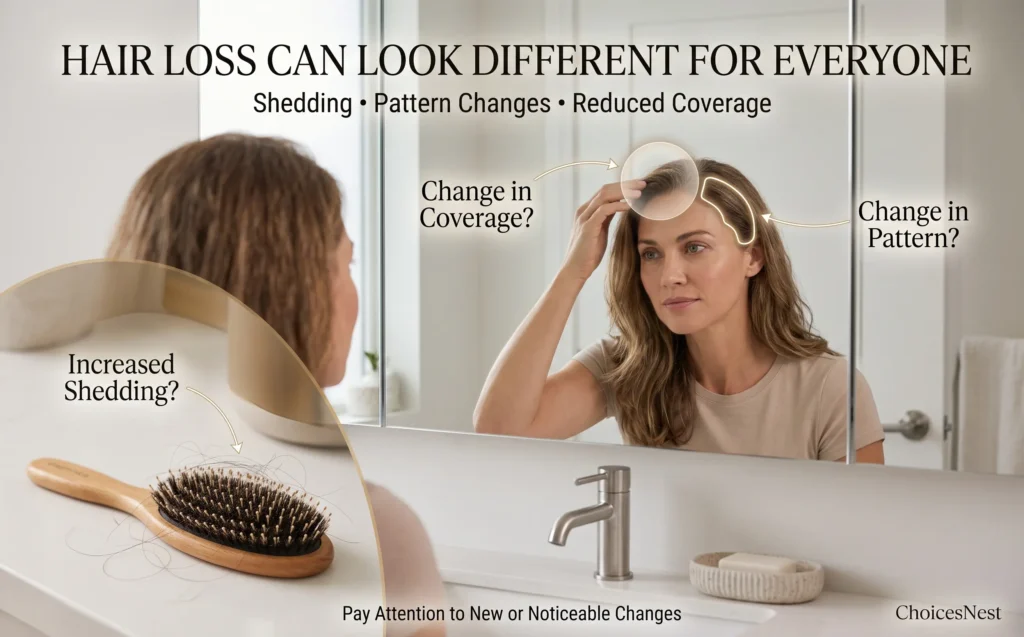
Hair loss is a broader term describing hair that sheds or falls out from the scalp. It can range from increased shedding to more noticeable changes in scalp coverage or distinct areas of hair loss. You might notice:
- More hair than usual on your pillow, brush, or shower floor
- A noticeable increase in daily shedding
- Changes in your hairline
- Reduced coverage in specific areas
- Round or patchy areas with less hair
Hair loss can develop gradually or appear more suddenly, depending on the underlying cause. Because different conditions can produce similar-looking changes, it is not always possible to identify the cause simply by looking at the hair.
Why your hair may be falling out?
If you’re noticing more hair than usual in your brush, shower, or on your pillow, our guide on why your hair may be falling out explains common causes and signs that may be worth paying attention to.
Hair Thinning vs. Hair Loss: The Key Difference
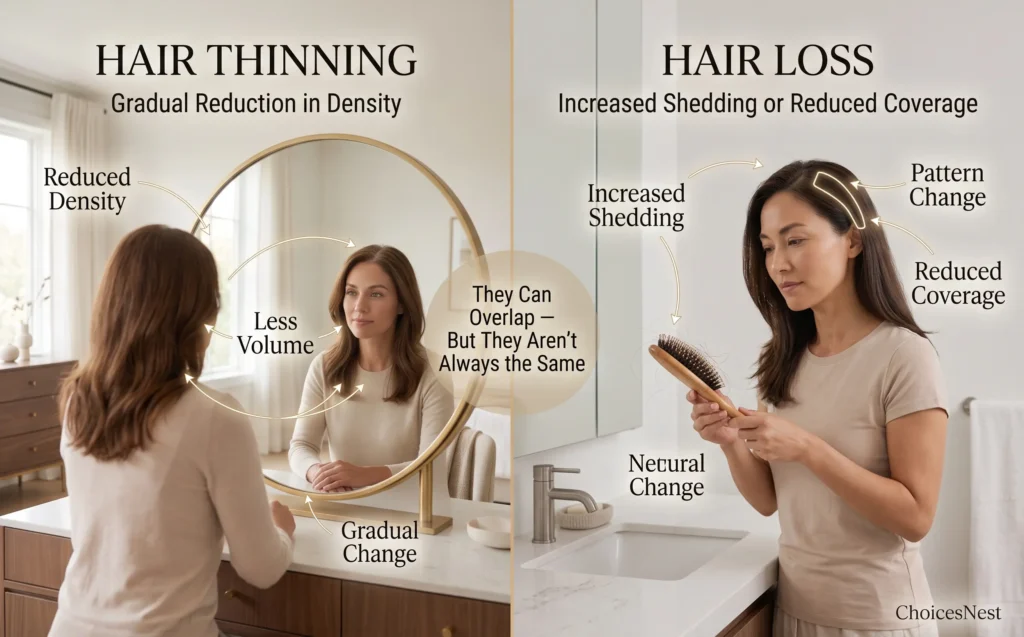
The two terms can overlap, which is why they are often confusing. Hair thinning usually focuses on a gradual reduction in density or fullness. Hair loss is a broader term that can include increased shedding, changes in growth patterns, or noticeable areas where scalp coverage has decreased.
A simple way to think about it is:
| Hair Thinning | Hair Loss |
|---|---|
| Often gradual | Can be gradual or sudden |
| Reduced density or volume | Increased shedding or reduced coverage |
| May show as a wider part | May affect the hairline or specific areas |
| Can become more noticeable over time | Pattern depends on the underlying cause |
However, these descriptions are not a diagnosis. The same underlying condition can sometimes involve both thinning and increased shedding. If you are mainly noticing more hair falling out than usual, you can also read our guide on why your hair may be falling out.
Common Reasons for Hair Thinning and Hair Loss
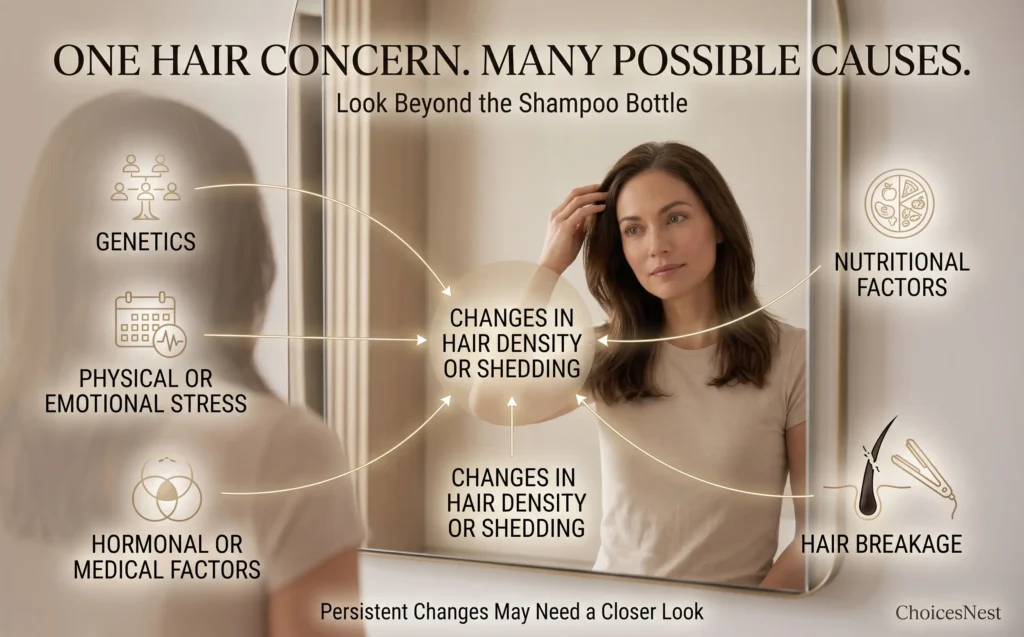
Hair thinning and hair loss can have many possible causes. Some changes may be temporary, while others can be longer-lasting or progressive.
1. Genetics and Family History
Genetic factors can influence how hair changes over time. Some people may gradually notice reduced density or changes in their hairline, while others may not experience significant thinning. A family history of similar hair changes can sometimes be relevant, but it does not automatically explain every case.
2. Stress or Major Physical Changes
Physical or emotional stress can sometimes be followed by increased hair shedding. Major illness, surgery, significant weight changes, and other physical stresses may also affect the normal hair-growth cycle. Because increased shedding can appear after the triggering event rather than immediately, identifying the reason is not always straightforward.
3. Hormonal or Medical Factors
Hormonal changes and certain medical conditions can also contribute to changes in hair growth or shedding. This is one reason it is important not to assume that every hair problem is caused by poor shampoo, heat styling, or lack of a particular product. If hair changes are persistent, significant, or accompanied by other symptoms, discussing them with a qualified healthcare professional may be appropriate.
4. Nutritional Factors
The body needs adequate nutrition to support normal hair growth. Significant dietary changes or nutritional deficiencies may contribute to hair changes in some situations. However, supplements are not automatically the answer. Taking high-dose supplements without knowing whether you have a deficiency may not address the actual cause.
5. Hair Breakage
Sometimes hair may appear thinner because strands are breaking along their length rather than shedding from the scalp. Frequent heat styling, harsh chemical treatments, excessive pulling, and rough detangling can all contribute to breakage.
How to reduce hair breakage and protect weak, damaged hair:
If shorter broken strands, split ends, or uneven hair lengths are your main concern, our guide on how to reduce hair breakage and protect weak, damaged hair covers practical ways to reduce avoidable damage.
If you notice many shorter broken strands or uneven lengths, read our guide on how to reduce hair breakage and protect weak, damaged hair.
When Should You Be Concerned?
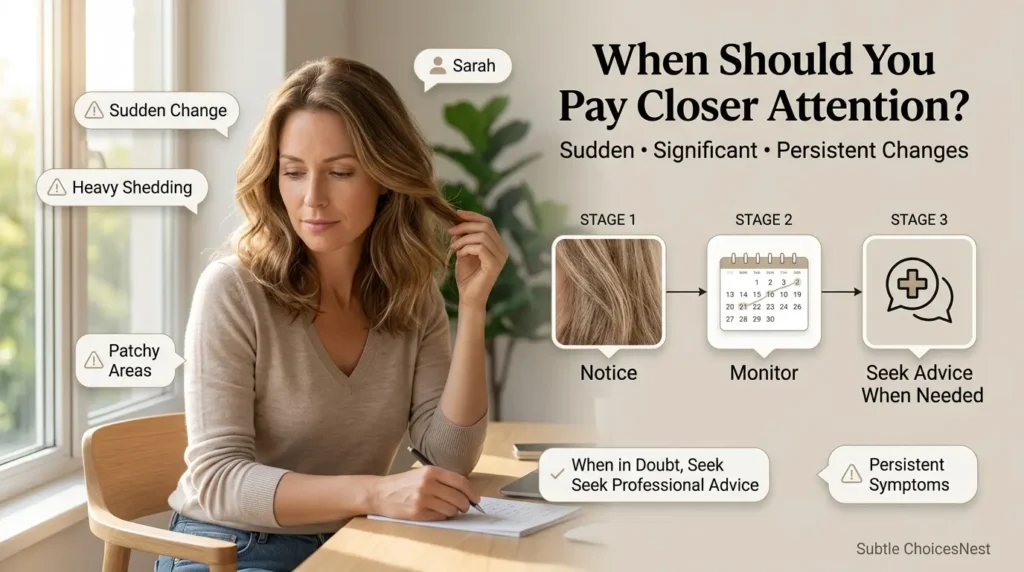
Not every change in shedding or hair density means there is a serious problem. However, it may be worth seeking professional advice if you notice a sudden, significant, or continuing change.
Consider discussing your concerns with a qualified healthcare professional if you experience:
- Sudden or unusually heavy hair shedding
- Rapidly increasing hair thinning
- Distinct bald or patchy areas
- Scalp pain, irritation, redness, or other noticeable changes
- Hair loss accompanied by other unexplained symptoms
A healthcare professional can help evaluate your individual situation and determine whether further investigation or treatment may be needed.
What Can You Do If You Notice Hair Thinning or Hair Loss?
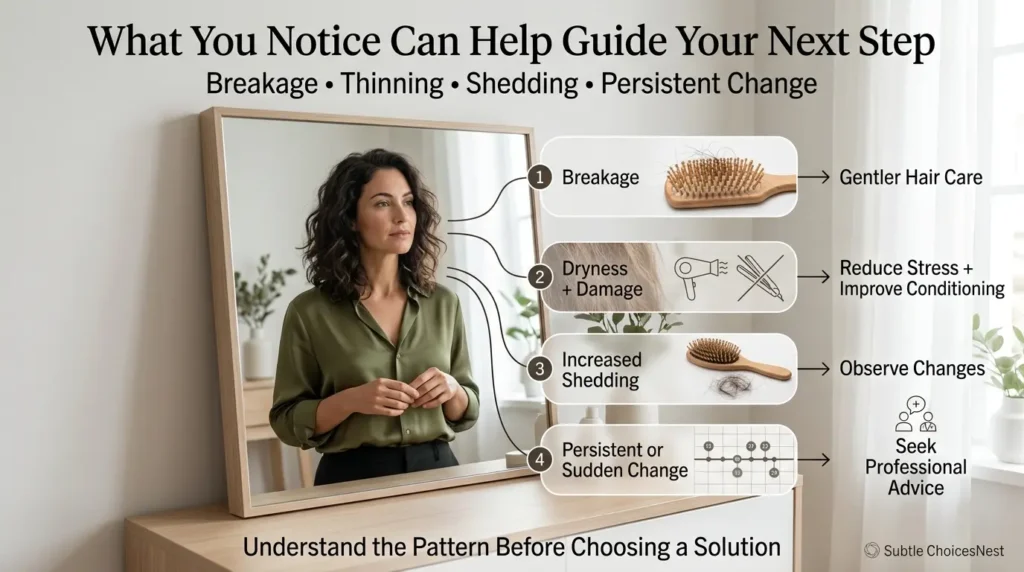
The best next step depends on what you are actually experiencing. If your hair appears thinner because of breakage, focus on reducing unnecessary stress from heat, tight hairstyles, rough detangling, and harsh chemical treatments. You can read our guide on how to reduce hair breakage and protect weak, damaged hair for practical tips. If dryness and frizz are making your hair harder to manage, especially during colder weather, our guide on how to prevent dry, frizzy hair in winter offers practical hair-care tips.
If you are noticing increased shedding, a widening part, changing scalp coverage, or persistent thinning, avoid assuming that a shampoo or cosmetic product is automatically the solution. Consider tracking when the change started and whether it followed a major illness, stressful event, significant weight change, or other noticeable change. Simple hair-care products may improve manageability and the appearance of damaged hair, but they cannot diagnose or treat every underlying cause of hair loss.
If your main concern is damaged or breakage-prone hair rather than unexplained hair loss, you can explore our roundup of the best products for hair breakage and damaged hair.
If your main concern is hair that looks dry, weak, or prone to breakage rather than sudden hair loss, you can also consider a repair-focused hair-care product such as the K18 Leave-In Molecular Repair Hair Mask. It is designed for damaged hair and can be used as part of a routine focused on improving the condition and manageability of stressed strands.
For a broader look at common causes and signs, explore our guide on why your hair may be falling out.
Frequently Asked Questions
Can hair thinning turn into hair loss?
Hair thinning and hair loss can overlap, depending on the underlying cause. Gradual thinning may become more noticeable over time, while some forms of increased shedding may be temporary.
Is hair breakage the same as hair loss?
No. Breakage happens when the hair shaft snaps along its length, while hair loss or shedding generally involves hair coming out from the scalp. If breakage is your main concern, our guide on how to reduce hair breakage and protect weak, damaged hair may help.
Can shampoo or hair products fix hair thinning?
Hair-care products may improve the appearance, softness, or manageability of hair, but they are not universal treatments for the different medical, hormonal, genetic, or other causes that may contribute to thinning or hair loss.
Final Thoughts
Hair thinning and hair loss are related concerns, but they are not always the same. Thinning often describes a gradual reduction in density or volume, while hair loss can involve increased shedding, changing patterns, or reduced scalp coverage. The most useful first step is to pay attention to the pattern of change rather than immediately searching for a miracle product. If the change is sudden, significant, persistent, or accompanied by other symptoms, consider seeking advice from a qualified healthcare professional.
Understand the pattern first. Then choose the right next step.