Disclosure: As an Amazon Associate, I earn from qualifying purchases. If you purchase through links on this page, I may earn a small commission at no additional cost to you.
How to Protect Hair from Sun Damage: Introduction
Summer is a great time to enjoy the outdoors, but prolonged exposure to sunlight, heat, and dust can take a serious toll on your hair. Many people focus on protecting their skin from UV rays while forgetting that their hair and scalp also need protection.
Strong sunlight can weaken the hair cuticle, causing dryness, frizz, split ends, and faded hair color. Dust and pollution can build up on the scalp, leaving hair looking dull and making it harder to manage.
The good news is that you don’t need an expensive salon routine to keep your hair healthy. A few simple daily habits and the right hair care products can go a long way in protecting your hair throughout the summer.
In this guide, you’ll learn 10 practical, easy-to-follow tips that can help minimize sun damage, reduce dust buildup, and keep your hair looking healthier all season long.
Why Sun & Dust Damage Your Hair
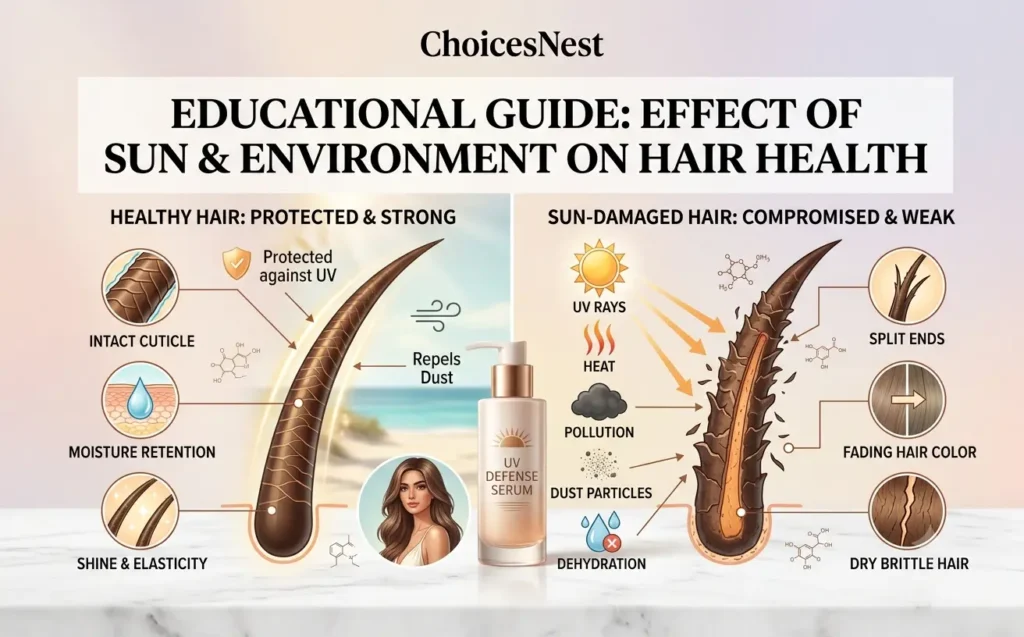
Hair is constantly exposed to environmental factors, especially during summer.
Here are the biggest causes of hair damage:
☀️ UV Rays
Ultraviolet (UV) rays can weaken the outer protective layer of your hair (the cuticle), making strands rough, dry, and more prone to breakage.
🌡️ Heat
High temperatures remove natural moisture from your hair, increasing frizz and making hair feel brittle.
🌬️ Dust & Pollution
Dust particles, smoke, and pollution stick to your hair throughout the day. Over time, this buildup can make your hair appear dull and may contribute to scalp irritation if not washed away properly.
💦 Sweat
Sweat mixes with dirt and oil, which can make hair look greasy while also attracting more dust and environmental pollutants.
🌊 Chlorine & Saltwater
Swimming pools and seawater may leave your hair dry because they can remove natural oils that help keep it soft and manageable.
Fortunately, a few smart habits can significantly reduce these effects.
⭐ 10 Simple Tips That Actually Work
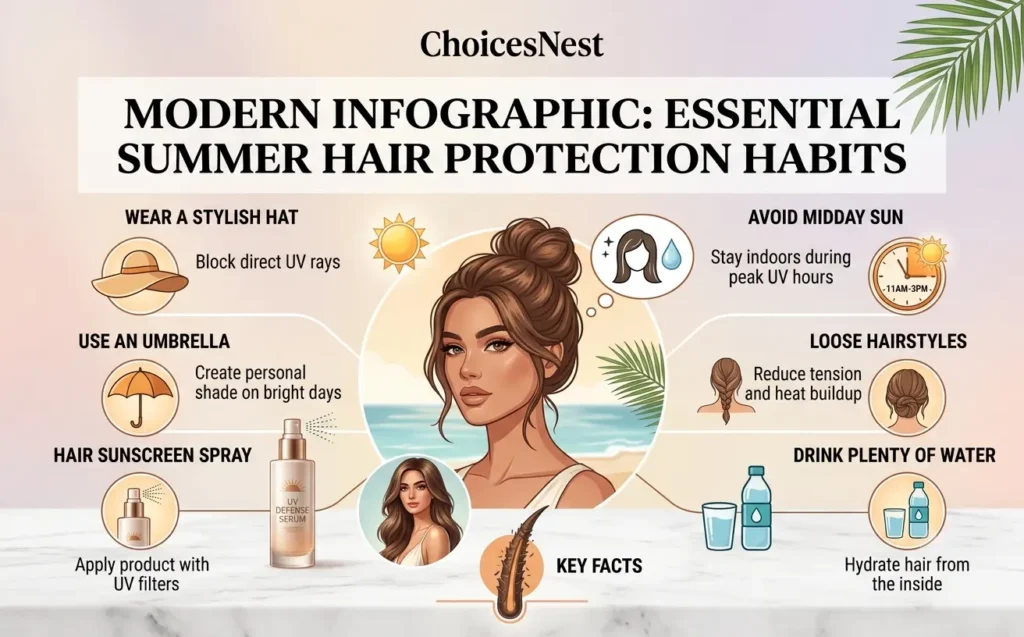
1️⃣ Wear a Hat or Scarf Outdoors
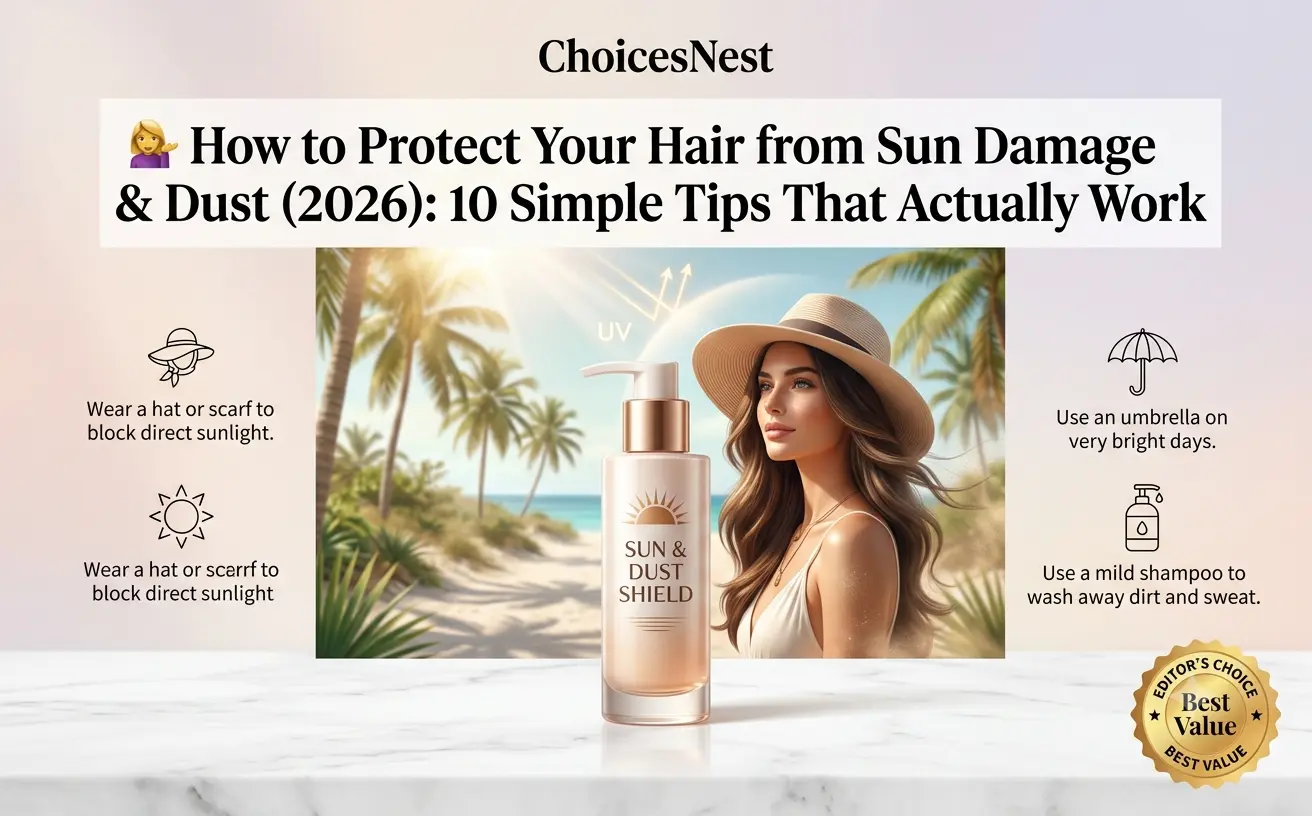
One of the easiest ways to protect your hair is by wearing a wide-brim hat, cap, or lightweight scarf whenever you’re outside for extended periods.
A physical barrier helps reduce direct UV exposure while also preventing dust from settling on your hair.
Why It Helps
✔ Reduces sun exposure
✔ Protects your scalp
✔ Keeps dust away
✔ Helps reduce color fading
2️⃣ Use Hair Products with UV Protection
Just as sunscreen protects your skin, some leave-in sprays and hair products are formulated to help shield hair from UV exposure.
These products can help reduce moisture loss while keeping your hair smoother during hot weather.
Why It Helps
✔ Helps reduce dryness
✔ Supports healthier-looking hair
✔ May improve shine
✔ Easy to apply before going outdoors
3️⃣ Stay Hydrated
Healthy hair starts from within. Drinking enough water helps support your overall health, including your scalp and hair.
While hydration alone won’t prevent sun damage, it can help keep your body functioning well, which supports healthy hair growth.
Why It Helps
✔ Supports scalp health
✔ Helps maintain moisture balance
✔ Benefits overall skin and hair health
4️⃣ Avoid Peak Afternoon Sun
The strongest sunlight usually occurs during the middle of the day. If possible, limit long periods of direct sun exposure during these hours or seek shade when outdoors.
Even small changes, such as walking on the shaded side of the street or carrying an umbrella, can reduce unnecessary exposure.
Why It Helps
✔ Less UV exposure
✔ Less heat damage
✔ More comfortable outdoor activities
5️⃣ Wash Away Dust Gently
After spending time outdoors, dust and sweat can build up on your hair and scalp. Instead of using harsh shampoos every day, choose a gentle sulfate-free shampoo when cleansing your hair.
Overwashing with strong cleansers may remove natural oils that help protect your hair.
Why It Helps
✔ Removes dust and pollution
✔ Helps maintain natural moisture
✔ Supports a healthier scalp
✔ Reduces dryness caused by harsh cleansing
🌿 6. Always Use a Conditioner After Shampooing
Summer heat, UV rays, and frequent washing can strip your hair of its natural moisture. A good conditioner helps restore hydration, smooth the hair cuticle, and reduce frizz.
Focus on applying conditioner from the mid-lengths to the ends of your hair, where dryness is usually most noticeable. If you have oily roots, avoid applying conditioner directly to your scalp unless the product is specifically designed for scalp care.
Why It Helps
✔ Restores moisture
✔ Reduces frizz
✔ Improves softness
✔ Makes hair easier to manage
💧 7. Avoid Tight Hairstyles in Hot Weather
Tight ponytails, buns, and braids can place extra stress on your hair, especially when it’s already weakened by sun exposure and heat.
Instead, choose loose hairstyles or use soft fabric hair ties that are less likely to pull on your hair.
Why It Helps
✔ Reduces hair breakage
✔ Minimizes scalp tension
✔ Helps prevent split ends
✔ More comfortable in hot weather
✂️ 8. Trim Split Ends Regularly
Sun exposure and dry weather can make split ends more noticeable. Regular trims help keep your hair looking healthier and prevent split ends from traveling further up the hair shaft.
You don’t need a dramatic haircut—a small trim every 6–8 weeks is often enough to maintain healthy-looking hair.
Why It Helps
✔ Prevents worsening split ends
✔ Keeps hair looking neat
✔ Improves overall appearance
✔ Supports healthier hair over time
🌙 9. Nourish Your Hair Overnight
Nighttime is an excellent opportunity to give your hair extra care. Using a lightweight leave-in conditioner, nourishing hair serum, or overnight hair mask can help replenish moisture while you sleep.
Sleeping on a satin or silk pillowcase may also reduce friction, which can help minimize frizz and hair breakage.
Why It Helps
✔ Deep overnight hydration
✔ Helps reduce frizz
✔ Supports smoother hair
✔ May reduce friction-related damage
🥗 10. Eat a Hair-Friendly Diet
Healthy hair starts from within. While no single food can prevent sun damage, a balanced diet provides the nutrients your hair needs to stay strong and healthy.
Foods rich in protein, healthy fats, iron, zinc, biotin, and vitamins A, C, D, and E all play a role in supporting healthy hair.
Some excellent choices include:
- Eggs
- Salmon
- Greek yogurt
- Nuts and seeds
- Leafy green vegetables
- Berries
- Sweet potatoes
- Avocados
Combined with good hair care habits, a nutritious diet helps support stronger, healthier-looking hair.
Why It Helps
✔ Supports healthy hair growth
✔ Provides essential nutrients
✔ Helps maintain stronger hair
✔ Benefits overall health
⭐ Common Summer Hair Care Myths
Many popular hair care beliefs sound convincing but aren’t always supported by evidence.
❌ Myth 1: Hair Doesn’t Need Sun Protection
Many people protect their skin with sunscreen but forget that UV rays can also affect the hair shaft, leading to dryness, brittleness, and color fading. Wearing a hat or using UV-protective hair products can help reduce this damage.
❌ Myth 2: Washing Hair Every Day Is Always Bad
There isn’t a one-size-fits-all answer. During hot weather, frequent sweating and dust buildup may mean some people need to wash their hair more often. The key is using a gentle shampoo that’s appropriate for your hair type.
❌ Myth 3: Air Drying Always Prevents Damage
Air drying can be gentler than excessive heat styling, but leaving hair wet for long periods or exposing damp hair to intense sunlight may still contribute to damage. Handle wet hair gently and avoid unnecessary exposure to harsh conditions.
❌ Myth 4: Hair Oils Block All Sun Damage
Hair oils can help reduce dryness and improve shine, but they are not a substitute for UV protection. If you’ll be outdoors for long periods, physical protection like a hat is often more effective.
✅ Quick Summer Hair Care Checklist
Protect your hair this summer with these simple habits:
✔ Wear a hat or scarf outdoors.
✔ Use UV-protective hair products when needed.
✔ Wash away sweat and dust with a gentle shampoo.
✔ Always follow with conditioner.
✔ Drink plenty of water.
✔ Avoid excessive heat styling.
✔ Protect your hair while swimming.
✔ Trim split ends regularly.
✔ Use an overnight hair treatment once or twice a week.
✔ Eat a balanced diet rich in hair-friendly nutrients.
Small daily habits can make a big difference in keeping your hair healthy throughout the summer.
👨⚕️ Dermatologist Tips
Dermatologists generally recommend protecting your scalp and hair from prolonged UV exposure, especially during peak sunlight hours. Wearing a wide-brim hat or seeking shade can help reduce direct sun exposure.
If you spend a lot of time outdoors, choose hair care products that are appropriate for your hair type and avoid excessive heat styling whenever possible. Gentle cleansing after exposure to dust, sweat, or swimming can also help keep the scalp healthy without removing too much natural moisture.
If you notice persistent hair loss, severe scalp irritation, painful sunburn on the scalp, or ongoing breakage that doesn’t improve with good hair care, consult a dermatologist or healthcare professional for personalized advice.
🛒 Recommended Products
Build Your Summer Hair Protection Routine
Protecting your hair from sun damage and dust is easier when you use the right combination of products. The items below can help keep your hair clean, hydrated, and better protected throughout the summer.
☀️ UV Protection Hair Spray
A UV protection hair spray helps shield your hair from prolonged sun exposure while reducing dryness and helping maintain shine.
🛒 Button: Compare UV Hair Protection Sprays on Amazon
🧴 Moisturizing Conditioner
A nourishing conditioner helps restore moisture lost from heat, UV exposure, and frequent washing, leaving hair softer and easier to manage.
🛒 Button: Browse Hydrating Conditioners on Amazon
🛁 Gentle Sulfate-Free Shampoo
A gentle shampoo effectively removes sweat, dust, and product buildup without stripping away too much of your hair’s natural moisture.
🛒 Button: Shop Gentle Sulfate-Free Shampoos on Amazon
🧢 Wide-Brim Sun Hat
One of the easiest ways to protect both your hair and scalp is by wearing a lightweight wide-brim hat whenever you’re outdoors for extended periods.
🛒 Button: See Sun Protection Hats on Amazon
💧 Reusable Water Bottle
Staying hydrated supports healthy skin and scalp, making a reusable water bottle a practical addition to your daily summer routine.
🛒 Button: Explore Reusable Water Bottles on Amazon
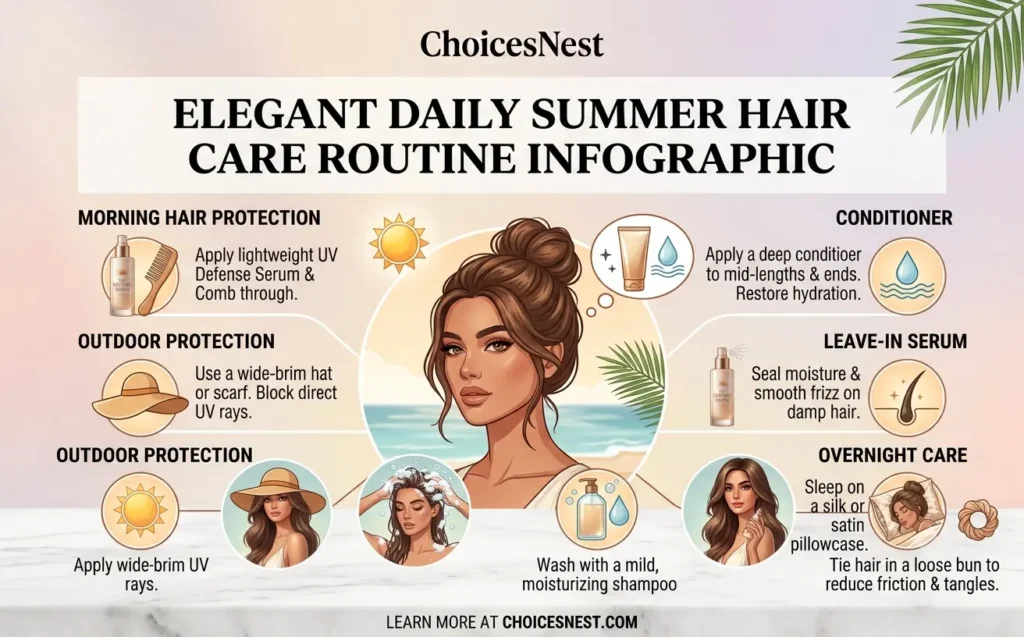
⏰ Best Time to Use These Products
Using the right product at the right time can improve your summer hair care routine.
🌅 Morning
Before heading outdoors:
- Apply a UV protection hair spray if you plan to spend time in the sun.
- Wear a wide-brim hat or scarf for additional protection.
☀️ During the Day
If your hair is exposed to strong sunlight, wind, or dust for several hours:
- Brush away loose dust gently.
- Reapply protective products only if the product instructions recommend doing so.
🚿 After Outdoor Activities
Once you’re home:
- Wash away sweat, dust, and pollutants with a gentle sulfate-free shampoo.
- Follow with a moisturizing conditioner to restore hydration.
🌙 Night
Before bed:
- Apply a lightweight leave-in conditioner or hair serum if your hair feels dry.
- Sleep on a satin or silk pillowcase to help reduce friction and frizz.
❓ Frequently Asked Questions
Can the sun really damage my hair?
Yes. Prolonged UV exposure can dry out the hair cuticle, making hair feel rough, brittle, and more prone to breakage. Wearing a hat and following a protective hair care routine can help reduce this damage.
How often should I wash my hair in summer?
It depends on your hair type and activity level. If you sweat heavily or spend time in dusty environments, you may need to wash your hair more frequently. Using a gentle shampoo can help cleanse without over-drying.
Is a hat enough to protect my hair?
A hat provides excellent physical protection against direct sunlight and dust, but combining it with good hair care habits—such as conditioning and gentle cleansing—offers more complete protection.
Can swimming damage my hair?
Yes. Chlorine from swimming pools and saltwater from the ocean can dry out your hair. Rinsing your hair with fresh water afterward and using conditioner can help minimize dryness.
Which ingredients are best for repairing dry hair?
Look for products containing ingredients such as argan oil, coconut oil, shea butter, glycerin, keratin, panthenol, aloe vera, and natural proteins that help improve softness and hydration.
🔗 Related Articles
Protecting your hair is only one part of a healthy summer beauty routine. You may also enjoy these helpful guides:
- How to Prevent Sunburn Naturally (2026): 10 Simple Tips That Actually Work
- 7 Summer Skincare Mistakes That Are Damaging Your Skin (And How to Avoid Them)
- How to Build a Daily Skincare Routine (2026): Best Morning & Night Guide for Every Skin Type
- 7 Signs Your Skin Is Dehydrated: Learn How to Fix It Naturally
- Dry Skin vs Dehydrated Skin: What’s the Difference?
- 7 Best Moisturizers for Dry Skin (2026): Top Picks for Deep Hydration
- 7 Best Body Lotions for Dry Summer Skin (2026): Stay Soft & Hydrated
- 7 Best Lip Balms for Dry & Chapped Lips (2026): Top Picks for Soft, Healthy Lips