Disclosure: As an Amazon Associate, I earn from qualifying purchases. If you purchase through links on this page, I may earn a small commission at no additional cost to you.
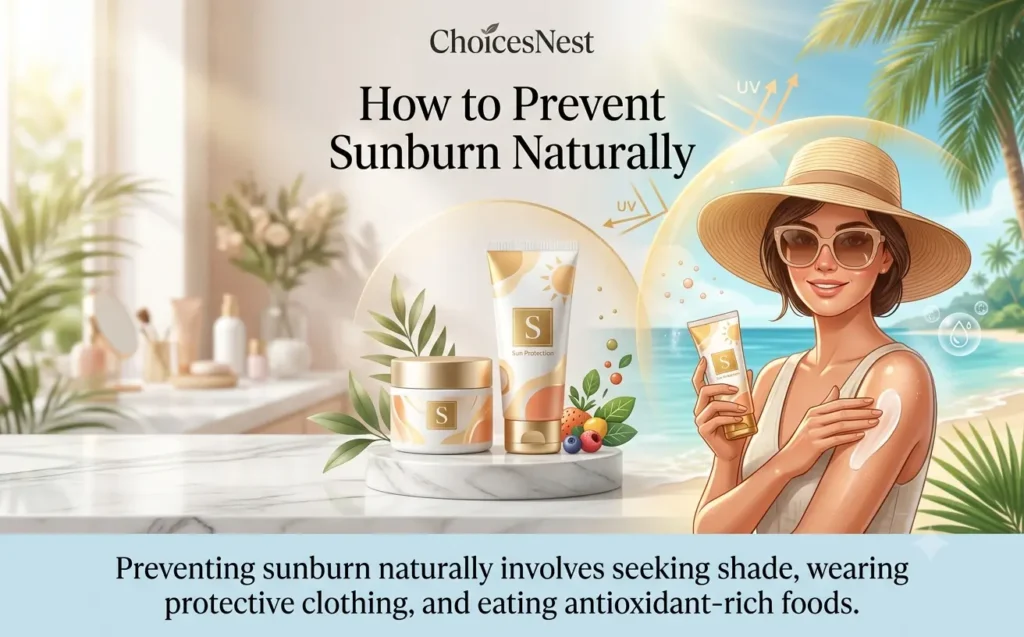
How to Prevent Sunburn Naturally: Introduction
Nothing can ruin a summer day faster than painful sunburn. Whether you’re relaxing at the beach, enjoying a family picnic, hiking, or simply spending time outdoors, too much sun exposure can leave your skin red, irritated, and uncomfortable.
Sunburn isn’t just a temporary inconvenience. Repeated exposure to ultraviolet (UV) radiation may contribute to premature skin aging and increase the risk of long-term skin damage. The good news is that most sunburns can be prevented with a few simple daily habits.
In this guide, you’ll learn ten practical ways to help protect your skin naturally, reduce unnecessary UV exposure, and enjoy the outdoors more safely throughout the summer.
🌞 At a Glance
To help reduce your risk of sunburn:
✅ Apply a broad-spectrum sunscreen with SPF 30 or higher.
✅ Reapply sunscreen according to the product instructions, especially after swimming or sweating.
✅ Wear a wide-brim hat and UV-protective sunglasses.
✅ Seek shade whenever possible during the strongest sunlight hours.
✅ Stay hydrated throughout the day.
✅ Wear lightweight clothing that covers exposed skin.
Small daily habits can make a significant difference in protecting your skin over time.
What Causes Sunburn?
Sunburn occurs when your skin is exposed to more ultraviolet (UV) radiation than it can safely handle. The sun produces two primary types of UV rays that affect your skin:
☀️ UVA Rays
UVA rays penetrate deeper into the skin and are present throughout the year. They contribute to premature aging, wrinkles, and long-term skin damage.
☀️ UVB Rays
UVB rays primarily affect the outer layers of the skin and are the main cause of sunburn. They tend to be strongest during the middle of the day and during summer months.
Your body’s natural response to excessive UV exposure is inflammation, which leads to redness, tenderness, warmth, and sometimes peeling as the skin begins to heal.
While anyone can experience sunburn, people with lighter skin tones generally burn more quickly than those with darker complexions. However, every skin tone benefits from daily sun protection.
Why Prevention Is Better Than Treatment
Once a sunburn develops, there is no instant cure. Although soothing products like aloe vera gel and cool compresses may help relieve discomfort, they cannot reverse the UV damage already caused.
Preventing sunburn is much easier than treating it afterward. Consistent sun protection helps:
- Reduce the risk of painful burns.
- Support healthier-looking skin.
- Minimize premature wrinkles and dark spots.
- Help maintain your skin’s natural barrier.
- Reduce cumulative UV exposure over time.
Developing a few simple protective habits today can help keep your skin healthier for years to come.
🌿 10 Simple Tips That Actually Work
✅ Tip 1: Apply Broad-Spectrum Sunscreen Every Day
The single most effective way to help prevent sunburn is by using a broad-spectrum sunscreen with SPF 30 or higher. Broad-spectrum products are designed to protect against both UVA and UVB rays.
Apply sunscreen generously to all exposed skin before spending time outdoors, and follow the product’s directions for reapplication, particularly after swimming, sweating, or towel drying.
✅ Tip 2: Wear Protective Clothing
Lightweight long-sleeved shirts, breathable fabrics, and long pants can provide an extra layer of protection between your skin and the sun.
Some clothing is specifically designed with UPF (Ultraviolet Protection Factor) to help block more UV radiation during outdoor activities.
✅ Tip 3: Wear a Wide-Brim Hat
A baseball cap protects only part of your face, while a wide-brim hat offers additional coverage for your forehead, ears, neck, and shoulders—areas that are commonly affected by sunburn.
Choose breathable materials that remain comfortable even during hot weather.
✅ Tip 4: Don’t Forget UV-Protection Sunglasses
Your eyes and the delicate skin surrounding them are also vulnerable to UV radiation. Sunglasses that block 99–100% of UVA and UVB rays help protect your vision while reducing unnecessary sun exposure around your eyes.
They also make spending time outdoors more comfortable on bright summer days.
✅ Tip 5: Seek Shade Whenever Possible
Even with sunscreen, limiting direct sun exposure is a smart habit.
Whenever possible:
- Sit under trees.
- Use umbrellas at the beach.
- Relax beneath canopies.
- Take breaks indoors during extended outdoor activities.
Combining shade with sunscreen and protective clothing provides much better protection than relying on a single method alone.
✅ Tip 6: Stay Hydrated Throughout the Day
Healthy skin starts from within. While drinking water alone won’t prevent sunburn, staying properly hydrated helps support your body’s normal functions and can help your skin feel healthier during hot weather.
Summer heat increases fluid loss through sweating, so remember to:
- Carry a reusable water bottle.
- Drink water regularly throughout the day.
- Eat water-rich foods like watermelon, cucumber, oranges, and strawberries.
- Limit excessive sugary or alcoholic beverages when spending long periods outdoors.
Proper hydration also complements a healthy skincare routine by supporting your skin’s overall appearance.
✅ Tip 7: Avoid Peak UV Hours
The sun’s ultraviolet rays are generally strongest during the middle of the day.
If possible, limit prolonged outdoor activities between 10:00 AM and 4:00 PM, when UV intensity is often at its highest.
If you must be outside:
- Seek shade whenever available.
- Wear protective clothing.
- Apply sunscreen before heading outdoors.
- Reapply sunscreen as directed on the product label.
Planning outdoor activities earlier in the morning or later in the afternoon can help reduce unnecessary UV exposure.
✅ Tip 8: Reapply Sunscreen Correctly
One of the biggest mistakes people make is applying sunscreen only once.
Even high-SPF sunscreens become less effective over time, especially after:
- Swimming
- Sweating
- Towel drying
- Extended outdoor activities
Always follow the manufacturer’s instructions for reapplication. Consistent use is just as important as choosing the right SPF.
Remember that no sunscreen blocks 100% of UV rays, so combining sunscreen with hats, sunglasses, and shade provides better overall protection.
✅ Tip 9: Give Extra Protection to Children and Older Adults
Some people are more sensitive to the sun than others.
Young children have delicate skin that can burn quickly, while older adults may have skin that’s more vulnerable due to age-related changes.
To help protect them:
- Dress them in lightweight protective clothing.
- Encourage them to wear wide-brim hats.
- Use broad-spectrum sunscreen according to product directions.
- Keep them hydrated.
- Take frequent breaks in the shade.
Making sun protection a daily habit helps everyone enjoy outdoor activities more comfortably.
✅ Tip 10: Care for Your Skin After Sun Exposure
Even if you avoid sunburn, your skin can benefit from gentle after-sun care.
After spending time outdoors:
- Take a cool or lukewarm shower.
- Apply a gentle moisturizer.
- Use soothing aloe vera gel if your skin feels warm.
- Continue drinking plenty of water.
- Avoid harsh exfoliants if your skin feels sensitive.
Taking care of your skin after sun exposure helps maintain hydration and supports your skin’s natural barrier. If your body skin feels dry after spending time outdoors, explore our guide to the best body lotions for dry summer skin, featuring options that can help restore moisture and keep your skin feeling soft and comfortable.
✅ Quick Summer Skincare Checklist
Follow these simple habits every day to help keep your skin healthy throughout the summer.
✔ Apply broad-spectrum SPF 30+ sunscreen before going outdoors.
✔ Reapply sunscreen according to the product instructions.
✔ Wear UV-protection sunglasses.
✔ Use a wide-brim hat.
✔ Wear lightweight protective clothing.
✔ Stay hydrated throughout the day.
✔ Seek shade during peak sunlight hours.
✔ Moisturize your skin after cleansing.
✔ Keep aloe vera gel available after extended outdoor activities.
✔ Avoid excessive sun exposure whenever possible.
Small, consistent habits often provide better long-term protection than relying on sunscreen alone.
👨⚕️ How to Prevent Sunburn Naturally: Dermatologist Tips
Dermatologists generally agree that the best way to reduce the risk of sunburn is to combine several protective strategies rather than relying on a single product.
Using a broad-spectrum sunscreen with SPF 30 or higher, wearing protective clothing, seeking shade, and avoiding excessive midday sun exposure all work together to help protect your skin from UV damage.
It’s also important to remember that sunscreen should be used every day—not only during beach vacations. UV rays can affect your skin during many outdoor activities, including walking, gardening, driving, and exercising.
If you experience severe sunburn, blistering, fever, dizziness, or signs of heat-related illness after prolonged sun exposure, seek medical advice promptly.
🛒 Recommended Products
Protect Your Skin This Summer
The right products can make spending time outdoors safer and more comfortable. Below are some product categories that complement the sun protection habits discussed in this guide.
☀️ Broad-Spectrum Daily Sunscreen
A broad-spectrum sunscreen with SPF 30 or higher helps protect your skin from both UVA and UVB rays. Choose a formula suitable for your skin type and use it consistently.
🛒 Button: Compare Daily Sunscreens on Amazon
🕶️ UV Protection Sunglasses
Quality sunglasses help protect your eyes and the delicate skin around them while reducing glare during bright summer days.
🛒 Button: Browse UV Protection Sunglasses
👒 Wide-Brim Sun Hat
A wide-brim hat provides additional coverage for your face, ears, and neck—areas commonly affected by sunburn.
🛒 Button: See Summer Sun Hats on Amazon
🌿 Aloe Vera Gel
Keeping aloe vera gel at home can be helpful for soothing skin after spending time outdoors. Look for formulas with minimal added fragrance or alcohol.
🛒 Button: Explore Aloe Vera Gels on Amazon
💧 Daily Moisturizer
Moisturizing after cleansing or after a day outdoors helps support your skin barrier and maintain hydration.
🛒 Button: Shop Hydrating Moisturizers on Amazon
❓ Frequently Asked Questions
Can I get sunburned on a cloudy day?
Yes. Up to 80% of UV rays can pass through clouds, so your skin may still be exposed even when the sun isn’t visible. Wearing sunscreen daily is a good habit regardless of the weather.
Is SPF 50 much better than SPF 30?
Both provide excellent protection when used correctly. SPF 50 filters slightly more UVB rays than SPF 30, but neither offers complete protection. Applying enough sunscreen and reapplying it according to the product instructions is more important than choosing the highest SPF.
How often should I reapply sunscreen?
Always follow the directions on the sunscreen label. In general, sunscreen should be reapplied after swimming, sweating, towel drying, or spending extended time outdoors.
Does darker skin need sunscreen?
Yes. Although darker skin contains more melanin and may burn less easily, it can still be damaged by UV radiation. Daily sun protection benefits all skin tones.
Can I prevent sunburn naturally without sunscreen?
Protective clothing, shade, hats, and avoiding excessive sun exposure all help reduce UV exposure. However, dermatologists generally recommend using a broad-spectrum sunscreen as part of a complete sun protection routine.
🔗 Related Articles
Protecting your skin from the sun is just one part of maintaining healthy skin. Explore these guides to build a complete summer skincare routine and choose products that suit your needs.
- Best Sunscreens for Summer (2026): Top Picks for Every Skin Type
- SPF 30 vs SPF 50: Which Sunscreen Is Better?
- How to Choose the Right Sunscreen for Your Skin Type
- 7 Summer Skincare Mistakes That Are Damaging Your Skin (And How to Avoid Them)
- The Ultimate Daily Skincare Routine (2026): Best Morning & Night Guide for Every Skin Type
- 7 Best Hyaluronic Acid Serums (2026): Top Picks for Hydrated & Glowing Skin
- Best Moisturizers for Dry Skin (2026): Top Picks for Deep Hydration
- 7 Signs Your Skin Is Dehydrated: Learn How to Fix It Naturally
- Dry Skin vs Dehydrated Skin: What’s the Difference?
🌟 Final Takeaway
Preventing sunburn doesn’t require complicated routines or expensive products. A few simple daily habits—such as applying sunscreen, wearing protective clothing, seeking shade, and staying hydrated—can go a long way toward protecting your skin from unnecessary UV damage.
Remember that no single product provides complete protection. The best approach is to combine multiple sun-safe practices, including broad-spectrum sunscreen, UV-protective sunglasses, a wide-brim hat, and sensible time in the shade during periods of intense sunlight. These habits not only help reduce the risk of painful sunburn but also support healthier-looking skin over the long term.
Whether you’re heading to the beach, going for a walk, or spending time in your garden, making sun protection part of your everyday routine is one of the simplest investments you can make in your skin’s future.