

Disclosure: As an Amazon Associate, I earn from qualifying purchases. If you purchase through links on this page, I may earn a small commission at no additional cost to you.

Transition Your Skincare Routine from Summer to Winter: Introduction
As the seasons change, your skincare routine should change too. The lightweight products that kept your skin comfortable during hot summer months may no longer provide enough hydration when cooler temperatures and lower humidity arrive.
Many people notice their skin becoming tighter, drier, or more sensitive during autumn without realizing that their skincare routine is still designed for summer weather. A few simple adjustments can help protect your skin barrier, maintain hydration, and keep your complexion healthy throughout the colder months.
In this guide, you’ll learn 10 dermatologist-inspired tips to transition your skincare routine from summer to winter. We’ll also recommend essential skincare products, explain which ingredients to look for, and help you build a routine that keeps your skin soft, hydrated, and glowing all season long.
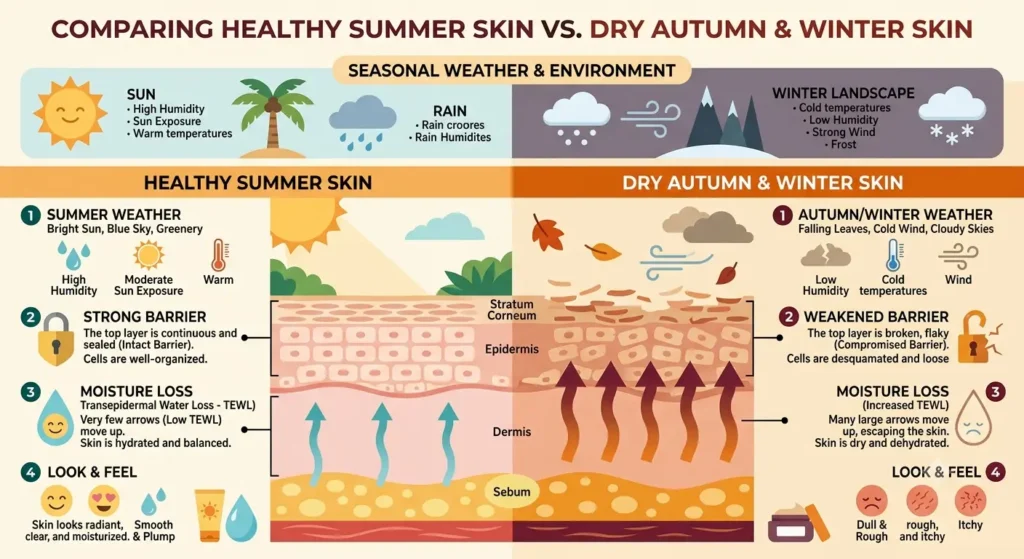
🍁 Why Your Skin Changes Between Seasons
If you’ve ever noticed that your skin suddenly feels dry when autumn arrives, you’re not imagining it. Seasonal changes affect your skin in several ways.
🌬️ Lower Humidity
Cooler air contains less moisture than warm summer air. This causes water to evaporate from your skin more quickly, making it feel dry and tight.
❄️ Cooler Temperatures
Cold weather slows your skin’s natural oil production. Without enough natural oils, your skin barrier becomes less effective at retaining moisture.
🏠 Indoor Heating
As temperatures drop, heaters begin running indoors. Heated indoor air is often very dry, which can further dehydrate your skin.
🌞 UV Exposure Doesn’t Disappear
Many people stop wearing sunscreen once summer ends, but harmful UVA rays remain present throughout autumn and winter. Daily sun protection is still an essential part of a healthy skincare routine.
💧 Your Skin Barrier Needs Extra Support
During colder months, your skin barrier works harder to prevent moisture loss. Using richer moisturizers and hydrating ingredients can help strengthen this protective layer.
⭐ 10 Expert Tips to Transition Your Skincare Routine
1️⃣ Switch to a Gentle Hydrating Cleanser
During summer, foaming cleansers help remove sweat, excess oil, and sunscreen. As temperatures cool, these same cleansers may leave your skin feeling dry.
Instead, choose a gentle hydrating cleanser that cleans your skin without stripping away its natural oils.
Look for ingredients such as:
- Ceramides
- Glycerin
- Hyaluronic Acid
- Aloe Vera
These ingredients help cleanse while supporting your skin’s moisture barrier.
2️⃣ Add a Hydrating Serum
Autumn is the perfect time to introduce—or continue using—a hydrating serum.
Hyaluronic acid is one of the most popular ingredients because it attracts moisture to the skin, helping reduce feelings of dryness and tightness.
Apply your serum immediately after cleansing while your skin is still slightly damp for better hydration.
3️⃣ Upgrade to a Richer Moisturizer
Light gel moisturizers work well during humid summer months, but cooler weather often calls for a richer cream.
Choose moisturizers containing ingredients like:
- Ceramides
- Shea Butter
- Squalane
- Glycerin
- Niacinamide
These ingredients help lock in moisture while strengthening your skin barrier against colder weather.
4️⃣ Don’t Stop Wearing Sunscreen
One of the biggest seasonal skincare mistakes is putting sunscreen away after summer ends.
UV rays can still damage your skin during autumn and winter—even on cloudy days. Daily broad-spectrum SPF 30 or higher remains one of the best ways to protect your skin and help prevent premature aging.
If your summer sunscreen feels too lightweight, consider switching to a moisturizing sunscreen that’s better suited for cooler weather.
5️⃣ Reduce Over-Exfoliation
Heat and humidity often allow your skin to tolerate more frequent exfoliation during summer. As the weather becomes cooler, excessive exfoliation can weaken your skin barrier and increase dryness.
Instead:
- Reduce exfoliation to once or twice a week.
- Choose gentle exfoliating products.
- Follow up with a rich moisturizer to replenish hydration.
This helps maintain smooth skin without causing unnecessary irritation.
💡 Why Seasonal Skincare Changes Matter
Your skin’s needs aren’t the same all year round. A routine that works perfectly in July may leave your skin dry and uncomfortable by October.
Making gradual adjustments—such as using a gentler cleanser, adding hydrating products, and switching to a richer moisturizer—can help your skin adapt naturally as temperatures change. Small changes now can prevent dryness, irritation, and discomfort later in the season.
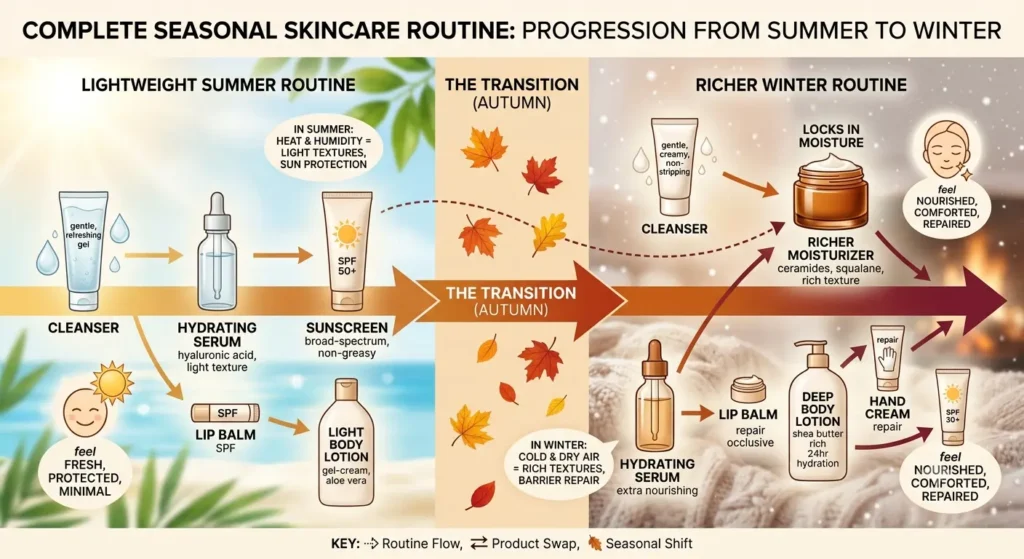
⭐ Continue Transitioning Your Skincare Routine
6️⃣ Don’t Forget Your Lips
Your lips have very little natural oil production, making them one of the first areas to become dry when temperatures drop.
Instead of waiting until your lips become chapped, begin using a nourishing lip balm every day.
Look for ingredients like:
- Shea Butter
- Beeswax
- Coconut Oil
- Vitamin E
- Lanolin
Applying lip balm before bed can provide additional overnight hydration.
7️⃣ Start Moisturizing Your Body Daily
Many people focus only on facial skincare, but the rest of the body also becomes drier during autumn and winter.
Apply a body lotion immediately after showering while your skin is still slightly damp. This helps lock in moisture and keeps your skin feeling soft throughout the day.
Choose body lotions containing:
- Ceramides
- Glycerin
- Shea Butter
- Cocoa Butter
- Oat Extract
8️⃣ Use Lukewarm Water Instead of Hot Water
Long, hot showers may feel relaxing during cooler weather, but they can remove your skin’s natural oils and contribute to dryness.
Instead:
✔ Keep showers around 5–10 minutes.
✔ Use lukewarm water whenever possible.
✔ Apply moisturizer immediately afterward.
These simple habits can make a noticeable difference in maintaining healthy skin.
9️⃣ Stay Hydrated from the Inside
Cooler temperatures often reduce feelings of thirst, but your body still needs adequate hydration.
Drinking enough water supports your overall health and helps maintain your skin’s natural moisture balance. Pair good hydration with moisturizing skincare products for the best results.
🔟 Pay Attention to Your Skin
The best skincare routine is one that adapts to your skin’s changing needs.
If your skin starts feeling:
- Tight
- Rough
- Flaky
- Itchy
- Sensitive
…it may be time to switch to richer products or reduce the use of strong exfoliants and drying cleansers.
Listening to your skin is often more important than following the same routine year-round.
🛒 Recommended Products
Build Your Autumn & Winter Skincare Routine
Transitioning your skincare routine is easier when you have the right products. The categories below can help keep your skin comfortable and hydrated as the weather changes.
🧴 Gentle Hydrating Cleanser
Switching from a strong foaming cleanser to a gentle hydrating cleanser helps cleanse your skin without stripping away its natural moisture barrier.
🛒 Button: Compare Gentle Cleansers on Amazon
💧 Hyaluronic Acid Serum
A hydrating serum helps replenish moisture and supports your skin as humidity begins to fall during autumn.
🛒 Button: Browse Hydrating Serums on Amazon
🧴 Rich Daily Moisturizer
A richer moisturizer helps strengthen your skin barrier and provides longer-lasting hydration than lightweight summer gels.
🛒 Button: Shop Rich Moisturizers on Amazon
👄 Nourishing Lip Balm
Cold air can quickly dry out your lips. Keeping a nourishing lip balm in your routine helps prevent chapping before it starts.
🛒 Button: Explore Lip Balms on Amazon
☀️ Daily Broad-Spectrum Sunscreen
Sunscreen remains essential even during autumn and winter. A moisturizing SPF can provide both hydration and daily UV protection.
🛒 Button: See Daily Sunscreens on Amazon
🛍️ How to Choose Products for Cooler Weather
Not every product needs to be replaced when summer ends. Instead, focus on gradually introducing products that provide additional hydration.
✔ Look for Skin Barrier Ingredients
Products containing ceramides, niacinamide, and glycerin help reinforce your skin’s natural protective barrier.
✔ Choose Creams Instead of Gels
Gel moisturizers are ideal for hot, humid weather, while cream-based formulas generally provide better hydration during colder months.
✔ Avoid Overly Drying Ingredients
If your skin feels tight after cleansing, consider switching to a gentler cleanser with fewer harsh surfactants.
✔ Keep Sunscreen in Your Routine
UV protection isn’t just for summer. Daily SPF remains one of the most effective ways to protect your skin from premature aging and sun damage.
⭐ Common Seasonal Skincare Myths
Many people make unnecessary changes—or fail to make important ones—when the weather changes.
❌ Myth 1: You Don’t Need Sunscreen in Autumn
UV rays remain present throughout the year, even on cloudy days.
❌ Myth 2: Drinking More Water Is Enough
Hydration is important, but your skin also needs topical moisturizers to reduce moisture loss.
❌ Myth 3: Oily Skin Doesn’t Need Moisturizer
Even oily skin can become dehydrated during cooler months. Lightweight but hydrating moisturizers are still beneficial.
❌ Myth 4: You Should Use the Same Products Year-Round
Your skin’s needs change with the seasons. Adjusting your routine helps maintain a healthy skin barrier.
✅ Seasonal Skincare Checklist
✔ Switch to a gentle cleanser.
✔ Add a hydrating serum.
✔ Upgrade to a richer moisturizer.
✔ Continue wearing SPF every day.
✔ Apply body lotion after showering.
✔ Use lip balm regularly.
✔ Drink enough water.
✔ Reduce excessive exfoliation.
✔ Keep showers short and lukewarm.
✔ Listen to your skin and adjust your routine as needed.
👨⚕️ Dermatologist Tips
Dermatologists generally recommend making gradual adjustments rather than completely replacing your skincare routine overnight. As temperatures and humidity decrease, focus on strengthening your skin barrier with hydrating ingredients such as ceramides, glycerin, hyaluronic acid, and niacinamide.
Daily sunscreen remains important throughout autumn and winter, and reducing the frequency of exfoliation may help prevent irritation. If your skin becomes persistently dry, itchy, or inflamed despite regular moisturizing, consult a dermatologist for personalized advice.

🍂 Build Your Complete Autumn & Winter Skincare Routine
Transitioning your skincare routine isn’t just about changing one moisturizer—it’s about creating a routine that keeps your skin comfortable, hydrated, and protected as temperatures drop. The product categories below work together to support healthy skin throughout autumn and winter.
🧴 Gentle Hydrating Cleanser
A gentle cleanser removes dirt, oil, and impurities without stripping away your skin’s natural moisture barrier. It’s one of the first products worth updating when moving into cooler weather.
🛒 Button: Compare Gentle Cleansers on Amazon
💧 Hydrating Hyaluronic Acid Serum
A hydrating serum helps replenish moisture after cleansing and prepares your skin for the moisturizer that follows.
🛒 Button: Browse Hydrating Serums on Amazon
🧴 Rich Moisturizer
As humidity drops, a richer moisturizer helps strengthen the skin barrier and reduce moisture loss throughout the day.
🛒 Button: Shop Rich Moisturizers on Amazon
❓ Frequently Asked Questions
When should I change my skincare routine for autumn?
You don’t need to wait until winter begins. As soon as the weather becomes cooler and your skin starts feeling tighter or drier, begin introducing more hydrating products gradually.
Should I stop using sunscreen after summer?
No. UVA rays are present year-round, so wearing a broad-spectrum sunscreen every day remains one of the best ways to protect your skin.
Can oily skin become dry during autumn?
Yes. Oily skin can still become dehydrated when humidity drops. Choosing a lightweight but hydrating moisturizer is often a better solution than skipping moisturizer altogether.
Should I exfoliate less during colder weather?
In many cases, yes. Over-exfoliating during autumn and winter can weaken the skin barrier and increase dryness. Once or twice a week is sufficient for many skin types.
What’s the biggest skincare mistake during seasonal changes?
Continuing to use the exact same routine from summer without adjusting products to meet your skin’s changing hydration needs.
🔗 Related Articles
Complete your seasonal skincare routine with these helpful guides:
- How to Build a Daily Skincare Routine (2026): Best Morning & Night Guide for Every Skin Type
- 7 Best Moisturizers for Dry Skin (2026): Top Picks for Deep Hydration
- Dry Skin vs Dehydrated Skin: What’s the Difference?
- 7 Signs Your Skin Is Dehydrated: Learn How to Fix It Naturally
- 7 Best Body Lotions for Dry Summer Skin (2026): Stay Soft & Hydrated
- 7 Best Lip Balms for Dry & Chapped Lips (2026): Top Picks for Soft, Healthy Lips
- 7 Best Foot Creams for Dry & Cracked Heels (2026): Top Picks for Soft, Healthy Feet
- How to Protect Your Hair from Sun Damage & Dust (2026): 10 Simple Tips That Actually Work
- 7 Best Sunglasses for UV Protection (2026): Top Picks for Eye Safety & Style