
10-Step Body Care Routine for 2026: How to Get Smooth, Soft & Glowing Skin

Most people have a skincare routine for their face, but the skin below the neck often receives much less attention. Your arms, legs, shoulders, chest, back, hands and feet can also become dry, rough, dull or uneven-looking, especially with frequent showers, shaving, changing weather and everyday sun exposure. The good news is that a body care routine doesn't need to be complicated or involve dozens of products. Current body-care trends are increasingly borrowing the skincare mindset used for the face, with greater attention to targeted exfoliation, hydration, body serums, oils and sun protection. The most useful approach is to build a routine around a few consistent fundamentals and then add optional treatments according to your skin's needs. In this guide, we'll walk through 10 practical body-care steps for 2026, from cleansing and exfoliating to moisturizing, protecting exposed skin from the sun and finishing with fragrance. You can use the list as a complete routine or simply choose the steps that make sense for you. Affiliate Disclosure: This article contains affiliate links. If you purchase through one of these links, ChoicesNest may earn a small commission at no additional cost to you. As an Amazon Associate, I earn from qualifying purchases. 1. Start With a Gentle Body Cleanser 🚿 A good body-care routine begins in the shower. The purpose of cleansing is to remove sweat, sunscreen, excess oil, dirt and everyday buildup without leaving your skin feeling excessively dry or tight. Choose a body cleanser that suits your skin rather…


Continue Reading10-Step Body Care Routine for 2026: How to Get Smooth, Soft & Glowing Skin

🛏️ Winter Night Skincare Routine (2026): Best Steps to Wake Up With Softer, Hydrated Skin

Amazon Associate Disclosure: As an Amazon Associate, I earn from qualifying purchases. If you purchase a product through links on this page, I may earn a small commission at no additional cost to you. Winter Night Skincare Routine: Introduction Winter can leave your skin feeling dry and uncomfortable, especially after spending the day moving between cold outdoor air and heated indoor spaces. Your nighttime routine is a good opportunity to keep things simple and focus on cleansing, hydration, moisturization, and skin-barrier support. You don't need ten different serums or an elaborate multi-step routine. For many beginners, a few consistent habits can make a much better foundation. In this guide, we'll walk through 8 simple winter nighttime skincare steps, explain which ingredients are worth looking for, compare routines for different skin types, and highlight mistakes that can make winter dryness worse. ❄️ Why Nighttime Skincare Matters More in Winter During winter, your skin may face several dryness triggers throughout the day: Cold outdoor air Wind Indoor heating Frequent hand washing Hot showers Low humidity Over-cleansing Your nighttime routine doesn't need to "repair everything overnight." Instead, think of it as an opportunity to remove daily buildup and give your skin consistent moisture and protection. 🛏️ 8 Steps for a Simple Winter Night Skincare Routine 1️⃣ Remove Makeup, Sunscreen & Daily Buildup Before applying nighttime skincare, start with clean skin. If you've worn makeup or water-resistant sunscreen, use a suitable removal method according to the product and your skin's needs. Then cleanse…

Continue Reading🛏️ Winter Night Skincare Routine (2026): Best Steps to Wake Up With Softer, Hydrated Skin

❄️ Winter Skincare Routine for Beginners (2026): 10 Simple Steps for Healthy, Hydrated Skin

Amazon Associate Disclosure: As an Amazon Associate, I earn from qualifying purchases. If you purchase a product through links on this page, I may earn a small commission at no additional cost to you. Winter Skincare Routine for Beginners: Introduction Winter can be beautiful, but colder temperatures can be challenging for your skin. As the weather becomes colder, outdoor air often becomes drier, while indoor heating can further reduce humidity. Wind, hot showers, frequent cleansing, and changes in your skincare routine can also contribute to dryness and discomfort. You may notice your skin feeling: Tight after cleansing Rough or flaky More sensitive than usual Drier around the cheeks Uncomfortable after spending time outdoors More prone to chapped lips The good news is that you don't need a complicated 12-step routine to care for your skin during winter. A simple routine built around gentle cleansing, hydration, moisturization, barrier support, and daily sun protection can be enough for many people. In this guide, we'll walk through a 10-step winter skincare routine for beginners, explain what each step does, discuss ingredients worth looking for, and show you how to adjust your routine based on your skin type. ❄️ Why Does Your Skin Need More Care in Winter? Your skin has a natural protective barrier that helps keep moisture inside and protects against environmental stressors. Cold, dry conditions can make maintaining that barrier more difficult. Transition from summer to winter skincare 🌬️ Cold Outdoor Air Cold air generally contains less moisture than warm…

Continue Reading❄️ Winter Skincare Routine for Beginners (2026): 10 Simple Steps for Healthy, Hydrated Skin

How to Transition Your Skincare Routine from Summer to Winter (2026): 10 Expert Tips for Healthy Skin

Disclosure: As an Amazon Associate, I earn from qualifying purchases. If you purchase through links on this page, I may earn a small commission at no additional cost to you. Transition Your Skincare Routine from Summer to Winter: Introduction As the seasons change, your skincare routine should change too. The lightweight products that kept your skin comfortable during hot summer months may no longer provide enough hydration when cooler temperatures and lower humidity arrive. Many people notice their skin becoming tighter, drier, or more sensitive during autumn without realizing that their skincare routine is still designed for summer weather. A few simple adjustments can help protect your skin barrier, maintain hydration, and keep your complexion healthy throughout the colder months. In this guide, you'll learn 10 dermatologist-inspired tips to transition your skincare routine from summer to winter. We'll also recommend essential skincare products, explain which ingredients to look for, and help you build a routine that keeps your skin soft, hydrated, and glowing all season long. 🍁 Why Your Skin Changes Between Seasons If you've ever noticed that your skin suddenly feels dry when autumn arrives, you're not imagining it. Seasonal changes affect your skin in several ways. 🌬️ Lower Humidity Cooler air contains less moisture than warm summer air. This causes water to evaporate from your skin more quickly, making it feel dry and tight. ❄️ Cooler Temperatures Cold weather slows your skin's natural oil production. Without enough natural oils, your skin barrier becomes less effective at retaining…

Continue ReadingHow to Transition Your Skincare Routine from Summer to Winter (2026): 10 Expert Tips for Healthy Skin

7 Best Moisturizers for Dry Skin (2026): Top Picks for Deep Hydration

Disclosure: As an Amazon Associate, I earn from qualifying purchases. If you purchase through links on this page, I may earn a small commission at no additional cost to you. Best Moisturizers for Dry Skin: Introduction If your skin constantly feels tight, flaky, or rough, choosing the right moisturizer can make a noticeable difference. A good moisturizer doesn't simply make your skin feel softer—it also helps strengthen your skin's natural barrier, reduces moisture loss, and protects against everyday environmental stress. With hundreds of moisturizers available, finding the right one can feel overwhelming. Some formulas are designed for extremely dry skin, while others work better for sensitive, mature, or combination skin. Understanding the ingredients and texture that best match your skin type can help you make a more informed decision. In this guide, we've selected seven highly rated moisturizers known for their hydrating ingredients, skin barrier support, and everyday usability. Whether you're looking for an affordable option or a premium formula, these recommendations can help you build a healthier skincare routine. Best Moisturizers for Dry Skin: Why Moisturizers Matter for Dry Skin Dry skin naturally produces less oil than other skin types, making it more vulnerable to moisture loss. Without adequate hydration and barrier support, dry skin may become rough, itchy, flaky, or uncomfortable. A quality moisturizer helps by: Supporting the skin's natural protective barrier. Reducing moisture loss throughout the day. Softening rough or flaky areas. Improving overall skin comfort. Helping skin appear smoother and healthier. Many dermatologists recommend looking…

Continue Reading7 Best Moisturizers for Dry Skin (2026): Top Picks for Deep Hydration

Dry Skin vs Dehydrated Skin: what’s the Difference?

Disclosure: As an Amazon Associate, I earn from qualifying purchases. If you purchase through links on this page, I may earn a small commission at no additional cost to you. Dry Skin vs Dehydrated Skin: Introduction Many people use the terms dry skin and dehydrated skin interchangeably, but they are not the same. Although both conditions can make your skin feel uncomfortable and look dull, they have different causes and require different skincare approaches. Dry skin is a skin type, meaning it naturally produces less oil. Dehydrated skin, on the other hand, is a temporary skin condition caused by a lack of water in the skin. This means even someone with oily skin can experience dehydration. Understanding the difference is important because using the wrong products may not solve the problem. In this guide, we'll compare dry skin and dehydrated skin, explain how to identify each condition, and share simple tips to restore healthier-looking skin. What Is Dry Skin? Dry skin is a skin type that produces less sebum (natural oil) than normal skin. These natural oils help protect the skin barrier, reduce moisture loss, and keep the skin feeling soft and comfortable. People with dry skin often experience: Rough texture Flaking or peeling Tightness throughout the day Itching Increased sensitivity during cold or dry weather Because dry skin lacks oil, it usually benefits from richer creams and moisturizers that help reinforce the skin barrier. Dry skin is often influenced by genetics, although environmental conditions and age can make…

Continue ReadingDry Skin vs Dehydrated Skin: what’s the Difference?

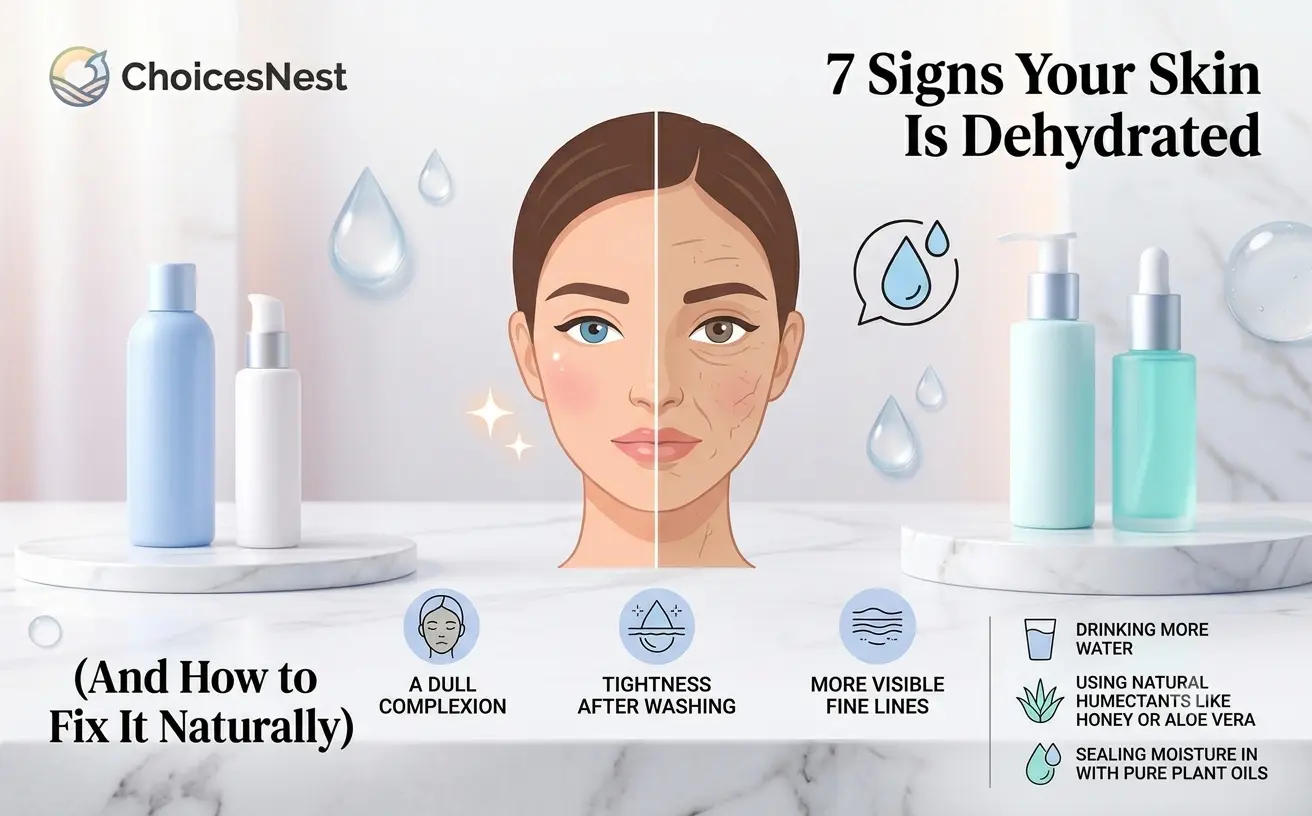
7 Signs Your Skin Is Dehydrated: Learn How to Fix It Naturally

Disclosure: As an Amazon Associate, I earn from qualifying purchases. If you purchase through links on this page, I may earn a small commission at no additional cost to you. 7 Signs Your Skin Is Dehydrated: Introduction Many people assume their skin is dry when it actually suffers from dehydration. Although the two conditions may look similar, they are not the same. Dry skin is a skin type that naturally produces less oil, while dehydrated skin is a temporary condition caused by a lack of water in the skin. Dehydrated skin can affect anyone—including people with oily or combination skin. Common causes include excessive sun exposure, hot weather, harsh skincare products, air conditioning, and not drinking enough water. When your skin lacks adequate hydration, it may appear dull, feel tight, and become more sensitive than usual. Fortunately, dehydrated skin can often be improved with the right daily habits and a consistent skincare routine. In this guide, we'll explore seven common signs that your skin may be dehydrated and share practical tips to help restore moisture naturally. Why Skin Becomes Dehydrated Your skin loses water every day through a natural process called transepidermal water loss (TEWL). During summer, this moisture loss often increases due to higher temperatures, prolonged sun exposure, sweating, and frequent washing. Several everyday habits can also contribute to dehydrated skin, including: Spending long hours in the sun without adequate protection. Using harsh cleansers that strip away the skin's protective barrier. Forgetting to apply moisturizer after cleansing. Drinking…

Continue Reading7 Signs Your Skin Is Dehydrated: Learn How to Fix It Naturally