
Amazon Associate Disclosure: As an Amazon Associate, I earn from qualifying purchases. If you purchase a product through links on this page, I may earn a small commission at no additional cost to you.
How to Prevent Chapped Lips in Winter: Introduction
Winter can be tough on your lips. Cold outdoor air, dry indoor heating, wind, frequent lip licking, and low humidity can leave your lips feeling dry, tight, flaky, or cracked. Unlike much of the skin on your face, your lips have a relatively thin protective barrier and don’t contain the same oil glands that help keep other areas of skin moisturized. That’s why a lip-care routine can become especially important during colder months.
The good news? You don’t need an elaborate routine. A few simple habits can help keep your lips more comfortable throughout winter.
In this guide, we’ll cover 10 practical ways to prevent chapped lips, which lip balm ingredients to look for, common mistakes, and when persistent problems may need professional attention.
❄️ Why Do Lips Get Chapped in Winter?
Several winter conditions can contribute to dry lips.
| Cause | How It Can Affect Lips | Simple Solution |
|---|---|---|
| Cold air | Increases dryness | Protect lips outdoors |
| Wind | Can increase moisture loss | Cover your lips |
| Indoor heating | Creates drier air | Consider a humidifier |
| Lip licking | Temporary moisture evaporates quickly | Use lip balm instead |
| Dehydration | May contribute to dryness | Drink fluids regularly |
| Irritating products | Can cause discomfort | Choose gentle formulas |
| Sun exposure | UV can affect exposed lips | Use lip SPF |
The key is to reduce exposure to drying conditions while providing consistent protection.
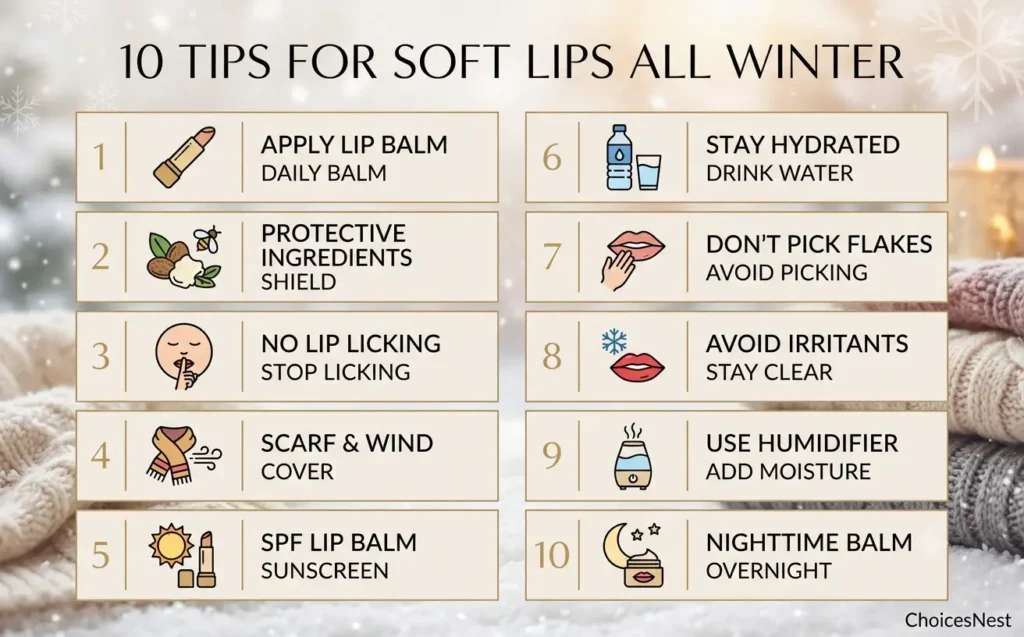
👄 10 Simple Tips to Prevent Chapped Lips
1️⃣ Use Lip Balm Regularly
Don’t wait until your lips become painfully dry.
Keep a lip balm somewhere convenient and reapply when your lips feel dry.
You can keep one:
- In your bag
- Beside your bed
- At your desk
- In your bathroom
- In your winter coat
Consistency matters more than having an expensive product.
🛒 Amazon CTA:
Browse Moisturizing Lip Balms on Amazon
2️⃣ Look for Protective Ingredients
Not all lip balms are formulated the same way.
For winter, ingredients that help moisturize or reduce moisture loss can be useful.
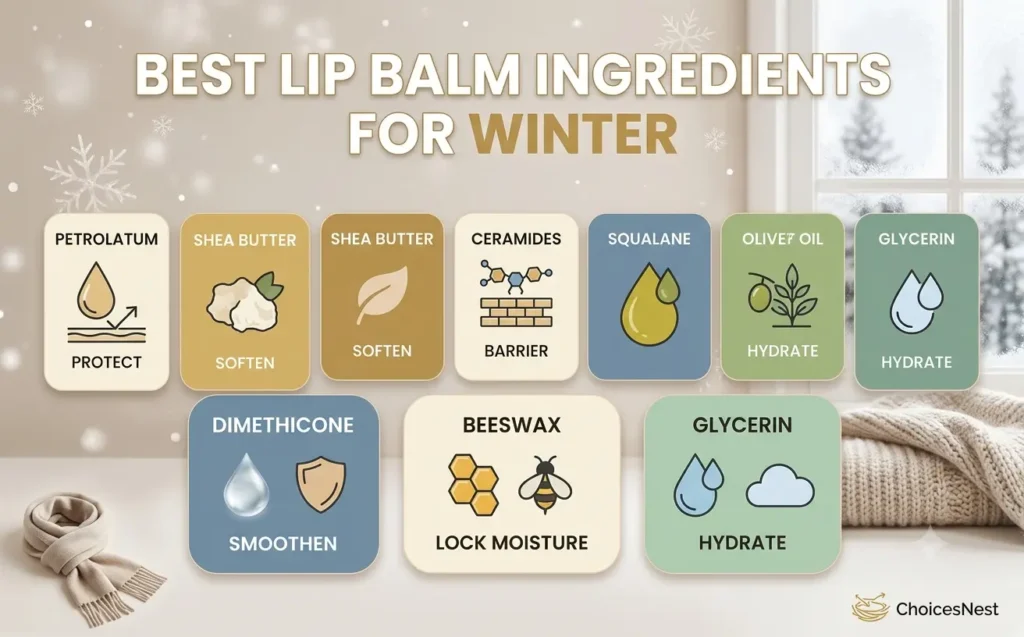
📊 Lip Balm Ingredient Guide
| Ingredient | General Role | Useful For |
|---|---|---|
| Petrolatum | Occlusive | Reducing moisture loss |
| Shea butter | Emollient | Softening dry lips |
| Ceramides | Barrier support | Dry/sensitive lips |
| Squalane | Emollient | Softening |
| Dimethicone | Protective | Creating a barrier |
| Beeswax | Occlusive/protective | Sealing in moisture |
| Glycerin | Humectant | Hydration |
You don’t need every ingredient in one product.
3️⃣ Don’t Lick Your Lips
This is one of the easiest habits to overlook.
Licking your lips may temporarily make them feel moist, but that sensation doesn’t last.
As the moisture evaporates, your lips may feel dry again.
Instead:
Dry lips → apply lip balm
rather than:
Dry lips → lick them
4️⃣ Protect Your Lips From Cold Wind
Wind can make already-dry lips feel even more uncomfortable.
When you’re outside for extended periods, use:
- Lip balm
- A scarf
- Weather-appropriate clothing
Pulling a soft scarf around your lower face can reduce direct exposure to cold wind.
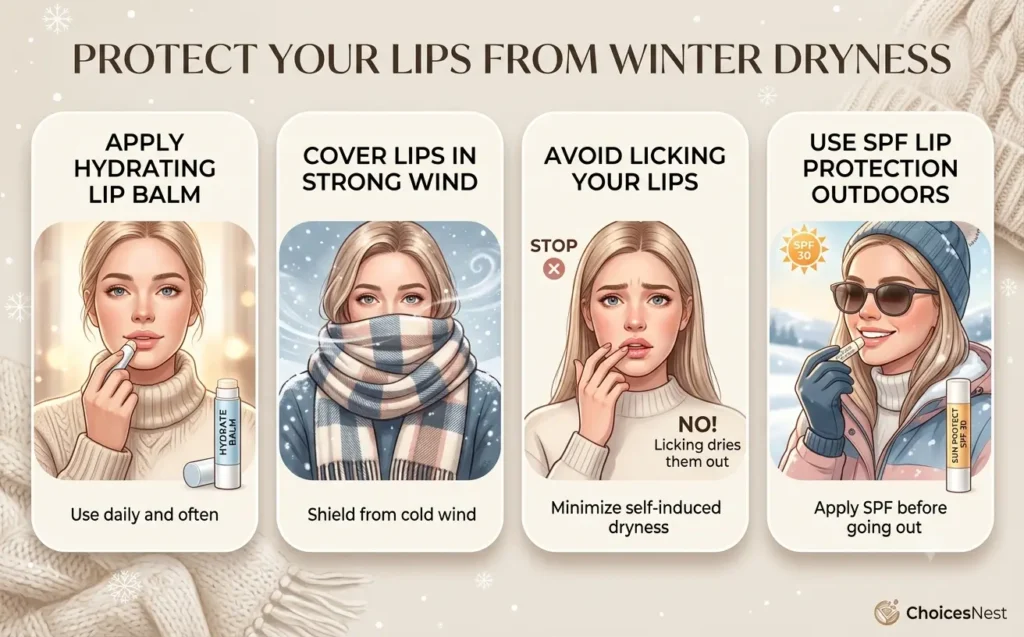
5️⃣ Use SPF Lip Protection Outdoors
Winter doesn’t eliminate UV exposure.
If you’re spending time outdoors, particularly around reflective surfaces such as snow, sun protection for exposed lips can be useful.
Consider a lip balm with broad-spectrum SPF when appropriate.
This is especially relevant for:
- Skiing
- Hiking
- Winter sports
- Long outdoor walks
- High-altitude travel
🛒 Amazon CTA:
Compare SPF Lip Balms on Amazon
6️⃣ Stay Hydrated
Drinking enough fluids is important for overall health.
However, don’t rely on drinking water alone to solve severely dry lips.
Think of hydration as one part of your overall winter lip-care routine, alongside external protection and moisturizing.
7️⃣ Avoid Picking Flaky Skin
When lips start peeling, it’s tempting to pull off the flakes.
Try not to.
Picking can irritate the delicate skin and may cause small cracks or bleeding.
Instead, keep applying a suitable moisturizing lip product and allow the skin to recover.
8️⃣ Be Careful With Irritating Lip Products
If a product consistently causes burning, stinging, or irritation, stop using it and reassess the formula.
Some people may find certain ingredients or strongly flavored/fragranced products irritating when their lips are already compromised.
When your lips are very dry, simple formulas may be preferable.
9️⃣ Use a Humidifier if Indoor Air Is Very Dry
Indoor heating can reduce indoor humidity.
If your home becomes particularly dry during winter, a properly maintained humidifier may make the environment more comfortable.
As with any humidifier, regular cleaning and maintenance are important.
This also connects naturally with our previous article:
How Indoor Heating Affects Your Skin
🔟 Make Lip Care Part of Your Night Routine
Before going to bed, apply a moisturizing lip product. This is easy to remember because it can become part of your existing routine:
Cleanse → Moisturize → Lip balm → Sleep
You don’t need a complicated overnight lip-care system. Consistency is the priority.
📊 Quick Winter Lip-Care Routine
| Time | What to Do |
|---|---|
| Morning | Apply lip balm |
| Before going outside | Use protective/SPF lip balm |
| During the day | Reapply as needed |
| After eating/drinking | Reapply if needed |
| Before bed | Apply moisturizing lip balm |
| Very dry indoor environment | Consider a properly maintained humidifier |
🍂 Common Winter Lip-Care Myths
❌ Myth 1: You should exfoliate chapped lips aggressively.
No. Scrubbing already-damaged lips can cause additional irritation.
❌ Myth 2: Lip licking moisturizes your lips.
Only temporarily. Repeated licking can actually contribute to persistent dryness.
❌ Myth 3: You don’t need lip SPF in winter.
UV exposure doesn’t disappear when temperatures fall.
❌ Myth 4: More expensive lip balm is always better.
Price doesn’t guarantee effectiveness.
Look at the ingredients and choose a formula your lips tolerate well.
📋 Quick Winter Lip-Care Checklist
| ✔ | Habit |
|---|---|
| ☐ | Apply lip balm regularly |
| ☐ | Reapply after eating/drinking when needed |
| ☐ | Avoid licking your lips |
| ☐ | Don’t pick peeling skin |
| ☐ | Protect lips from cold wind |
| ☐ | Consider SPF lip protection outdoors |
| ☐ | Stay adequately hydrated |
| ☐ | Avoid products that irritate your lips |
| ☐ | Consider indoor humidity |
| ☐ | Apply lip balm before bed |
👨⚕️ Dermatologist-Inspired Tips
For winter lip care, simplicity is usually your friend.
- Choose a moisturizing, protective lip product.
- Reapply when needed rather than waiting for severe dryness.
- Avoid repeatedly licking or picking your lips.
- Protect exposed lips from cold wind.
- Consider SPF when spending time outdoors.
- Stop using products that consistently cause burning or irritation.
- Avoid aggressively exfoliating chapped lips.
If your lips remain severely cracked, painful, bleeding, swollen, or persistently irritated despite basic care, consider consulting a dermatologist or qualified healthcare professional.
❓ Frequently Asked Questions
How often should I apply lip balm in winter?
Apply it whenever your lips feel dry and reapply after eating or drinking when needed.
What is the best ingredient for severely dry lips?
Protective ingredients such as petrolatum can help reduce moisture loss. Other moisturizing ingredients may also be useful depending on the formula and your individual tolerance.
Why do my lips keep getting chapped even when I use lip balm?
Cold weather, wind, indoor dryness, lip licking, irritating products, and other factors can contribute. If the problem persists despite basic care, consider professional advice.
Should I exfoliate chapped lips?
Aggressive exfoliation isn’t recommended for already-irritated lips. Focus on moisturizing and protecting them instead.
Is SPF lip balm necessary in winter?
Sun protection can still be relevant during winter, particularly when you’re spending significant time outdoors or around reflective snow.
Disclaimer: This article provides general skincare information for educational purposes and isn’t a substitute for professional medical advice, diagnosis, or treatment. If your lips are persistently painful, severely cracked, bleeding, swollen, or irritated, consult a qualified healthcare professional or dermatologist.
🌟 Final Takeaway
Winter chapped lips don’t require a complicated solution. The most useful habits are simple:
Moisturize regularly → protect from wind → avoid licking → don’t pick flakes → consider SPF outdoors → keep your nighttime lip-care routine consistent.
Choose a lip balm your lips tolerate well, keep it within reach, and use it regularly rather than waiting until your lips become painfully dry. And if basic lip care isn’t improving persistent or severe symptoms, it’s better to get professional advice than continuously try new products.