Affiliate Disclosure: As an Amazon Associate, DailyDealsPro earns from qualifying purchases. If you buy through links on this page, we may earn a small commission at no extra cost to you. We only recommend products we believe offer value to our readers.
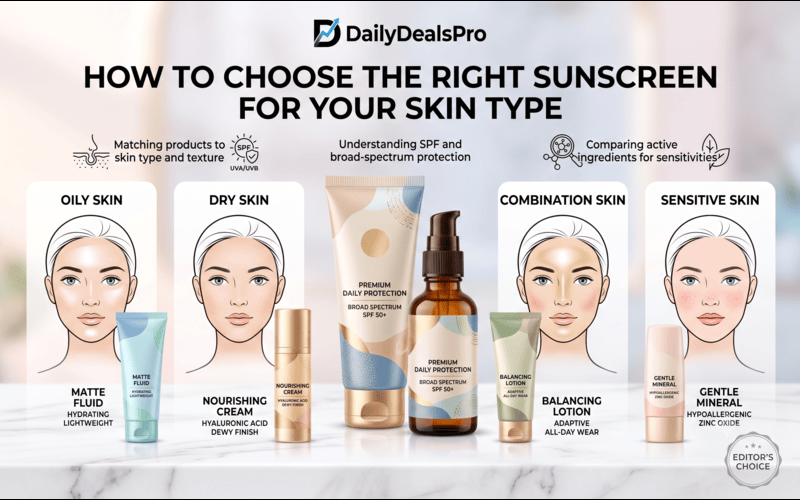
Best Sunscreen for Your Skin Type: Walking into a store or browsing online for sunscreen can quickly become overwhelming. You’ll find lotions, gels, sprays, mineral formulas, chemical sunscreens, SPF 30, SPF 50, and products claiming to work for every skin type. The truth is that the best sunscreen depends on your skin type, daily routine, and level of sun exposure.
Choosing the wrong sunscreen may leave your skin feeling greasy, dry, irritated, or even lead to clogged pores. Choosing the right one, however, helps protect your skin from sunburn, premature aging, and long-term UV damage while feeling comfortable enough to wear every day.
In this guide, we’ll explain how to identify your skin type, understand sunscreen formulas, and choose the best option for your daily skincare routine.
Why Wearing Sunscreen Every Day Matters
Sunscreen is more than just beach-day protection. Daily use helps protect your skin from harmful UVA and UVB rays that are present even on cloudy days.
Regular sunscreen use can help:
- Reduce the risk of sunburn.
- Protect against premature wrinkles and fine lines.
- Prevent dark spots and uneven skin tone.
- Lower long-term UV damage.
- Support overall skin health.
The key is finding a sunscreen you’ll actually enjoy wearing every day.
Best Sunscreen for Your Skin Type: Know Your Skin Type
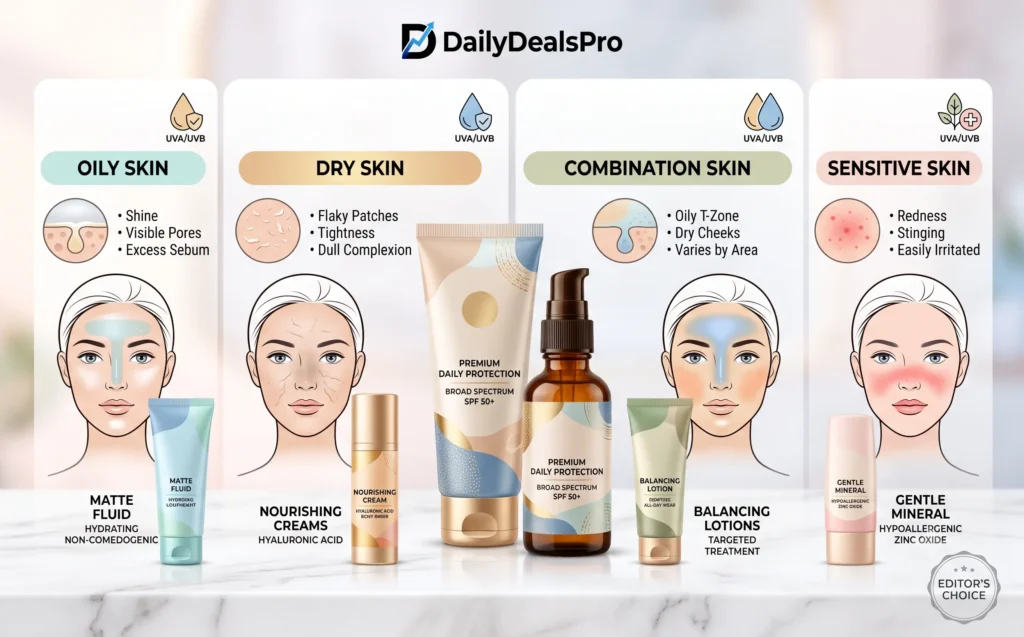
Before buying sunscreen, it’s important to understand your skin type.
Oily Skin
Characteristics:
- Shiny appearance
- Enlarged pores
- Frequent breakouts
- Makeup may slide off during the day
Best sunscreen:
- Oil-free formulas
- Gel-based sunscreen
- Matte finish
- Non-comedogenic products
Dry Skin
Characteristics:
- Tight feeling after cleansing
- Flaky patches
- Rough texture
Best sunscreen:
- Cream formulas
- Hydrating ingredients
- Ceramides
- Hyaluronic acid
Combination Skin
Characteristics:
- Oily T-zone
- Dry cheeks
Best sunscreen:
- Lightweight lotion
- Balanced hydration
- Broad-spectrum daily sunscreen
Sensitive Skin
Characteristics:
- Easily irritated
- Redness
- Burning or stinging with some products
Best sunscreen:
- Fragrance-free
- Mineral sunscreen
- Zinc oxide or titanium dioxide
- Dermatologist-tested formulas
Best Sunscreen for Your Skin Type: Mineral vs. Chemical Sunscreen
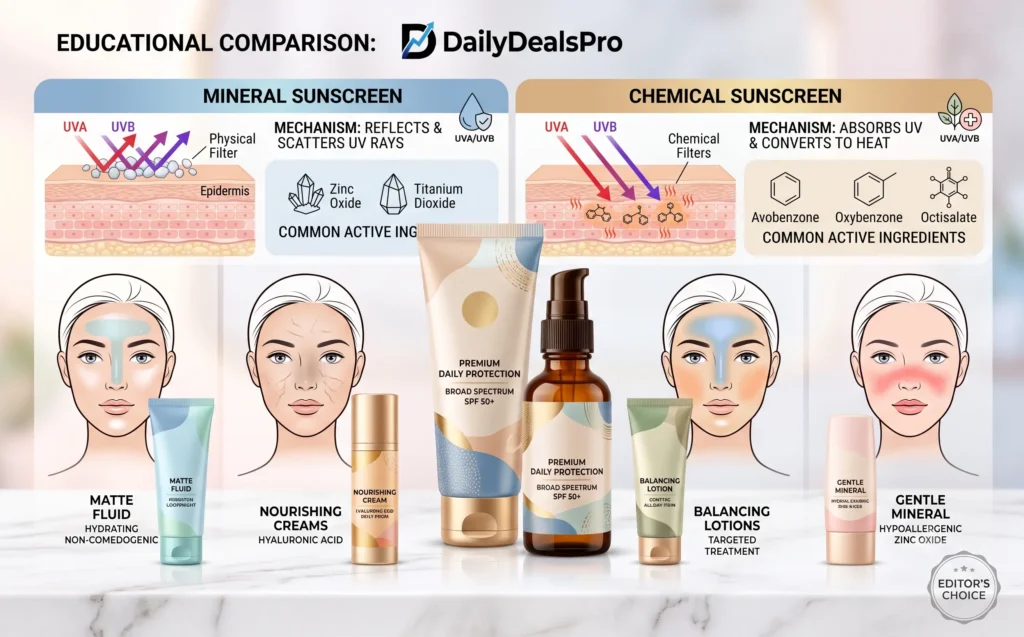
Understanding sunscreen ingredients helps you choose the right product.
Mineral Sunscreen
Mineral sunscreens use ingredients like:
- Zinc Oxide
- Titanium Dioxide
These ingredients sit on the skin’s surface and reflect UV rays.
Pros
- Excellent for sensitive skin
- Starts working immediately
- Less likely to cause irritation
Cons
- Can leave a slight white cast on some skin tones.
- May feel thicker than chemical formulas.
Chemical Sunscreen
Chemical sunscreens absorb UV rays before they can damage your skin.
Pros
- Lightweight
- Easy to blend
- Invisible finish
- Great under makeup
Cons
- Some people with sensitive skin may experience irritation.
- Needs about 15–20 minutes to become fully effective.
Best Sunscreen for Your Skin Type: What SPF Should You Choose?
For most people:
- SPF 30 is excellent for everyday use.
- SPF 50 is recommended for prolonged outdoor activities or people who burn easily.
The difference in protection is smaller than many people think, so proper application and reapplication are more important than simply choosing the highest SPF.
Our Sunscreen Recommendations by Skin Type
Oily Skin
Look for lightweight, oil-free, non-comedogenic formulas that provide a matte finish.
👉 Check Recommended Sunscreens for Oily Skin on Amazon
Dry Skin
Choose moisturizing sunscreens with ingredients like ceramides and hyaluronic acid.
👉 Check Hydrating Sunscreens on Amazon
Sensitive Skin
Mineral sunscreens with zinc oxide or titanium dioxide are usually the safest choice.
👉 Check Mineral Sunscreens on Amazon
Combination Skin
A lightweight broad-spectrum sunscreen balances hydration without feeling greasy.
👉 Check Daily Broad-Spectrum Sunscreens on Amazon
Internal Reading Recommendations
🌞 Still Deciding Between SPF 30 and SPF 50?
If you’re unsure which SPF level is right for your lifestyle, our detailed comparison explains the differences in protection, common myths, and when each option makes the most sense.
👉 Read our complete guide: SPF 30 vs SPF 50: Which Sunscreen Is Better?
⭐ Looking for Our Top Sunscreen Picks?
We’ve compared some of the best dermatologist-recommended sunscreens available today to help you choose the right product.
Inside the guide you’ll find recommendations for:
- Oily skin
- Dry skin
- Sensitive skin
- Outdoor activities
- Daily use
👉 Read: 10 Best Sunscreens for Summer 2026
🧴 Start Your Routine with the Right Cleanser
Best Sunscreen for Your Skin Type: Healthy skin starts with proper cleansing. Before applying sunscreen, use a gentle facial cleanser to remove dirt, oil, and impurities.
Our detailed review explains why the CeraVe Foaming Facial Cleanser is one of the best daily cleansers for oily and combination skin.
👉 Read our complete CeraVe Foaming Facial Cleanser Review
Best Sunscreen for Your Skin Type: Final Verdict
The best sunscreen isn’t simply the one with the highest SPF—it’s the one that matches your skin type, feels comfortable to wear, and encourages consistent daily use.
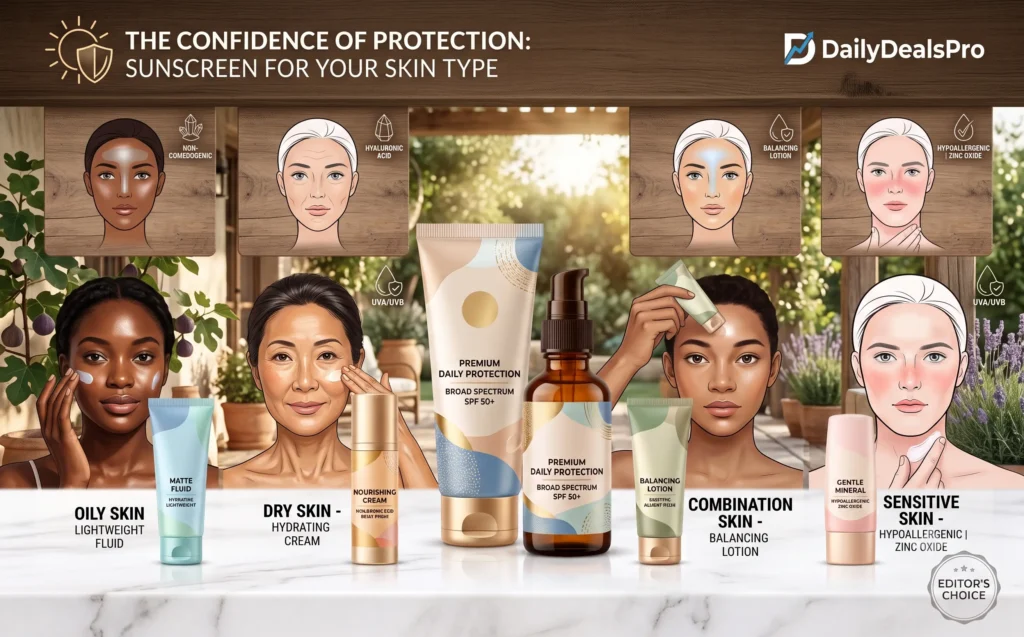
If you have oily skin, look for lightweight, non-comedogenic formulas. If your skin is dry, choose hydrating ingredients like ceramides and hyaluronic acid. Those with sensitive skin often benefit from fragrance-free mineral sunscreens.
No matter which product you choose, remember that sunscreen is most effective when applied generously and reapplied throughout the day during prolonged sun exposure.
Choosing the right sunscreen today is one of the simplest steps you can take to protect your skin for years to come.
Frequently Asked Questions
Which sunscreen is best for oily skin?
Look for lightweight, oil-free, non-comedogenic formulas with a matte finish.
Is mineral sunscreen better for sensitive skin?
Yes. Mineral sunscreens containing zinc oxide or titanium dioxide are often recommended because they’re less likely to cause irritation.
Should dry skin use SPF 30 or SPF 50?
Both can work well. The most important factor is choosing a hydrating formula that suits your skin type.
Can I use sunscreen under makeup?
Yes. Many lightweight sunscreens are specifically designed to work well under makeup.
How often should sunscreen be reapplied?
Every two hours during sun exposure, or immediately after swimming or heavy sweating.
⭐ Find the Right Sunscreen for Your Skin
After identifying your skin type, compare trusted sunscreen options with verified customer reviews, ingredient lists, and current prices before purchasing.
Recommended categories to explore:
- Lightweight sunscreens for oily skin
- Hydrating sunscreens for dry skin
- Mineral sunscreens for sensitive skin
- Broad-spectrum daily sunscreens