Expert reviews and buying guides for skincare, beauty, and personal care products.

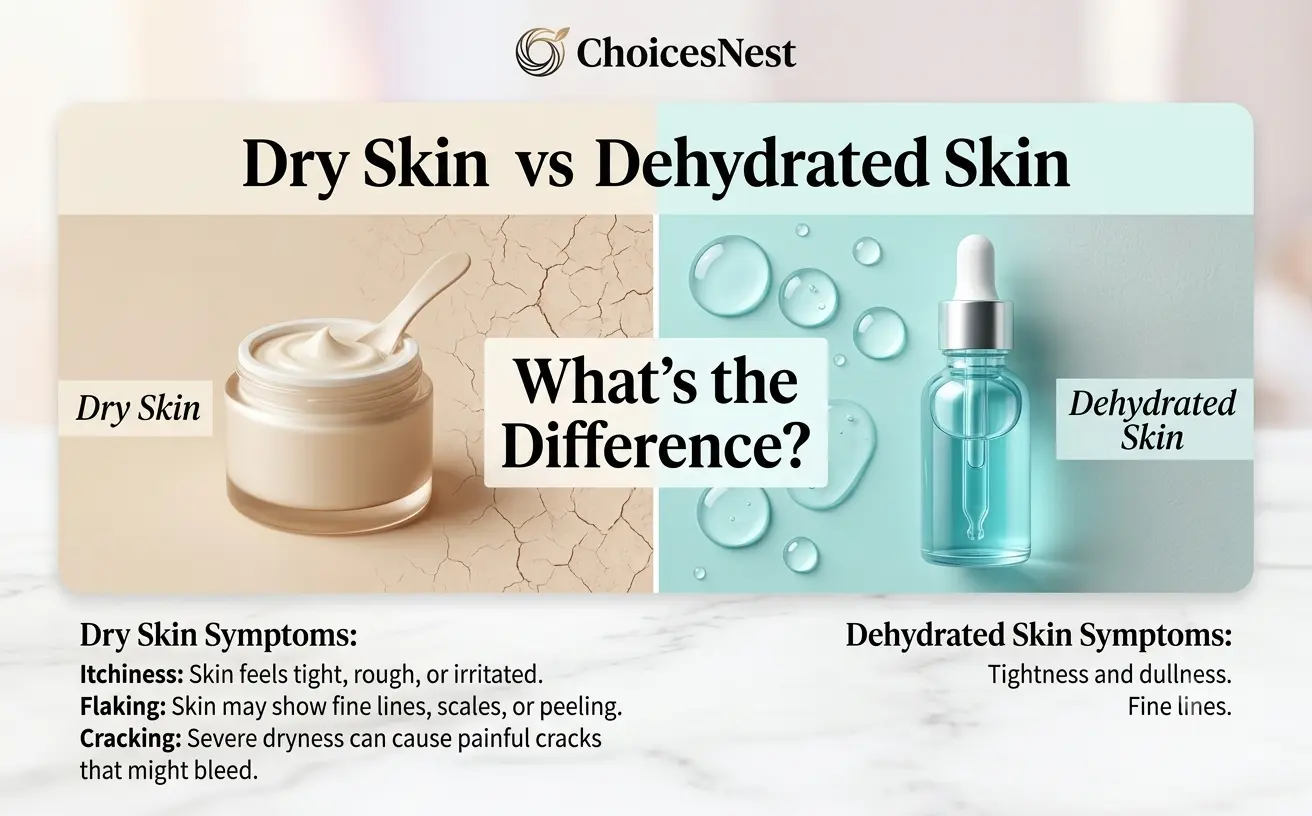
Dry Skin vs Dehydrated Skin: what’s the Difference?

Disclosure: As an Amazon Associate, I earn from qualifying purchases. If you purchase through links on this page, I may earn a small commission at no additional cost to you. Dry Skin vs Dehydrated Skin: Introduction Many people use the terms dry skin and dehydrated skin interchangeably, but they are not the same. Although both conditions can make your skin feel uncomfortable and look dull, they have different causes and require different skincare approaches. Dry skin is a skin type, meaning it naturally produces less oil. Dehydrated skin, on the other hand, is a temporary skin condition caused by a lack of water in the skin. This means even someone with oily skin can experience dehydration. Understanding the difference is important because using the wrong products may not solve the problem. In this guide, we'll compare dry skin and dehydrated skin, explain how to identify each condition, and share simple tips to restore healthier-looking skin. What Is Dry Skin? Dry skin is a skin type that produces less sebum (natural oil) than normal skin. These natural oils help protect the skin barrier, reduce moisture loss, and keep the skin feeling soft and comfortable. People with dry skin often experience: Rough texture Flaking or peeling Tightness throughout the day Itching Increased sensitivity during cold or dry weather Because dry skin lacks oil, it usually benefits from richer creams and moisturizers that help reinforce the skin barrier. Dry skin is often influenced by genetics, although environmental conditions and age can make…

Continue ReadingDry Skin vs Dehydrated Skin: what’s the Difference?

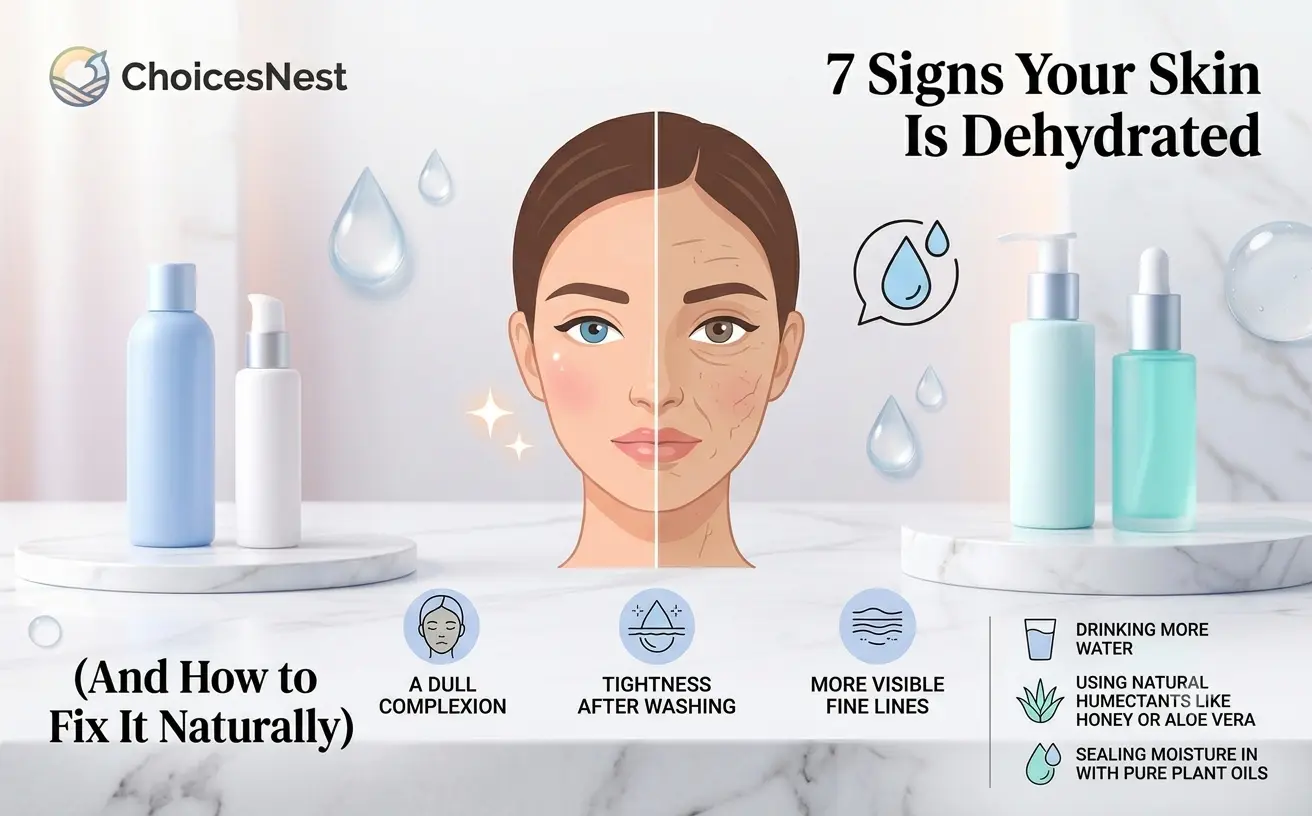
7 Signs Your Skin Is Dehydrated: Learn How to Fix It Naturally

Disclosure: As an Amazon Associate, I earn from qualifying purchases. If you purchase through links on this page, I may earn a small commission at no additional cost to you. 7 Signs Your Skin Is Dehydrated: Introduction Many people assume their skin is dry when it actually suffers from dehydration. Although the two conditions may look similar, they are not the same. Dry skin is a skin type that naturally produces less oil, while dehydrated skin is a temporary condition caused by a lack of water in the skin. Dehydrated skin can affect anyone—including people with oily or combination skin. Common causes include excessive sun exposure, hot weather, harsh skincare products, air conditioning, and not drinking enough water. When your skin lacks adequate hydration, it may appear dull, feel tight, and become more sensitive than usual. Fortunately, dehydrated skin can often be improved with the right daily habits and a consistent skincare routine. In this guide, we'll explore seven common signs that your skin may be dehydrated and share practical tips to help restore moisture naturally. Why Skin Becomes Dehydrated Your skin loses water every day through a natural process called transepidermal water loss (TEWL). During summer, this moisture loss often increases due to higher temperatures, prolonged sun exposure, sweating, and frequent washing. Several everyday habits can also contribute to dehydrated skin, including: Spending long hours in the sun without adequate protection. Using harsh cleansers that strip away the skin's protective barrier. Forgetting to apply moisturizer after cleansing. Drinking…

Continue Reading7 Signs Your Skin Is Dehydrated: Learn How to Fix It Naturally

7 Summer Skincare Mistakes That Are Damaging Your Skin (And How to Avoid Them)

Disclosure: As an Amazon Associate, I earn from qualifying purchases. If you purchase through links on this page, I may earn a small commission at no additional cost to you. Summer Skincare Mistakes: Summer is one of the toughest seasons for your skin. Higher temperatures, stronger UV rays, increased sweating, and outdoor activities can all contribute to dehydration, premature aging, clogged pores, and sun damage. The good news is that many of these problems are preventable. By avoiding a few common skincare mistakes and following a simple daily routine, you can keep your skin healthy, hydrated, and glowing throughout the season. In this guide, we'll cover seven common summer skincare mistakes and explain how to avoid them. Summer Skincare Mistakes: Why Summer Skincare Matters During summer, your skin is exposed to more environmental stress than usual. Sun exposure, heat, humidity, and pollution can weaken the skin barrier, increase oil production, and accelerate moisture loss. A proper skincare routine helps: Protect against UV damage Prevent dehydration Reduce breakouts Maintain healthy skin barrier Keep skin looking fresh and glowing 7 Summer Skincare Mistakes ☀️ 1. Skipping Sunscreen Even a few minutes of daily sun exposure can contribute to premature aging and increase the risk of sun damage. Apply a broad-spectrum sunscreen with SPF 30 or higher every morning and reapply it during extended outdoor activities. 💧 2. Not Drinking Enough Water Your skin reflects your body's hydration levels. Drinking enough water throughout the day supports healthy-looking skin and complements a good…

Continue Reading7 Summer Skincare Mistakes That Are Damaging Your Skin (And How to Avoid Them)

The Ultimate Daily Skincare Routine (2026): Best Morning & Night Guide for Healthy Skin

Disclosure: As an Amazon Associate, I earn from qualifying purchases. If you purchase through links on this page, I may earn a small commission at no additional cost to you. Daily Skincare Routine: A consistent skincare routine doesn't need to be complicated. Using the right products in the correct order can help keep your skin clean, hydrated, and protected while addressing concerns like dryness, excess oil, sensitivity, or dullness. Whether you're just starting your skincare journey or looking to improve your current routine, this guide explains the essential morning and evening steps, how to choose products for your skin type, and common mistakes to avoid. Daily Skincare Routine: Why a Daily Skincare Routine Matters A good skincare routine helps: Remove dirt, oil, and impurities Maintain the skin's natural moisture barrier Protect against environmental damage Improve hydration Support healthier-looking skin over time Consistency is often more important than using a large number of products. Morning Skincare Routine Step 1 – Gentle Cleanser Wash away overnight oil and impurities with a cleanser suited to your skin type. Step 2 – Hydrating Serum Apply a hyaluronic acid serum to help attract and retain moisture. Step 3 – Moisturizer Lock in hydration and support the skin barrier with a moisturizer. Step 4 – Sunscreen Finish with a broad-spectrum sunscreen (SPF 30 or higher) every morning, even on cloudy days. Daily Skincare Routine: Night Skincare Routine Step 1 – Cleanser Remove makeup, sunscreen, and daily buildup. Step 2 – Treatment Serum Use products such…

Continue ReadingThe Ultimate Daily Skincare Routine (2026): Best Morning & Night Guide for Healthy Skin

7 Best Hyaluronic Acid Serums (2026): Top Picks for Hydrated & Glowing Skin

Disclosure: As an Amazon Associate, I earn from qualifying purchases. If you purchase through links on this page, I may earn a small commission at no additional cost to you. Best Hyaluronic Acid Serums (2026): Hyaluronic acid is one of the most popular skincare ingredients for a reason. It helps attract and retain moisture, leaving the skin looking smoother, plumper, and healthier. Whether you have dry, oily, combination, or sensitive skin, the right hyaluronic acid serum can become an essential part of your daily skincare routine. In this guide, we've selected seven highly rated hyaluronic acid serums based on hydration performance, ingredient quality, skin compatibility, texture, and overall value to help you choose the best option for your needs. Best Hyaluronic Acid Serums (2026): How We Selected These Serums We compared each serum using these important factors: Hydration performance Ingredient quality Skin compatibility Lightweight texture Absorption speed Fragrance-free options Overall value Quick Comparison Table SerumBest ForKey IngredientSkin TypeProduct 1OverallHyaluronic AcidAll Skin TypesProduct 2Dry SkinHA + CeramidesDryProduct 3Oily SkinHA + NiacinamideOilyProduct 4Sensitive SkinHA + Aloe VeraSensitiveProduct 5Anti-AgingMulti-Molecular HAMatureProduct 6BudgetPure HAAllProduct 7PremiumHA + PeptidesAll ⭐ Best Overall 1. CeraVe Hydrating Hyaluronic Acid Serum CeraVe Hydrating Hyaluronic Acid Serum is one of the most popular choices for daily hydration. It combines hyaluronic acid, ceramides, and vitamin B5 to help restore the skin barrier while providing long-lasting moisture. Its lightweight, fragrance-free formula is suitable for most skin types, including sensitive skin, making it an excellent all-around option. ✅ Why We Like It Lightweight…

Continue Reading7 Best Hyaluronic Acid Serums (2026): Top Picks for Hydrated & Glowing Skin

10 Best Niacinamide Serums for Clear & Balanced Skin

Affiliate Disclosure: As an Amazon Associate, DailyDealsPro earns from qualifying purchases. If you purchase through links on this page, we may earn a small commission at no extra cost to you. We only recommend products we believe provide value to our readers. Best Niacinamide Serums: Niacinamide has quickly become one of the most recommended skincare ingredients by dermatologists—and for good reason. Whether you're struggling with oily skin, enlarged pores, acne marks, redness, or uneven skin tone, a quality niacinamide serum can become an essential part of your skincare routine. Also known as Vitamin B3, niacinamide is a versatile ingredient suitable for almost every skin type. It helps strengthen the skin barrier while supporting a smoother, healthier-looking complexion without being overly harsh. In this guide, we'll explain how niacinamide works, who should use it, what ingredients to look for, and compare ten of the best niacinamide serums available today. Best Niacinamide Serums: Benefits of Niacinamide Niacinamide is known for providing multiple skincare benefits with consistent use. Helps Control Excess Oil Niacinamide can help regulate sebum production, making it a popular choice for oily and combination skin. Improves the Appearance of Pores Although it doesn't physically shrink pores, niacinamide can make enlarged pores appear less noticeable. Supports the Skin Barrier A healthy skin barrier helps protect against moisture loss and environmental stress. Reduces Redness Many people find niacinamide helpful for calming mild redness and irritation. Improves Uneven Skin Tone Regular use may gradually improve the appearance of acne marks and uneven…

Continue Reading10 Best Niacinamide Serums for Clear & Balanced Skin

10 Best Face Washes for Dry Skin

Affiliate Disclosure: As an Amazon Associate, DailyDealsPro earns from qualifying purchases. If you purchase through links on this page, we may earn a small commission at no additional cost to you. We only recommend products we believe provide value to our readers. Best Face Washes for Dry Skin: Finding the right face wash for dry skin can make a significant difference in your daily skincare routine. Many cleansers remove dirt and excess oil effectively, but some also strip away the skin's natural moisture, leaving it feeling tight, rough, and uncomfortable. If you have dry skin, choosing a gentle, hydrating cleanser is essential. The best face washes cleanse without damaging your skin barrier, helping your skin stay soft, healthy, and comfortable throughout the day. In this guide, we'll explain what makes a good cleanser for dry skin, which ingredients to look for, and compare ten of the best face washes currently available. Best Face Washes for Dry Skin: Why Dry Skin Needs a Gentle Face Wash Dry skin naturally produces less oil than other skin types. This makes it more likely to experience: Tightness Flaking Rough texture Redness Irritation Using an aggressive cleanser can make these problems even worse. A gentle cleanser helps: Remove dirt and impurities. Maintain the skin's natural moisture. Protect the skin barrier. Prepare the skin for moisturizer and sunscreen. Reduce irritation caused by over-cleansing. A good cleanser should leave your skin feeling clean—not dry. Ingredients to Look For The right ingredients help clean your skin while…

Continue Reading10 Best Face Washes for Dry Skin

10 Best Vitamin C Serums for Glowing Skin

Affiliate Disclosure: As an Amazon Associate, DailyDealsPro earns from qualifying purchases. If you purchase through links on this page, we may earn a small commission at no additional cost to you. We only recommend products we believe provide value to our readers. Best Vitamin C Serums: Vitamin C has become one of the most popular skincare ingredients—and for good reason. Whether you're dealing with dull skin, uneven tone, dark spots, or early signs of aging, a quality Vitamin C serum can become one of the most effective products in your daily skincare routine. As a powerful antioxidant, Vitamin C helps protect the skin from environmental damage while supporting collagen production and promoting a brighter complexion. However, with hundreds of Vitamin C serums available, choosing the right one can feel overwhelming. In this guide, we'll explain how Vitamin C works, what ingredients to look for, and compare ten of the best Vitamin C serums available today to help you find the right option for your skin. Best Vitamin C Serums: Benefits of Vitamin C Serum Vitamin C offers several well-known skincare benefits when used consistently. Brightens Dull Skin Regular use can help improve overall skin radiance and give your complexion a healthier appearance. Helps Reduce Dark Spots Vitamin C may gradually improve the appearance of post-acne marks, sun spots, and uneven pigmentation. Supports Collagen Production Healthy collagen contributes to firmer-looking skin and can help reduce the appearance of fine lines over time. Protects Against Environmental Stress As an antioxidant, Vitamin…

Continue Reading10 Best Vitamin C Serums for Glowing Skin

10 Best Moisturizers for Oily Skin

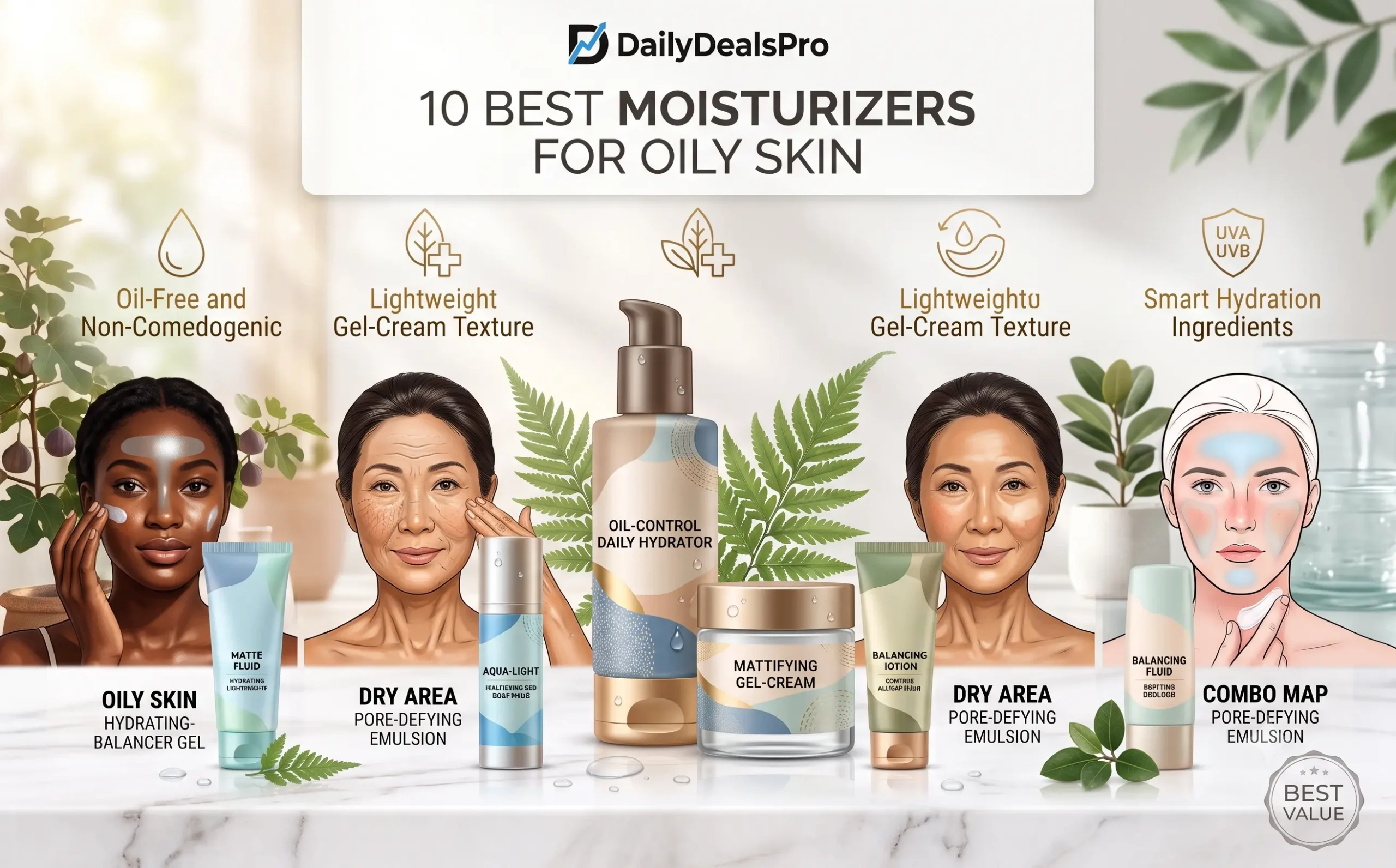
Affiliate Disclosure: As an Amazon Associate, DailyDealsPro earns from qualifying purchases. If you buy through links on this page, we may earn a small commission at no extra cost to you. We only recommend products we believe offer value to our readers. Best Moisturizers for Oily Skin: Many people with oily skin believe they should avoid moisturizers altogether. It seems logical—if your skin already produces excess oil, why add more moisture? Surprisingly, this is one of the biggest skincare myths. Oily skin still needs hydration. In fact, skipping moisturizer can make your skin produce even more oil as it tries to compensate for the lack of moisture. The key isn't avoiding moisturizer—it's choosing the right one. In this guide, we'll explain why moisturizers are essential for oily skin, what ingredients to look for, which ingredients to avoid, and recommend some of the best moisturizers available for different skin concerns. Why Oily Skin Still Needs Moisturizer Many people confuse oil with hydration, but they're not the same thing. Your skin can produce excess oil while still being dehydrated. When your skin lacks water, it often responds by producing even more sebum, leading to: Increased shine More clogged pores Frequent breakouts An unbalanced skin barrier Using a lightweight, oil-free moisturizer helps maintain your skin's natural balance without making it feel greasy. Benefits of moisturizing oily skin include: Supports a healthy skin barrier. Helps control excess oil production. Reduces tightness after cleansing. Keeps skin smooth and comfortable. Works well under sunscreen and…

Continue Reading10 Best Moisturizers for Oily Skin

Best Sunscreen for Your Skin Type: A Complete 2026 Guide

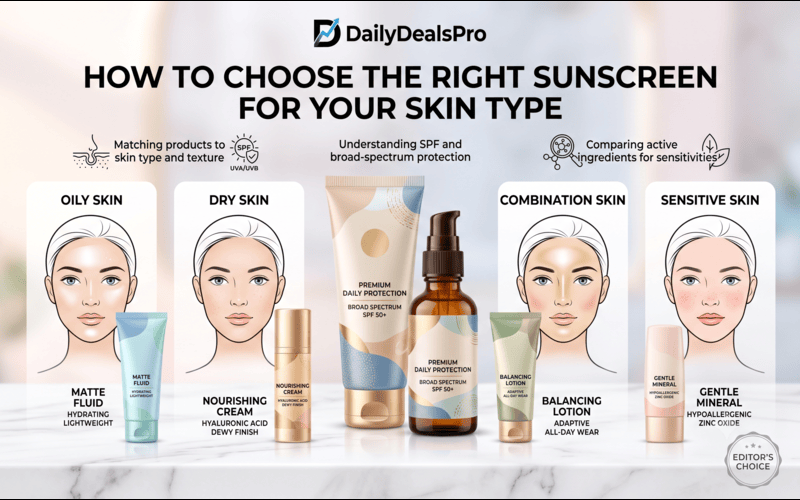
Affiliate Disclosure: As an Amazon Associate, DailyDealsPro earns from qualifying purchases. If you buy through links on this page, we may earn a small commission at no extra cost to you. We only recommend products we believe offer value to our readers. Best Sunscreen for Your Skin Type: Walking into a store or browsing online for sunscreen can quickly become overwhelming. You'll find lotions, gels, sprays, mineral formulas, chemical sunscreens, SPF 30, SPF 50, and products claiming to work for every skin type. The truth is that the best sunscreen depends on your skin type, daily routine, and level of sun exposure. Choosing the wrong sunscreen may leave your skin feeling greasy, dry, irritated, or even lead to clogged pores. Choosing the right one, however, helps protect your skin from sunburn, premature aging, and long-term UV damage while feeling comfortable enough to wear every day. In this guide, we'll explain how to identify your skin type, understand sunscreen formulas, and choose the best option for your daily skincare routine. Why Wearing Sunscreen Every Day Matters Sunscreen is more than just beach-day protection. Daily use helps protect your skin from harmful UVA and UVB rays that are present even on cloudy days. Regular sunscreen use can help: Reduce the risk of sunburn. Protect against premature wrinkles and fine lines. Prevent dark spots and uneven skin tone. Lower long-term UV damage. Support overall skin health. The key is finding a sunscreen you'll actually enjoy wearing every day. Best Sunscreen for Your…

Continue ReadingBest Sunscreen for Your Skin Type: A Complete 2026 Guide