
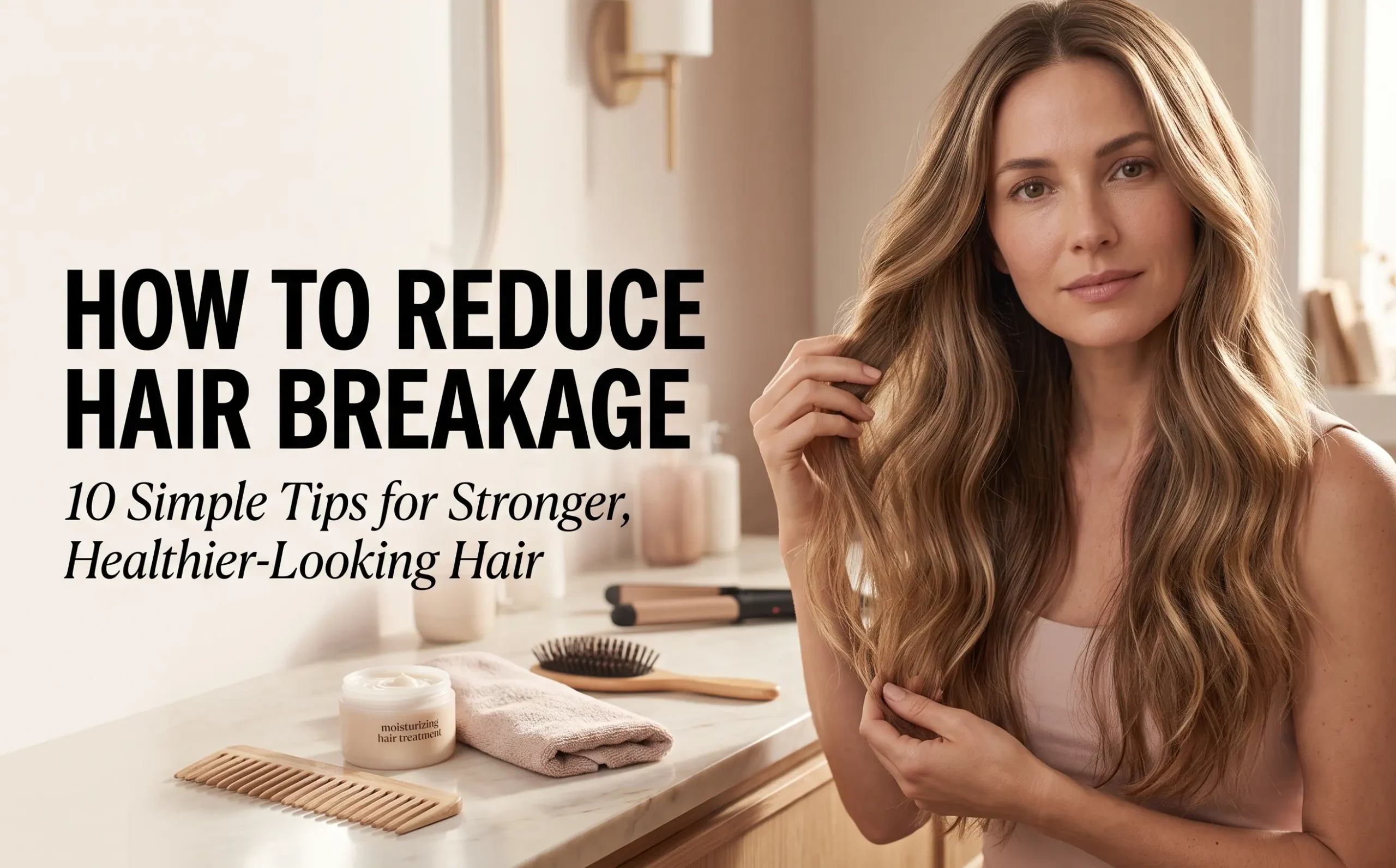
How to Reduce Hair Breakage: If your hair seems to be getting shorter even though you are trying to grow it, or you keep noticing short broken strands, split ends, and uneven lengths, hair breakage may be part of the problem. Hair breakage is different from hair shedding. With shedding, a full strand of hair comes out from the scalp. With breakage, the hair shaft snaps somewhere along its length. This can make hair look thinner, rougher, frizzier, and more uneven—even when the hair itself is still growing from the scalp. Common contributors to hair damage and breakage can include:
- Rough detangling
- Excessive heat styling
- Chemical processing
- Tight hairstyles
- Frequent friction
- Dry or weakened hair
- Aggressive handling when hair is wet
The good news is that some forms of breakage are linked to hair-care habits that you can improve. This article focuses specifically on reducing avoidable damage and breakage. It is not a guide to curing every type of hair loss. If you are experiencing sudden shedding, patchy hair loss, significant thinning, or other concerning scalp symptoms, it may be important to identify the underlying cause.
In simple terms: You may not always be able to control how fast your hair grows—but reducing unnecessary breakage can help you keep more of the length you already have.
Why your hair may be falling out?
Not sure whether you are dealing with breakage, normal shedding, or another type of hair change? Our guide on why your hair may be falling out explains several common causes and signs to watch for.
ChoicesNest participates in the Amazon Services LLC Associates Program, an affiliate advertising program designed to provide a means for sites to earn advertising fees by linking to Amazon.com and affiliated sites. As an Amazon Associate, ChoicesNest may earn from qualifying purchases at no extra cost to you.
How to Reduce Hair Breakage: 10 Simple Tips
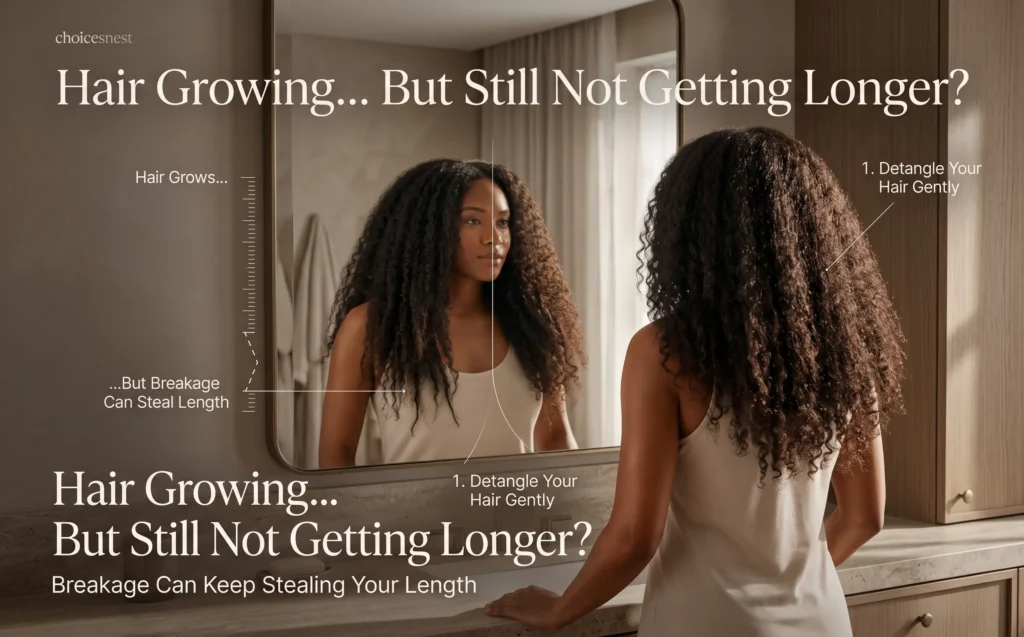
Detangle Your Hair Gently
Rough Brushing Can Cause More Damage
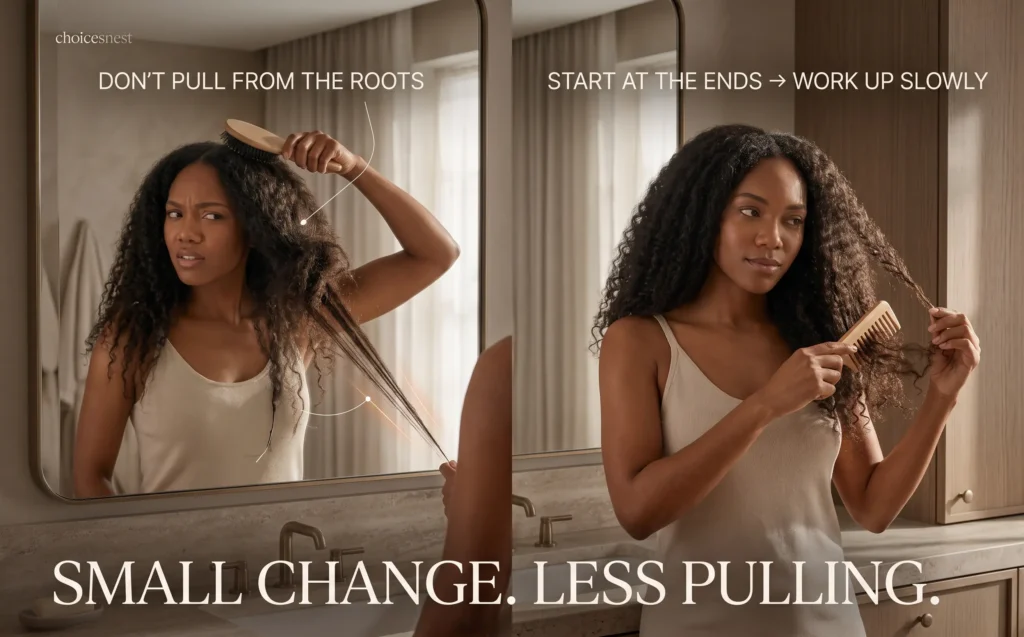
One of the simplest ways to reduce unnecessary breakage is to change how you detangle your hair. Pulling a brush forcefully through knots can place stress on the hair shaft and cause already weakened strands to snap. Instead of starting at the roots and dragging a brush downward, begin by gently working through the ends. Once the lower section is detangled, gradually move higher.
A Simpler Detangling Method
Try this approach:
- Divide very tangled hair into manageable sections.
- Start gently near the ends.
- Remove small tangles before moving upward.
- Gradually work toward the roots.
- Avoid pulling through a large knot with force.
A wide-tooth comb or a brush designed for detangling may also make it easier to work through knots with less pulling.
Remember
The goal is not to brush your hair as quickly as possible. The goal is to remove tangles while putting as little unnecessary stress on the strands as possible.
Be Extra Gentle With Wet Hair
Wet Hair Can Be More Vulnerable to Damage
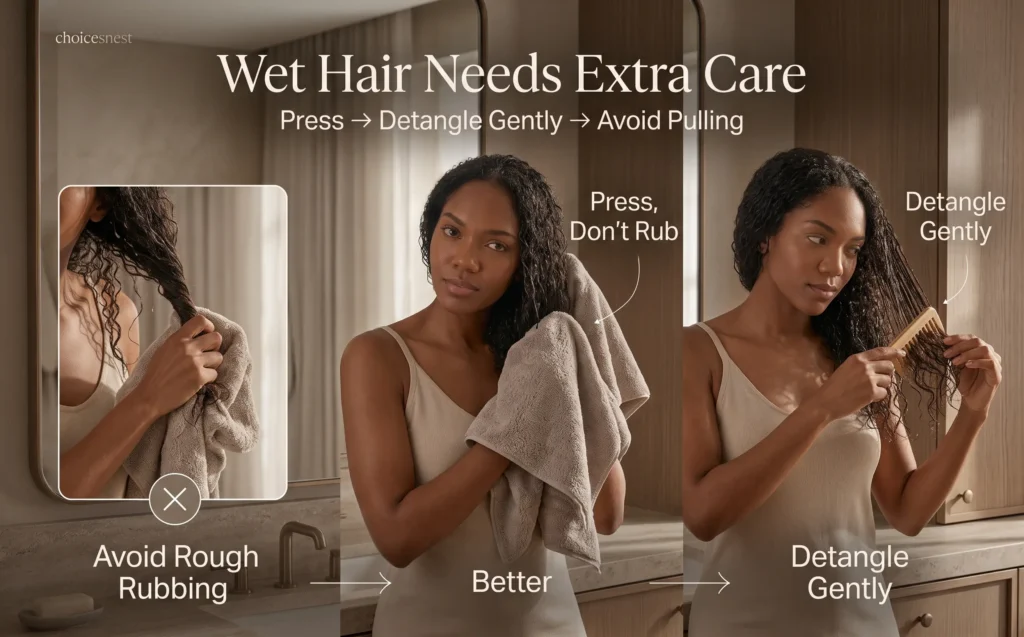
Hair can be especially vulnerable when it is wet. Aggressive brushing, pulling, or rubbing wet hair with a towel can increase physical stress on already weakened strands. Instead of roughly rubbing your hair dry, gently press or squeeze out excess water with a soft towel or suitable hair wrap. When detangling wet hair, use a gentle approach and avoid repeatedly pulling through stubborn knots.
A Better Post-Shower Routine
After washing your hair:
- Gently squeeze out excess water.
- Avoid aggressive towel rubbing.
- Use a gentle detangling method.
- Work in small sections if necessary.
- Avoid unnecessary pulling while the hair is wet.
If your hair tends to tangle easily, applying a suitable conditioning or detangling product may help reduce friction while combing.
Reduce Excessive Heat Styling
High Heat Can Add More Stress to Damaged Hair
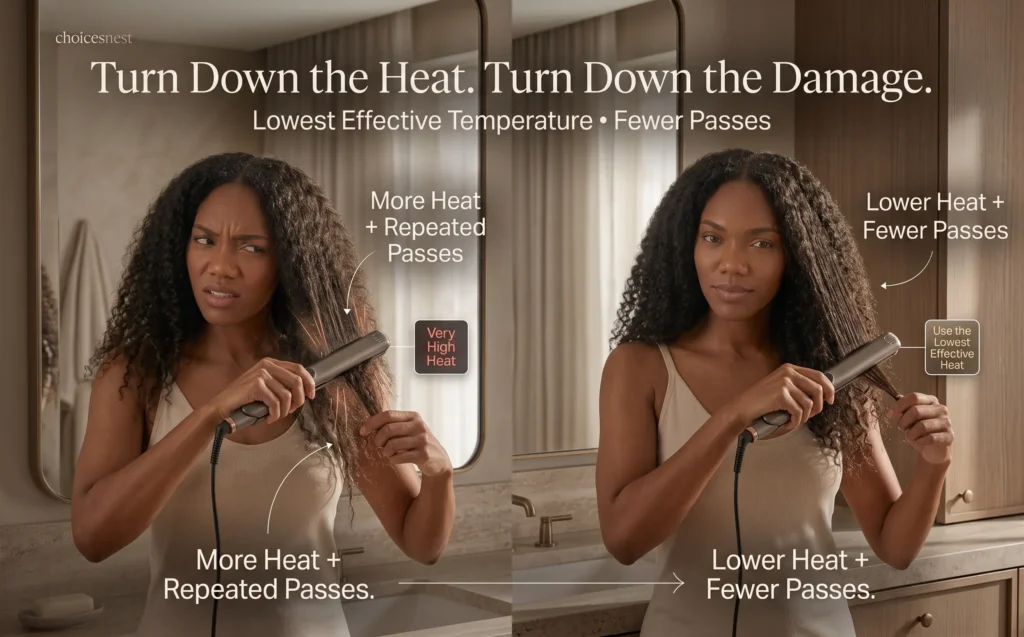
Blow-dryers, flat irons, curling tools, and other heated styling devices can expose the hair to repeated heat. If your hair is already dry, weak, or damaged, frequent high-temperature styling may contribute to further dryness and breakage. You do not necessarily have to stop using every heat tool forever. Instead, consider reducing unnecessary exposure.
Simple Ways to Reduce Heat Stress
Try to:
- Use the lowest effective temperature.
- Avoid repeatedly going over the same section.
- Give your hair occasional breaks from heat styling.
- Let your hair air-dry partially when practical.
- Consider using a suitable heat-protection product before heat styling.
The goal is to reduce repeated unnecessary stress, particularly when the hair is already showing signs of damage.
How to protect your hair from sun damage and dust
Heat styling is only one source of hair damage. Daily environmental exposure can also affect how dry and stressed your hair feels. For more practical protection tips, explore our guide on how to protect your hair from sun damage and dust.
Give Your Hair Enough Moisture and Conditioning
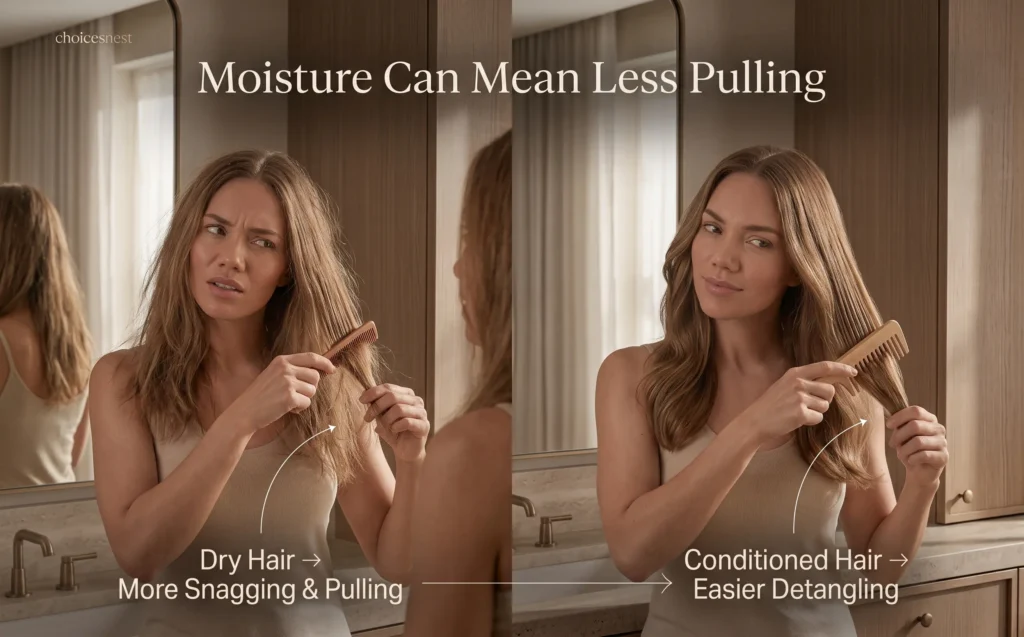
Dry, rough hair is more likely to feel difficult to manage and may be more prone to snapping during brushing and styling. Use a conditioner appropriate for your hair type after cleansing, focusing especially on the mid-lengths and ends. If your hair feels particularly dry or damaged, an occasional deep-conditioning treatment may also help improve softness and manageability. The goal is not to overload your hair with products. Instead, focus on a routine that helps reduce dryness and friction.
Simple tip
If your hair feels rough immediately after washing, detangles poorly, or constantly catches during brushing, improving your conditioning routine may help reduce unnecessary mechanical stress.
How to prevent dry, frizzy hair in winter
If dry, frizzy hair is one of your biggest concerns, you may also find our guide on how to prevent dry, frizzy hair in winter helpful.
Avoid Hairstyles That Pull Too Tightly
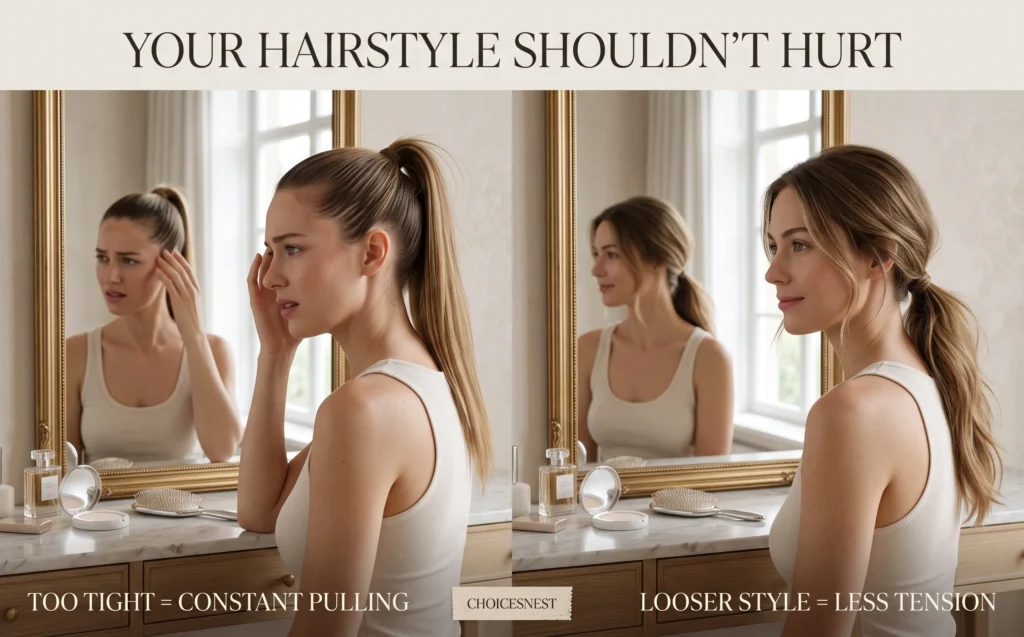
Tight ponytails, buns, braids, and other styles that create constant tension can place repeated stress on the hair and scalp. A hairstyle should not regularly cause pain, scalp tenderness, or a strong pulling sensation. Try alternating your hairstyles and choosing looser options when possible. If you frequently wear your hair pulled back, changing the position of your ponytail or bun may also reduce repeated stress on the same area.
Simple tip
If your hairstyle feels uncomfortable, it may be too tight.
Reduce Friction While Sleeping
Friction can contribute to tangles and roughness, especially if you frequently wake up with knotted or difficult-to-manage hair. You may be able to reduce unnecessary friction by:
- Sleeping with your hair loosely arranged
- Avoiding very tight overnight hairstyles
- Detangling gently before bed
- Using a smooth hair-friendly pillowcase or sleep accessory if it works for your routine
The goal is simple: less pulling and tangling overnight.
Be Careful With Chemical Treatments
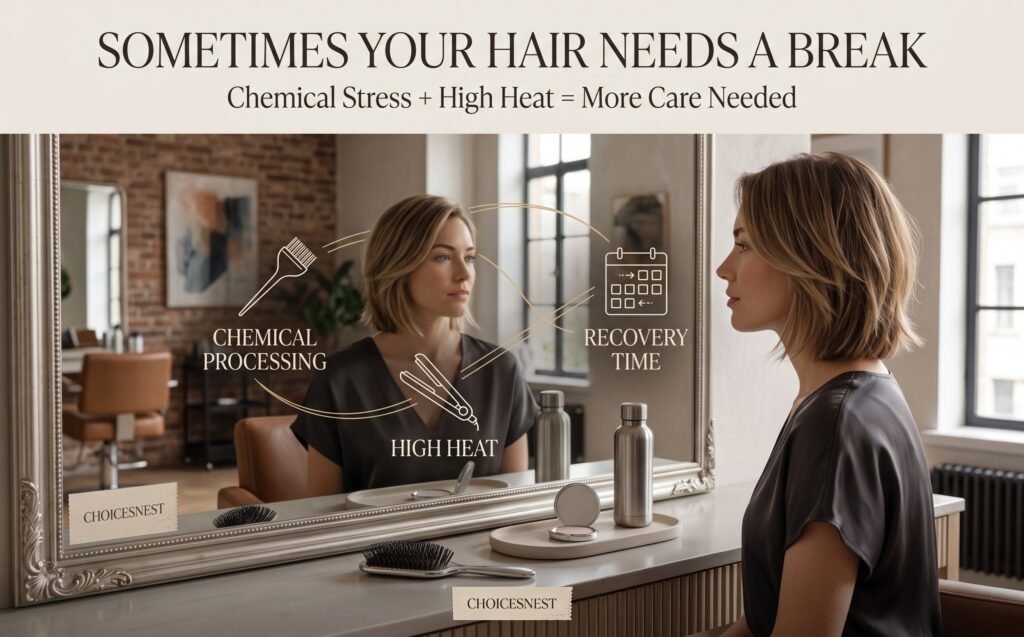
Bleaching, coloring, relaxing, perming, and other chemical processes can affect the condition of the hair. Repeated processing—especially when combined with frequent heat styling—may leave the hair feeling dry, rough, and more fragile. This does not necessarily mean you must stop coloring or chemically treating your hair completely. Instead, consider giving your hair enough recovery time between intensive treatments and avoid combining multiple stressful processes unnecessarily.
Simple tip
If your hair already feels weak, stretchy, unusually dry, or prone to snapping, it may be worth simplifying your routine and reducing additional stress.
Trim Split or Severely Damaged Ends When Needed
Split ends cannot always be permanently repaired. Products may temporarily improve the appearance and feel of damaged ends, but severely split or broken sections can continue to make hair look rough and uneven. Regular trimming does not make hair grow faster from the scalp, but removing badly damaged ends may help improve the overall appearance of the hair and prevent you from holding onto increasingly fragile lengths. You do not necessarily need frequent dramatic haircuts. A small trim when the ends become noticeably split, thin, or difficult to manage may be enough.
Simple tip
If the ends of your hair constantly:
- Feel rough
- Look thin or uneven
- Catch on your comb
- Develop visible split ends
…it may be time to consider trimming the most damaged length.
Protect Your Hair From Sun, Dust and Environmental Exposure
Heat styling and chemical treatments are not the only things that can leave hair feeling dry or stressed. Sun exposure, dust, dry air, and other environmental factors may also affect how manageable your hair feels.
Simple protective habits can include:
- Covering your hair when spending long periods in strong sunlight
- Gently cleansing away dust and buildup when needed
- Avoiding unnecessary overwashing
- Using conditioning products appropriate for your hair type
- Being extra gentle when hair already feels dry or rough
Environmental exposure is only one part of the picture, but reducing unnecessary stress can support an overall gentler hair-care routine.
How to protect your hair from sun damage and dust
For more practical ideas on protecting your hair from everyday environmental exposure, read our guide on how to protect your hair from sun damage and dust.
Build a Simpler, Consistent Hair-Care Routine
When hair feels weak or damaged, it can be tempting to buy multiple oils, masks, serums, shampoos, and treatments. But more products do not automatically mean better hair care. A simple routine may be easier to maintain and can help you identify which habits or products work well for your hair. Your routine might focus on:
- Gentle cleansing
- Regular conditioning
- Careful detangling
- Reducing excessive heat
- Avoiding unnecessary pulling
- Managing dryness
- Giving damaged hair time between intensive treatments
Consistency is often more useful than constantly changing your entire routine. The goal is to reduce the repeated stress that can contribute to breakage over time.
🛒 A Hair Care Option for Dry, Weak or Breakage-Prone Hair
If your hair tends to feel dry, rough, difficult to detangle, or prone to breakage, a moisturizing treatment may be a useful addition to a gentle hair-care routine. A deep-conditioning product can help improve softness and manageability, which may reduce the amount of pulling that happens during detangling and styling.
However, remember that a conditioning product is designed for hair care and manageability. It is not a universal treatment for every type of hair loss or shedding.
Best for:
- Dry or rough-feeling hair
- Hair that tangles easily
- Damaged or chemically processed hair
- Improving softness and manageability
Frequently Asked Questions
Can hair breakage make your hair look thinner?
Yes. When strands repeatedly break along their length, hair may appear less full, especially around the ends. Breakage can also create uneven lengths and more visible short strands.
Is hair breakage the same as hair loss?
No. Hair shedding generally involves a strand coming out from the scalp, while breakage happens when the hair shaft snaps somewhere along its length. If you are unsure which one you are experiencing, our guide on why your hair may be falling out can help explain some common differences.
Does trimming hair stop breakage?
Trimming removes damaged ends, but it does not prevent new damage by itself. Reducing excessive heat, rough detangling, chemical stress, and unnecessary pulling can also be important for protecting the remaining hair.
Can damaged hair become healthy again?
Products may improve the appearance, softness, and manageability of damaged hair, but severely damaged sections may not fully return to their original condition. Reducing additional stress and protecting new growth can help improve how your hair looks and feels over time.
How can I reduce hair breakage when brushing?
Start near the ends and gradually work upward. Avoid forcing a brush through large knots, and work in smaller sections when your hair is heavily tangled.
Final Thoughts
Hair breakage can make it feel as though your hair is not growing, even when new hair is continuing to grow from the scalp. The key is to focus on the things you can control. Gentler detangling, careful handling of wet hair, reduced heat exposure, adequate conditioning, looser hairstyles, less friction, and fewer unnecessary chemical treatments can all help reduce avoidable stress on the hair. You do not need a complicated routine with dozens of products. Sometimes the most useful approach is simply:
Pull less. Use less unnecessary heat. Reduce repeated damage. Stay consistent.
Small changes may not transform hair overnight, but consistently reducing avoidable stress can help protect weak, damaged, and breakage-prone strands over time.