
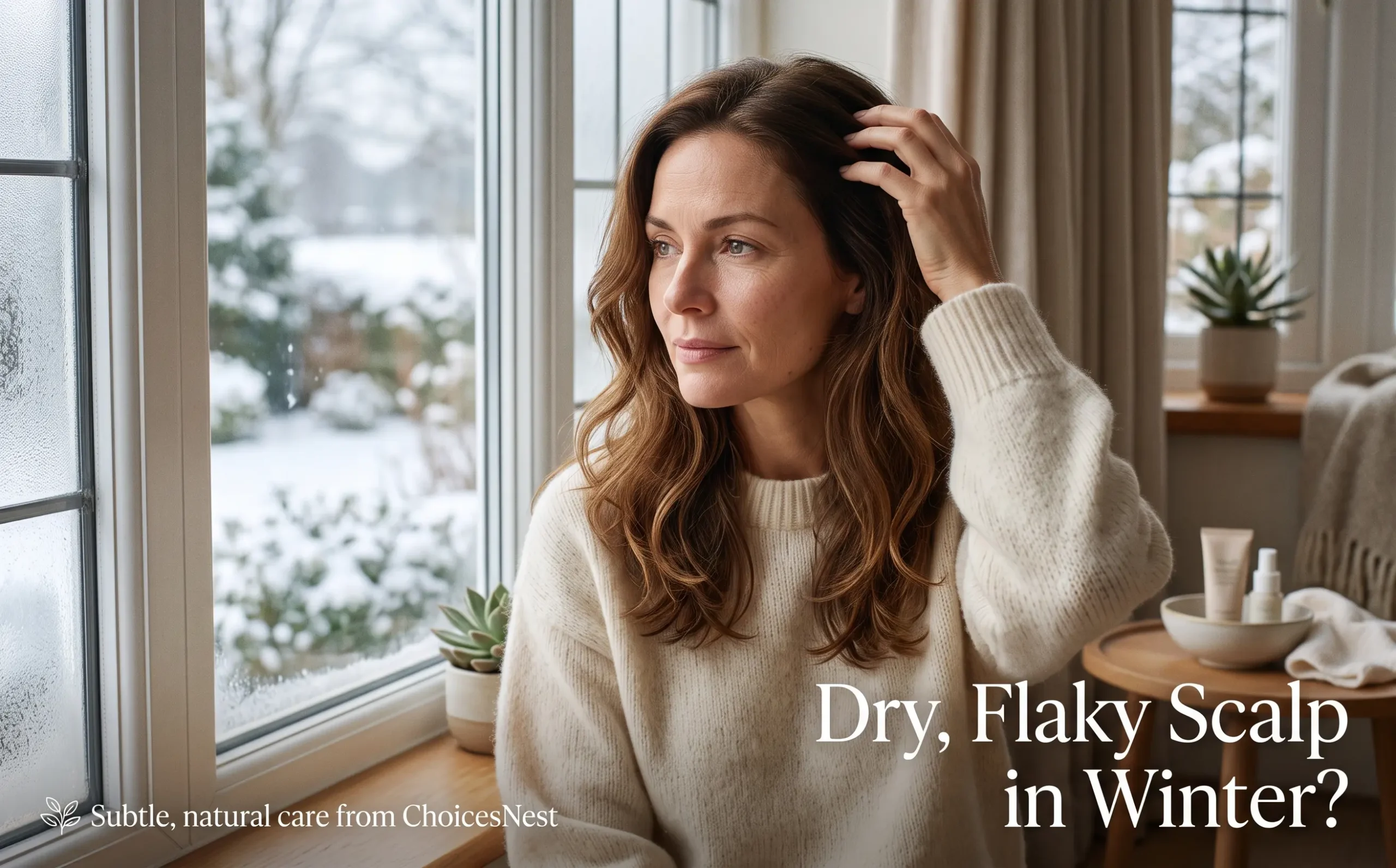
Dry, Flaky Scalp in Winter: Winter can affect more than just the skin on your face and body. For some people, colder and drier weather can also make the scalp feel dry, tight, itchy, or flaky. However, not every flake means the same thing. A dry scalp can cause visible flakes, but dandruff and other scalp conditions can also cause similar symptoms. Cold, dry weather may worsen dandruff for some people, while dandruff itself can have several possible causes.
That is why the goal of winter scalp care should not simply be to use more products. Instead, it can help to look at the habits and environmental factors that may be contributing to dryness or irritation. In this guide, we’ll explore some common reasons a scalp may become dry or flaky during winter and simple ways to care for it.
Important: Persistent, severe, painful, or worsening scalp symptoms may have causes beyond ordinary seasonal dryness. If self-care is not helping, consider speaking with a qualified healthcare professional or dermatologist.

Why Does Your Scalp Become Dry and Flaky in Winter?
There is not always one single cause. Your scalp is skin, and like the rest of your skin, it can be affected by changes in temperature, humidity, cleansing habits, and the products you use. Winter may also coincide with habits such as taking hotter showers or spending more time in heated indoor environments. At the same time, visible flakes can sometimes be associated with dandruff, seborrheic dermatitis, product sensitivity, or other skin conditions. This means it is important not to automatically assume that every flaky scalp is simply “dry skin.”
Let’s look at some of the most common factors.
1. Cold, Dry Winter Air
One of the most obvious changes during winter is the drop in temperature and humidity. Lower humidity can contribute to drier skin, and winter conditions may also worsen dandruff or scalp flaking for some people. Cold, dry weather is recognized as a potential factor in seasonal flare-ups of certain scalp conditions. When you move between cold outdoor air and warm indoor spaces, your scalp may also be exposed to a very different environment throughout the day.
Simple Care Tip
Protect your head from harsh outdoor weather with appropriate winter clothing, such as a comfortable hat that does not cause unnecessary friction or irritation. If your indoor air feels particularly dry, improving indoor humidity may also help reduce dryness affecting the skin generally.
2. Hot Showers and Very Hot Water
A long, hot shower may feel especially relaxing during cold weather, but very hot water can contribute to skin dryness. Hot water and lengthy bathing can remove oils from the skin, which may worsen dryness. The same general principle can be relevant when washing your scalp and hair.
This does not mean you need to take cold showers during winter. Instead, consider using comfortably warm water rather than extremely hot water, especially if your scalp already feels dry or irritated.
Simple Care Tip
Try slightly lowering the water temperature and avoid unnecessarily long showers. Small adjustments can be easier to maintain than completely changing your routine.
3. Overwashing or Using a Harsh Shampoo
Your scalp needs regular cleansing, but washing habits that do not suit your hair and scalp type may contribute to dryness or irritation. Dermatologists recommend focusing shampoo primarily on the scalp, where it helps remove buildup, dead skin, and excess oil, while avoiding unnecessary rubbing through the full length of the hair. How often you shampoo can also depend on factors such as hair type and scalp condition.
For some people, a harsh or unsuitable product may also irritate the scalp. Product sensitivity is one of the possible causes associated with scalp flaking.
Simple Care Tip
Consider whether your current shampoo feels overly harsh or irritating. If your scalp consistently feels tight, uncomfortable, or more irritated after washing, simplifying your routine and choosing a gentler product may be worth considering.
Also, remember that washing less often is not automatically the answer for everyone. Some flakes may be associated with dandruff or scalp buildup rather than simple dryness, so the right cleansing routine depends on the underlying cause.

4. Dry Indoor Heating
Winter weather often means spending more time indoors with heating systems running. While a warm room can feel comfortable, heated indoor air may also be quite dry. If your skin already tends to feel dry during winter, spending long periods in dry indoor environments may contribute to that uncomfortable feeling. The scalp is no exception.
Simple Care Tip
If your home feels especially dry, consider ways to increase indoor humidity. Even simple changes, such as avoiding unnecessarily high heating temperatures, may help create a more comfortable environment for your skin and scalp. You don’t need to completely change your home routine. The goal is simply to reduce some of the environmental dryness that may contribute to winter discomfort.
5. Product Buildup From Styling Products
Hair serums, dry shampoo, hairspray, gels, and other styling products can be useful, but using multiple products without properly cleansing the scalp may lead to buildup. Buildup and flakes can sometimes look similar, which makes it easy to assume that every visible flake is caused by dry skin.
This is one reason why simply applying more oils or moisturizing products is not always the right solution. If the issue is related to product buildup, your scalp may instead benefit from an appropriate cleansing routine.
Simple Care Tip
Think about how many styling products you regularly use. If you use dry shampoo, hairspray, oils, serums, and other products throughout the week, make sure your regular routine also includes appropriate cleansing. Avoid aggressively scrubbing the scalp, as harsh rubbing may increase irritation.
A balanced routine is usually more helpful than either extreme:
- Not cleansing enough, which may allow buildup to accumulate.
- Over-cleansing, which may leave some scalps feeling dry or irritated.
The goal is to find a routine that suits your individual scalp and hair needs.
6. Hair Products That Irritate Your Scalp
Sometimes the problem may not be winter weather alone. Certain hair-care products can cause irritation or sensitivity in some people. This may include reactions to ingredients such as fragrances or other components in shampoos, conditioners, styling products, or treatments. If your scalp Consistently feels uncomfortable after introducing a new product, it may be worth considering whether that product is contributing to the problem.
Simple Care Tip
Keep your routine simple when your scalp feels irritated. Instead of adding several new products at once, consider using fewer products and introducing new ones gradually. This makes it easier to notice whether a particular product appears to make your scalp feel worse. If irritation is persistent or significant, stop using the suspected product and consider seeking advice from a qualified healthcare professional.
Dry, Flaky Scalp in Winter: Simple Winter Scalp-Care Habits to Try
If your scalp becomes dry or flaky during colder months, these simple habits may help support a gentler routine.
1. Use Comfortably Warm Water
Very hot water may contribute to skin dryness. You don’t need a cold shower—simply avoid making the water unnecessarily hot, especially if your scalp already feels dry or tight.
2. Avoid Aggressive Scratching
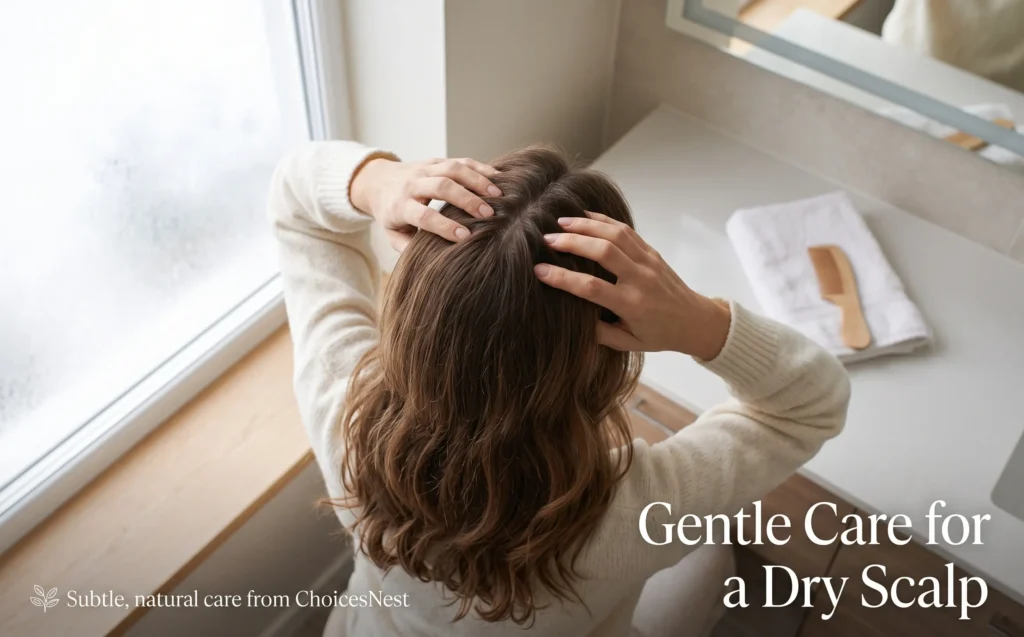
An itchy scalp can make scratching tempting, but repeated scratching may irritate the skin further. Try to avoid using your nails aggressively on the scalp. When washing your hair, use gentle fingertip movements instead.
3. Choose Products That Suit Your Scalp
A product that works well for someone else may not necessarily work well for you. Pay attention to how your scalp feels after washing or using a new styling product. If a product consistently leaves your scalp feeling uncomfortable or irritated, it may not be the best choice for your routine.
4. Don’t Automatically Assume Every Flake Is Dryness
This is one of the most important points in the article. Winter dryness can contribute to scalp discomfort and visible flakes, but flakes can also be associated with dandruff or other scalp conditions. If changing basic winter habits does not help, repeatedly adding more moisturizing products may not address the actual cause.
How to Prevent Dry, Frizzy Hair in Winter: 10 Simple Tips: Winter weather can affect both your scalp and the rest of your hair. If your hair lengths are also feeling rough, dry, or difficult to manage during colder months, explore our guide to how to prevent dry, frizzy hair in winter for practical tips on protecting your hair from seasonal dryness.

When a Dry, Flaky Scalp May Be More Than Winter Dryness
Winter weather can contribute to scalp dryness, but it is important not to assume that every itchy or flaky scalp is caused by cold weather. Flaking can also be associated with issues such as dandruff, seborrheic dermatitis, product reactions, or other skin conditions. If flakes continue despite changing your winter hair-care routine, the underlying cause may need a different approach.
Consider seeking advice from a qualified healthcare professional or dermatologist if your scalp symptoms are:
- Persistent or getting worse
- Very itchy or painful
- Associated with redness or significant irritation
- Causing thick or persistent scaling
- Not improving with basic changes to your routine
The purpose of this article is to help with general winter scalp-care habits, not to diagnose the cause of persistent scalp problems.
Simple Winter Scalp-Care Routine
You do not necessarily need a complicated routine. A simple approach may include:
1. Cleanse According to Your Scalp’s Needs
Avoid both extremes—overwashing when it leaves your scalp feeling dry, or avoiding cleansing when product buildup or dandruff may be contributing to flakes.
2. Avoid Extremely Hot Water
Use comfortably warm water when washing your hair and scalp.
3. Be Gentle
Avoid aggressive scratching or harsh scrubbing. Use your fingertips gently when cleansing.
4. Pay Attention to New Products
If irritation begins after introducing a new shampoo, conditioner, oil, or styling product, consider whether the product could be contributing to the problem.
5. Adjust Your Routine During Winter
Your summer hair-care routine may not always feel ideal during colder months. If your scalp becomes noticeably drier in winter, simplifying your routine or choosing products better suited to your current needs may help.
Helpful Product Option: If your scalp is dry and flaky and you want a product specifically designed to address both scalp flaking and hydration, a gentle anti-dandruff shampoo may be worth considering. CeraVe Anti-Dandruff Hydrating Shampoo is one option to explore, especially for readers looking for a hydrating approach rather than a heavily stripping cleanser.
Frequently Asked Questions
Why is my scalp flaky only in winter?
Changes in weather, lower humidity, dry indoor heating, hotter showers, and changes in your hair-care routine may all contribute to scalp dryness or make existing flaking more noticeable. However, winter weather is not the only possible cause. Dandruff and other scalp conditions can also cause visible flakes.
Should I wash my hair less often if my scalp is dry?
Not necessarily. The ideal washing routine depends on your hair type, scalp condition, and the cause of the flakes. Washing less frequently may help some people with dryness, while others may need regular cleansing to manage oil, buildup, or dandruff.
Can hot showers cause a dry scalp?
Very hot water may contribute to skin dryness. Using comfortably warm water instead of excessively hot water may be a gentler choice if your scalp already feels dry or uncomfortable.
Is a dry scalp the same as dandruff?
Not always. Both can involve visible flakes, but dandruff and dry scalp can have different underlying causes. Persistent or severe flaking may need a different approach than ordinary seasonal dryness.
When should I see a dermatologist?
Consider professional advice if symptoms are persistent, severe, painful, worsening, or accompanied by significant redness or thick scaling.
Final Thoughts
A dry or flaky scalp during winter can sometimes be connected to simple seasonal factors such as cold weather, dry indoor heating, hot showers, or an unsuitable hair-care routine. The first step is often to simplify your routine and pay attention to how your scalp responds. Gentle cleansing, avoiding excessively hot water, reducing unnecessary irritation, and considering your environment can all be useful starting points.
At the same time, persistent flakes should not automatically be treated as ordinary winter dryness. If simple changes are not helping, identifying the actual cause becomes more important than simply adding more moisturizing products.