

Amazon Associate Disclosure: As an Amazon Associate, I earn from qualifying purchases. If you purchase a product through links on this page, I may earn a small commission at no additional cost to you.

Indoor Heating Affects Your Skin: Introduction
When temperatures drop, turning on the heater can make your home much more comfortable. But spending hours in heated indoor environments may also leave your skin feeling dry, tight, rough, or uncomfortable.
Indoor heating can reduce the relative humidity of the air, while winter weather outside may already be cold and dry. Together, these conditions can increase moisture loss from the skin.
You may notice:
- Tightness after cleansing
- Dry or flaky patches
- Rough cheeks
- Chapped lips
- Dry hands
- Increased skin sensitivity
The good news is that you don’t need a complicated routine to deal with winter indoor dryness.
Here are 7 simple ways to protect your skin while keeping your home warm.
🏠 How Does Indoor Heating Affect Your Skin?
Heating systems warm the air inside your home, but heated air can have relatively low humidity.
When the surrounding air is dry, water can evaporate more readily from the skin’s surface. This can contribute to transepidermal water loss (TEWL) and make already-dry skin feel even less comfortable.
Winter heating isn’t necessarily “damaging” your skin by itself. The bigger issue is the combination of:
Cold outdoor air + dry indoor air + hot showers + frequent cleansing = more potential dryness.
📊 Winter Conditions That Can Dry Your Skin
| Factor | What It Can Do | Helpful Response |
|---|---|---|
| Indoor heating | Low indoor humidity | Consider a humidifier |
| Cold outdoor air | Increases dryness | Protect exposed skin |
| Hot showers | Can remove surface oils | Use lukewarm water |
| Frequent washing | May increase dryness | Use gentle cleanser |
| Wind | Can increase discomfort | Cover exposed skin |
| Low humidity | Increases moisture loss | Moisturize regularly |
Why Your Skin Gets Drier When the Weather Changes
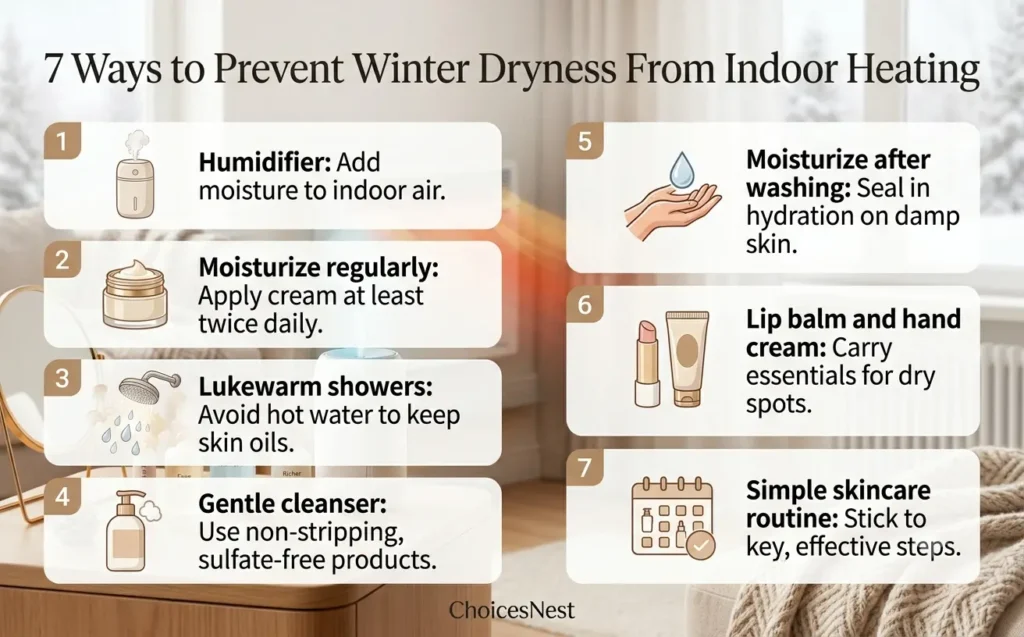
1️⃣ Use a Humidifier
A humidifier can add moisture to indoor air, which may make a dry environment more comfortable for your skin.
If you use one, clean it regularly according to the manufacturer’s instructions. A poorly maintained humidifier can become a source of unwanted microorganisms.
Best placement
Keep it in the room where you spend significant time, such as your bedroom or living room.
🛒 Amazon CTA:
Browse Humidifiers on Amazon
2️⃣ Moisturize More Consistently
If your skin becomes noticeably drier during winter, don’t wait until it feels uncomfortable before applying moisturizer.
A good winter moisturizer may contain ingredients such as:
- Glycerin
- Ceramides
- Hyaluronic acid
- Shea butter
- Squalane
- Petrolatum
For particularly dry skin, a richer cream may feel more comfortable than a lightweight lotion.
3️⃣ Don’t Turn the Shower Into a Sauna
A long, extremely hot shower can feel amazing when the weather is cold.
However, very hot water can remove some of the skin’s natural oils.
Try:
Lukewarm water + shorter showers + moisturizer afterward.
This small adjustment can make your winter routine more skin-friendly.

4️⃣ Switch to a Gentler Cleanser
If your face feels tight immediately after washing, your cleanser may be too aggressive for your current routine.
Consider a gentle, hydrating cleanser, especially if your skin is already dry or sensitive.
You don’t necessarily need to stop cleansing. Instead, focus on cleansing without unnecessarily stripping the skin.
🛒 Amazon CTA:
Explore Gentle Winter Cleansers on Amazon
5️⃣ Moisturize Right After Cleansing
One of the easiest habits to add to your routine is applying moisturizer shortly after washing.
This is especially useful for:
- Face
- Hands
- Body
Keeping moisturizer beside your sink can make this habit much easier.
For your face, choose a formula appropriate for your skin type rather than automatically choosing the thickest product available.
6️⃣ Don’t Forget Your Lips and Hands
Your face isn’t the only area affected by dry indoor air.
Hands are repeatedly exposed to washing, while lips have a relatively limited protective barrier.
Keep:
🧤 Hand cream nearby
and
👄 Lip balm nearby.
Reapply as needed, particularly after washing your hands or when your lips feel dry.
You can naturally read here our existing articles for further help:
7️⃣ Keep Your Winter Routine Simple
You don’t need to compensate for dry indoor air by adding ten new products.
A simple routine can be enough for many people:
🌅 Morning
Gentle cleanser → Moisturizer → Sunscreen
🌙 Night
Gentle cleanser → Hydrating product → Moisturizer
Plus:
Lip balm + hand cream as needed.
📊 Indoor Heating: Quick Fixes at a Glance
| Problem | Simple Solution |
|---|---|
| Dry indoor air | Use a properly maintained humidifier |
| Tight facial skin | Use a richer moisturizer |
| Dry hands | Apply hand cream after washing |
| Chapped lips | Reapply lip balm |
| Tight skin after washing | Use a gentler cleanser |
| Very hot showers | Switch to lukewarm water |
| Winter outdoor dryness | Protect exposed skin |
🍂 Common Winter Dry-Skin Myths
❌ Myth 1: Indoor heating directly damages everyone’s skin.
Not necessarily. Indoor heating can contribute to a drier environment, which may increase moisture loss and make dryness more noticeable.
❌ Myth 2: You need a completely different skincare routine.
Usually not. Small adjustments—such as a richer moisturizer or gentler cleanser—may be enough.
❌ Myth 3: Oily skin doesn’t need moisturizer.
Oily skin can still become dehydrated. A lightweight moisturizer may be more appropriate than skipping moisturizer altogether.
❌ Myth 4: The hotter the shower, the better.
A very hot shower may feel comfortable temporarily, but it isn’t necessarily better for dry winter skin.
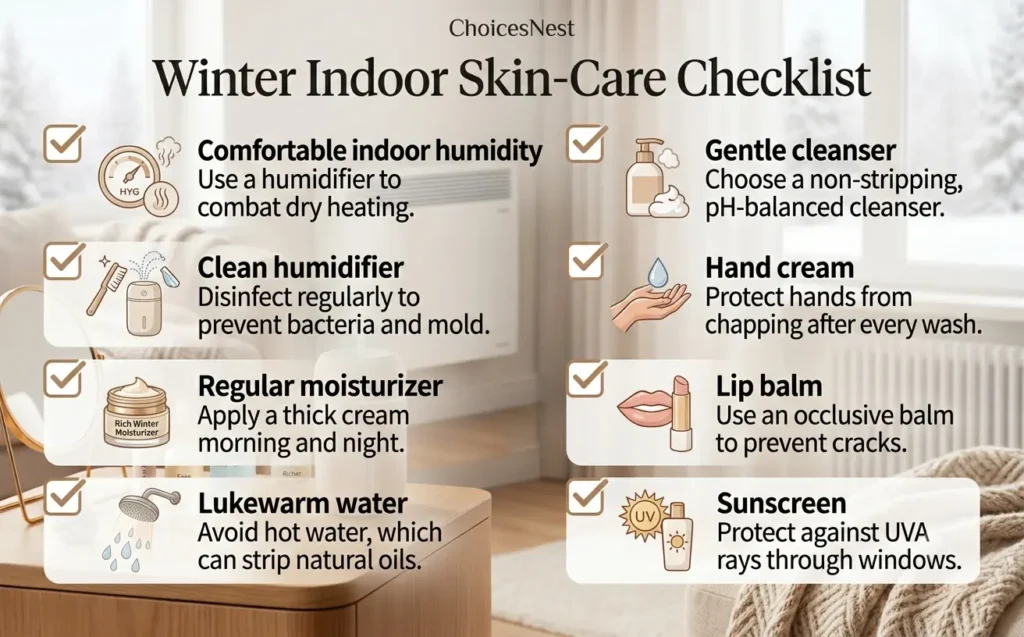
📋 Quick Winter Indoor-Skin Checklist
| ✔ | Habit |
|---|---|
| ☐ | Keep indoor humidity comfortable |
| ☐ | Clean your humidifier regularly |
| ☐ | Moisturize consistently |
| ☐ | Use lukewarm water |
| ☐ | Choose a gentle cleanser |
| ☐ | Protect your hands |
| ☐ | Keep lips moisturized |
| ☐ | Continue daytime sunscreen |
👨⚕️ Dermatologist Tips
A simple approach is usually best:
- Moisturize regularly rather than waiting for severe dryness.
- Apply moisturizer soon after washing.
- Avoid unnecessarily hot water.
- Choose gentle cleansing products.
- Don’t aggressively exfoliate already-dry skin.
- Protect exposed skin outdoors.
- Consider a humidifier if indoor air is particularly dry.
- Keep humidifiers clean according to manufacturer instructions.
If your skin becomes severely cracked, painful, bleeding, persistently itchy, or inflamed, basic moisturizer may not be enough. Consider consulting a dermatologist or other qualified healthcare professional.
❓ Frequently Asked Questions
Does indoor heating make your skin dry?
It can contribute to a drier indoor environment, which may increase moisture loss from the skin and make existing dryness more noticeable.
Should I use a humidifier in winter?
A humidifier can be useful when indoor air is dry. However, it should be cleaned and maintained properly according to the manufacturer’s instructions.
What moisturizer is best for heated indoor environments?
Look for moisturizing ingredients such as glycerin, ceramides, shea butter, squalane, or petrolatum. Choose the texture according to your skin type.
Can indoor heating cause chapped lips?
Dry indoor air can contribute to dry lips. Regular lip balm and avoiding excessive licking can help keep lips comfortable.
Should I change my skincare routine because of indoor heating?
You may not need a complete change. Consider simple adjustments such as a gentler cleanser, more consistent moisturizing, or a richer moisturizer if your skin becomes dry.
🌟 Final Takeaway
Indoor heating can make winter dryness more noticeable, but you don’t need a complicated skincare routine to respond.
Focus on the basics:
comfortable indoor humidity + gentle cleansing + consistent moisturizing + lukewarm showers + protection for lips and hands.
If your skin becomes significantly drier when the heater is running, try making one or two changes at a time rather than replacing your entire skincare collection.
And remember: persistent, painful, cracked, bleeding, or severely irritated skin deserves professional attention rather than simply adding more skincare products.