

Disclosure: As an Amazon Associate, I earn from qualifying purchases. If you purchase through links on this page, I may earn a small commission at no additional cost to you.

Why Your Skin Gets Drier When the Weather Changes: Introduction
Have you ever noticed that your skin suddenly feels tight, flaky, or rough when summer ends? You’re not alone. Many people experience dry skin as temperatures begin to fall, but few understand why it happens.
The transition from warm, humid weather to cooler, drier air affects your skin’s natural moisture balance. Lower humidity, indoor heating, stronger winds, and changes in your daily routine can all weaken your skin’s protective barrier. As a result, moisture escapes more easily, leaving your skin feeling dry and uncomfortable.
The good news is that seasonal dry skin is often preventable. By understanding what causes these changes and making a few simple adjustments to your skincare routine, you can keep your skin soft, healthy, and hydrated throughout fall and winter.
In this guide, we’ll explain the 10 most common reasons your skin gets drier when the weather changes, along with practical solutions, dermatologist-inspired advice, and beginner-friendly product recommendations.
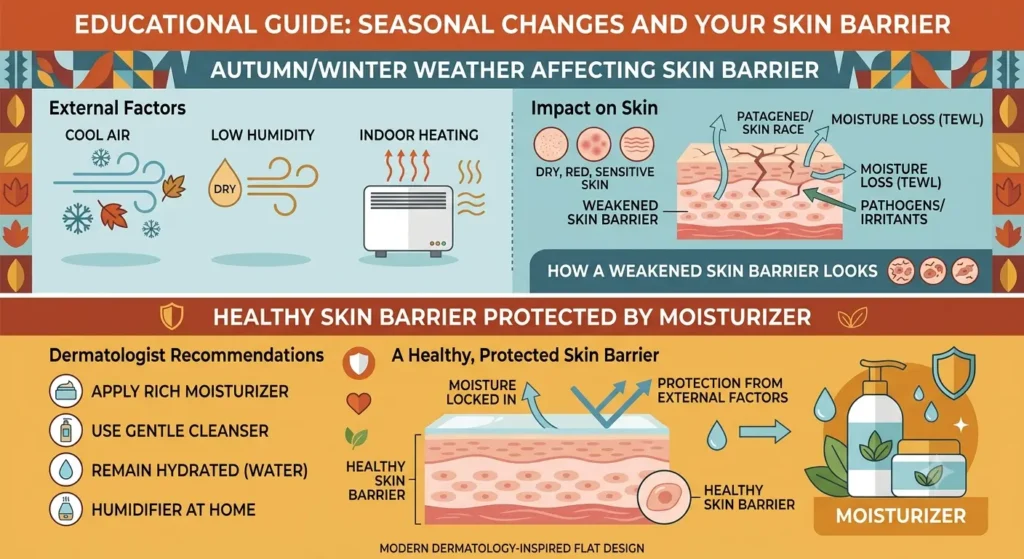
🍁 Why Weather Changes Affect Your Skin
Your skin is protected by a natural barrier made of oils, lipids, and skin cells. This barrier helps keep moisture inside while protecting against environmental irritants.
As the seasons change, several environmental factors begin working against this natural barrier.
🌬️ Lower Humidity
During autumn and winter, the air contains much less moisture than it does during summer. Dry air pulls water from the surface of your skin, making it easier for moisture to evaporate.
🌡️ Cooler Temperatures
Cold weather reduces your skin’s natural oil production. With fewer protective oils, your skin has a harder time holding onto moisture.
🏠 Indoor Heating
Heating systems make indoor environments comfortable for us—but much drier for our skin. Spending hours in heated rooms can increase water loss from your skin throughout the day.
💨 Wind Exposure
Autumn winds can strip away moisture and leave your skin feeling rough, irritated, or sensitive, especially on exposed areas like your face and hands.
☀️ UV Rays Still Matter
Even though temperatures are cooler, ultraviolet rays remain present throughout the year. Sun exposure can still contribute to skin damage and weaken your skin barrier if sunscreen is skipped.
📊 Comparison Table: How Seasonal Weather Affects Your Skin
| Weather Change | What Happens to Your Skin | Simple Solution |
|---|---|---|
| Lower humidity | Moisture evaporates faster | Apply a hydrating serum daily |
| Cooler temperatures | Less natural oil production | Switch to a richer moisturizer |
| Indoor heating | Skin becomes dehydrated | Moisturize morning and night |
| Wind exposure | Skin barrier weakens | Protect skin with moisturizer and SPF |
| Continued UV exposure | Skin damage and premature aging | Wear SPF 30+ every day |
📊 Comparison Table: Summer Skincare vs. Fall Skincare
| Summer Routine | Fall Routine |
|---|---|
| Lightweight gel moisturizer | Rich cream moisturizer |
| Oil-control cleanser | Gentle hydrating cleanser |
| Frequent exfoliation | Gentle exfoliation (1–2 times weekly) |
| Lightweight hydration | Hyaluronic acid serum |
| Sunscreen | Sunscreen (still essential every day) |
⭐ 10 Reasons Your Skin Gets Drier When the Weather Changes
1️⃣ Lower Humidity Pulls Moisture from Your Skin
One of the biggest reasons your skin becomes dry during seasonal changes is the drop in humidity.
Humidity refers to the amount of moisture in the air. During summer, higher humidity helps your skin retain water more effectively. As autumn arrives, the air becomes much drier, causing water to evaporate from your skin more quickly.
This process, known as transepidermal water loss (TEWL), weakens your skin barrier and leaves your skin feeling:
- Tight
- Rough
- Flaky
- Less comfortable after cleansing
✔ Simple Solution
Apply a hydrating serum followed by a moisturizer immediately after washing your face to help reduce moisture loss.
2️⃣ Your Skin Produces Less Natural Oil
Your skin naturally produces oils (sebum) that help lock in moisture and protect the skin barrier.
As temperatures cool, oil production often decreases. Without enough natural oil, your skin loses moisture more easily and may become more sensitive.
This is why people who have never experienced dry skin during summer may suddenly notice it in fall.
✔ Simple Solution
Switch from lightweight gel moisturizers to richer cream-based moisturizers containing:
- Ceramides
- Shea Butter
- Squalane
- Glycerin
3️⃣ Indoor Heating Makes the Air Extremely Dry
As outdoor temperatures fall, we spend more time indoors using heaters.
While heating keeps us warm, it also removes moisture from indoor air. Spending several hours in a heated room can gradually dry out your skin throughout the day.
Many people notice that their skin feels comfortable outdoors but becomes tight after spending time inside.
✔ Simple Solution
- Moisturize morning and evening.
- Consider using a humidifier in frequently used rooms.
- Drink water regularly throughout the day.
4️⃣ Long Hot Showers Remove Protective Oils
Nothing feels better than a hot shower on a cool day—but hot water is one of the most common causes of seasonal dry skin.
Hot water strips away your skin’s natural oils, leaving your skin more vulnerable to moisture loss.
✔ Simple Solution
Instead:
- Use lukewarm water.
- Limit showers to 5–10 minutes.
- Apply moisturizer within a few minutes of drying off.
5️⃣ You’re Still Using Your Summer Skincare Routine
One of the most common mistakes people make is assuming their summer routine will continue working during cooler months.
Products designed for hot, humid weather are often too lightweight once humidity begins to fall.
Signs your routine may need updating include:
- Skin feels tight after cleansing.
- Moisturizer absorbs too quickly.
- Flaky patches begin appearing.
- Makeup sits unevenly on the skin.
✔ Simple Solution
Gradually transition to more hydrating products rather than replacing your entire routine at once. Start with a richer moisturizer and a hydrating serum, then adjust other products as your skin’s needs change.
💡 Key Takeaway So Far
Your skin doesn’t become dry simply because it’s colder—it becomes dry because several environmental changes work together to weaken your skin’s natural moisture barrier. Understanding these causes is the first step toward preventing seasonal dryness and keeping your skin healthy throughout the year.
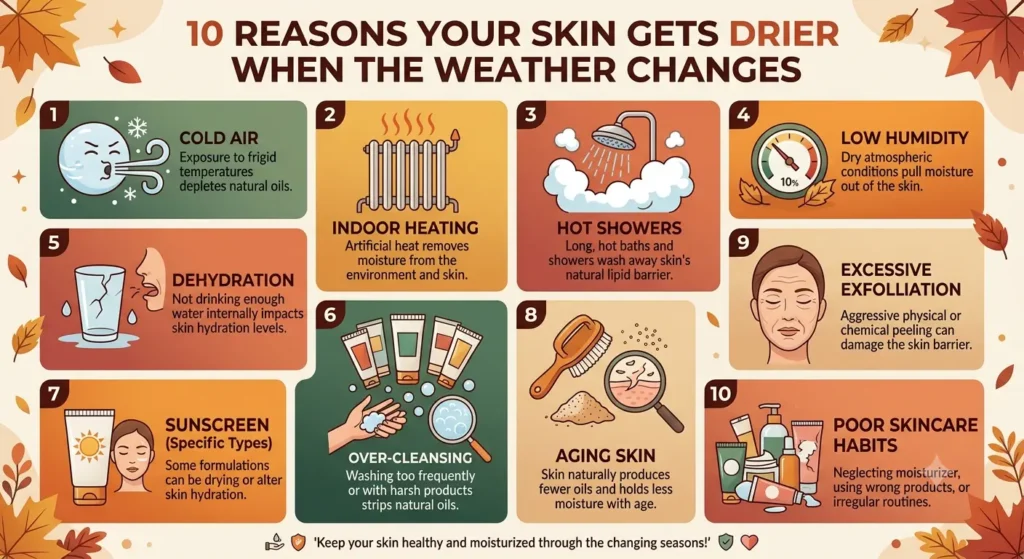
6️⃣ Wind Damages Your Skin Barrier
Cool autumn breezes may feel refreshing, but they can remove moisture from your skin and weaken its natural protective barrier. Areas that are constantly exposed—such as your face, lips, and hands—are usually affected first.
Common signs include:
- Redness
- Tightness
- Chapped lips
- Rough patches
✔ Simple Solution
Before spending time outdoors:
- Apply a rich moisturizer.
- Protect your lips with a nourishing lip balm.
- Wear sunscreen, even on cloudy days.
- Consider wearing a scarf or other protective clothing on particularly windy days.
7️⃣ You’re Not Drinking Enough Water
As temperatures cool, many people naturally drink less water because they don’t feel as thirsty.
While drinking water alone won’t completely prevent dry skin, staying hydrated supports your body’s overall functions and works alongside topical skincare products to maintain healthy skin.
✔ Simple Solution
Aim to:
- Drink water consistently throughout the day.
- Include water-rich foods like oranges, apples, cucumbers, soups, and leafy vegetables.
- Limit excessive caffeine or alcohol if you notice they contribute to dehydration.
8️⃣ Over-Exfoliation Weakens Your Skin
Exfoliation helps remove dead skin cells, but excessive exfoliation during cooler months can damage your skin barrier and increase moisture loss.
If your skin feels stinging or unusually sensitive after exfoliating, you may be doing it too often.
✔ Simple Solution
Instead:
✔ Exfoliate only 1–2 times per week.
✔ Choose gentle exfoliating products.
✔ Always apply moisturizer immediately afterward.
Healthy skin isn’t achieved through aggressive exfoliation—it’s achieved through a healthy skin barrier.
9️⃣ Skin Naturally Changes with Age
As we get older, our skin gradually produces less oil and loses some of its ability to retain moisture.
Seasonal weather changes can make these natural changes even more noticeable, especially during fall and winter.
This doesn’t mean you need an entirely different skincare routine—it simply means hydration becomes more important.
✔ Simple Solution
Look for moisturizers containing:
- Ceramides
- Hyaluronic Acid
- Niacinamide
- Squalane
- Shea Butter
These ingredients help support the skin barrier and improve hydration.
🔟 Skipping Sunscreen Damages Your Skin Barrier
Many people think sunscreen is only necessary during summer.
In reality, UVA rays remain present all year, even when temperatures are cool or the sky is cloudy.
Repeated UV exposure contributes to:
- Premature aging
- Reduced skin elasticity
- Uneven skin tone
- A weakened skin barrier
✔ Simple Solution
Make sunscreen the final step of your morning skincare routine every day, regardless of the season.
Choose a broad-spectrum SPF 30 or higher that suits your skin type.
🛒 Recommended Products
Build a Seasonal Hydration Routine
If changing weather is making your skin feel dry or uncomfortable, these product categories can help restore moisture and support a healthy skin barrier.
🧴 Gentle Hydrating Cleanser
A gentle cleanser removes dirt, sunscreen, and excess oil without stripping away your skin’s natural moisture.
🛒 Button: Compare Gentle Cleansers on Amazon
💧 Hyaluronic Acid Serum
A hydrating serum attracts moisture to the skin and helps reduce the feeling of tightness that often appears during seasonal changes.
🛒 Button: Browse Hydrating Serums on Amazon
🧴 Rich Moisturizer
A cream-based moisturizer creates a protective barrier that helps lock in hydration throughout cooler months.
🛒 Button: Shop Rich Moisturizers on Amazon
👄 Nourishing Lip Balm
Dry lips are often one of the first signs of seasonal weather changes. Daily lip balm helps protect and soften delicate lip skin.
🛒 Button: Explore Lip Balms on Amazon
☀️ Broad-Spectrum Sunscreen
Daily SPF protects your skin from year-round UV exposure while supporting long-term skin health.
🛒 Button: See Daily Sunscreens on Amazon
📊 Product Comparison Table
| Product Category | Main Purpose | When to Apply | Best For |
|---|---|---|---|
| Gentle Hydrating Cleanser | Cleans without drying the skin | Morning & Evening | All skin types |
| Hyaluronic Acid Serum | Boosts hydration | After cleansing | Dry & dehydrated skin |
| Rich Moisturizer | Locks in moisture | Morning & Evening | Dry to normal skin |
| Lip Balm | Prevents cracked lips | Throughout the day | Everyone |
| Sunscreen SPF 30+ | Protects from UV damage | Every morning | All skin types |
🍂 Common Seasonal Skincare Myths
Many misconceptions about seasonal skincare can actually make dryness worse.
❌ Myth 1: Dry Skin Means You’re Not Drinking Enough Water
Hydration is important, but seasonal dry skin is usually caused by environmental factors such as lower humidity and a weakened skin barrier. Moisturizers play a key role in preventing moisture loss.
❌ Myth 2: Oily Skin Doesn’t Need Moisturizer
Even oily skin can become dehydrated during cooler months. The goal is to choose a moisturizer that matches your skin type—not to skip moisturizer altogether.
❌ Myth 3: Cloudy Days Mean You Can Skip Sunscreen
Cloud cover doesn’t block all UVA rays. Daily sunscreen remains important throughout the year.
❌ Myth 4: More Exfoliation Fixes Dry Skin
Exfoliating too often removes protective oils and can worsen dryness. Gentle exfoliation combined with regular moisturizing is a better approach.
✅ Quick Seasonal Skincare Checklist
✔ Switch to a gentle hydrating cleanser.
✔ Apply a hydrating serum after cleansing.
✔ Upgrade to a richer moisturizer.
✔ Wear broad-spectrum SPF 30+ every morning.
✔ Moisturize your lips daily.
✔ Drink enough water.
✔ Limit hot showers.
✔ Exfoliate only once or twice weekly.
✔ Protect your skin from wind.
✔ Listen to your skin and adjust products as needed.
👨⚕️ Dermatologist Tips
Dermatologists generally recommend focusing on your skin barrier as the weather changes. Instead of adding many new products at once, make gradual adjustments that increase hydration and reduce irritation.
Ingredients such as ceramides, glycerin, hyaluronic acid, niacinamide, and squalane are commonly recommended because they help strengthen the skin barrier and reduce moisture loss. If your skin becomes persistently dry, cracked, or itchy despite following a gentle skincare routine, consult a dermatologist for personalized evaluation and treatment.

❓ Frequently Asked Questions
Why does my skin become dry when the weather changes?
As temperatures drop, humidity decreases and indoor heating becomes more common. These environmental changes increase moisture loss from your skin and weaken its natural protective barrier, making your skin feel dry, tight, or flaky.
Can weather changes affect oily skin too?
Yes. Even oily skin can become dehydrated during seasonal changes. You may still produce oil, but your skin can lack water, making hydration just as important as oil control.
Should I change my skincare routine every season?
Not completely. Instead of replacing your entire routine, make gradual adjustments. Switch to a gentler cleanser, use a richer moisturizer, and add extra hydration as your skin’s needs change.
Is sunscreen still necessary during fall and winter?
Absolutely. UVA rays remain present throughout the year, even on cloudy days. Daily broad-spectrum SPF 30 or higher helps protect your skin from premature aging and sun damage.
What’s the fastest way to improve seasonal dry skin?
Focus on strengthening your skin barrier by using a gentle cleanser, hydrating serum, richer moisturizer, and avoiding overly hot showers. Consistency is more important than using many products.
🔗 Continue Reading
Expand your seasonal skincare knowledge with these helpful guides:
🍂 Seasonal Skincare
- How to Transition Your Skincare Routine from Summer to Winter (2026): 10 Expert Tips for Healthy Skin
- Fall Skincare Checklist for Beginners (2026): 10 Easy Steps for Healthy, Hydrated Skin
- 7 Summer Skincare Mistakes That Are Damaging Your Skin (And How to Avoid Them)
- How to Prevent Sunburn Naturally (2026): 10 Simple Tips That Actually Work
💧 Hydration & Moisturizing
- Dry Skin vs Dehydrated Skin: What’s the Difference?
- 7 Signs Your Skin Is Dehydrated: Learn How to Fix It Naturally
- 7 Best Hyaluronic Acid Serums (2026): Top Picks for Hydrated & Glowing Skin
- 7 Best Moisturizers for Dry Skin (2026): Top Picks for Deep Hydration
🧴 Daily Skincare Essentials
- How to Build a Daily Skincare Routine (2026): Best Morning & Night Guide for Every Skin Type
- Best Face Washes for Every Skin Type (2026)
💄 Complete Body Care
- 7 Best Body Lotions for Dry Summer Skin (2026): Stay Soft & Hydrated
- 7 Best Lip Balms for Dry & Chapped Lips (2026): Top Picks for Soft, Healthy Lips
- 7 Best Foot Creams for Dry & Cracked Heels (2026): Top Picks for Soft, Healthy Feet
- How to Protect Your Hair from Sun Damage & Dust (2026): 10 Simple Tips That Actually Work
- 7 Best Sunglasses for UV Protection (2026): Top Picks for Eye Safety & Style