

Amazon Associate Disclosure: As an Amazon Associate, I earn from qualifying purchases. If you purchase a product through links on this page, I may earn a small commission at no additional cost to you.

Best Hand Creams for Dry Hands: Introduction
Dry hands are one of the most common skincare problems when temperatures begin to fall. Cooler air, lower humidity, frequent hand washing, indoor heating, and exposure to wind can gradually remove moisture from the skin. Why skin gets drier when the weather changes
You may notice your hands feeling tight after washing, rough around the knuckles, flaky between the fingers, or uncomfortable when you move them. For some people, the problem becomes especially noticeable during fall and winter.
The good news is that a consistent hand-care routine can help.
A good hand cream doesn’t simply make your hands feel softer for a few minutes. The right formula can help replenish moisture, reduce moisture loss, and support the skin’s protective barrier.
In this guide, we’ll look at 7 of the best hand-cream categories and product types for dry hands in 2026, what ingredients to look for, how to choose a formula for your needs, and how to build a simple routine that keeps your hands comfortable through the colder months.
Editor’s Note: Product availability, prices, formulas, and ratings can change. Always check the current Amazon product page before purchasing.
🧤 Why Do Your Hands Get So Dry?
Your hands experience a lot of daily stress. 7 Signs of dehydrated skin
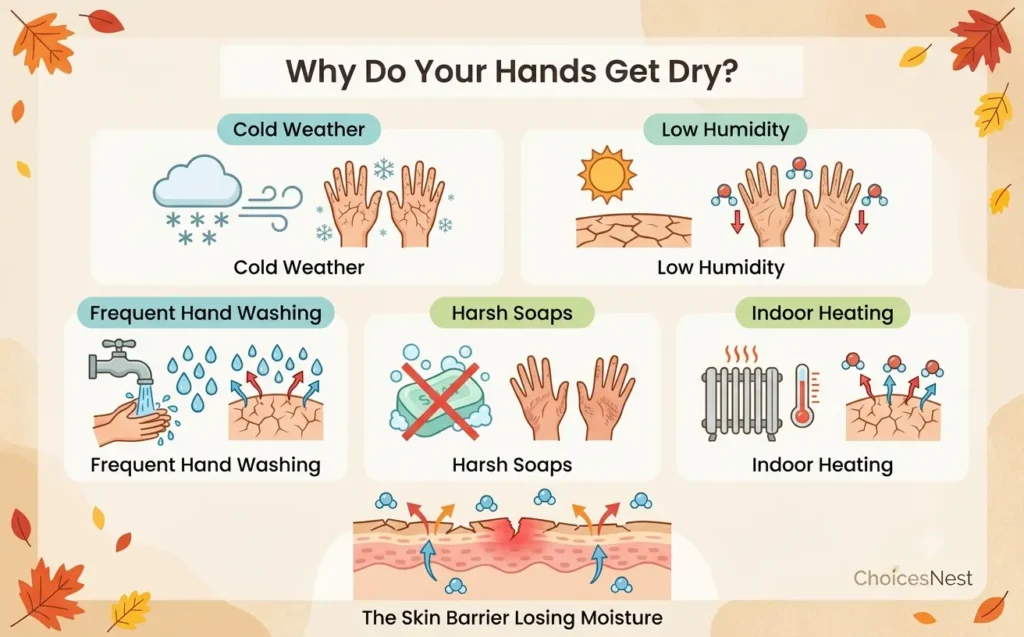
Unlike areas of the body that remain covered by clothing, your hands are repeatedly exposed to water, soap, weather, cleaning products, and environmental conditions.
🌬️ Cold and Dry Air
When outdoor temperatures fall, humidity often decreases. Dry air can increase moisture loss from the skin, leaving hands feeling rough and tight.
🧼 Frequent Hand Washing
Hand washing is essential for hygiene, but repeated exposure to water and cleansing agents can remove some of the skin’s natural oils.
🧴 Harsh Soaps
Some soaps and heavily fragranced cleansing products may be irritating or drying for people with sensitive skin.
🏠 Indoor Heating
Heating systems can make indoor environments comfortable while reducing humidity, potentially contributing to dry skin.
💨 Wind Exposure
Cold wind can make already-dry hands feel even more uncomfortable.
📊 Summer vs. Fall/Winter Hand Care
| Factor | Summer | Fall/Winter |
|---|---|---|
| Humidity | Often higher | Often lower |
| Hand dryness | Usually less noticeable | Often more noticeable |
| Moisturizer | Lightweight formula may be sufficient | Richer cream may be preferred |
| Outdoor exposure | Heat and sun | Cold, wind and dry air |
| Hand washing | Frequent | Frequent |
| Hand protection | SPF important | Moisturizer + protection important |
The goal isn’t to completely change your routine when fall arrives. Instead, adjust your products when your hands start showing signs that they need more moisture.
Transition your skincare routine from summer to winter
🧴 What Makes a Good Hand Cream?
Before choosing a product, look at the ingredients and formula, rather than focusing only on packaging or marketing claims.
Some ingredients are particularly useful for dry hands.
📊 Best Ingredients for Dry Hands
| Ingredient | What It Does | Best For |
|---|---|---|
| Glycerin | Helps attract moisture | Everyday hydration |
| Ceramides | Supports the skin barrier | Dry or compromised skin |
| Shea Butter | Provides rich emollient moisture | Very dry hands |
| Petrolatum | Helps reduce moisture loss | Extremely dry areas |
| Hyaluronic Acid | Helps attract water | Dehydrated skin |
| Urea | Helps soften and hydrate dry skin | Rough, thickened areas |
| Squalane | Provides lightweight emollient support | Dry but texture-sensitive skin |
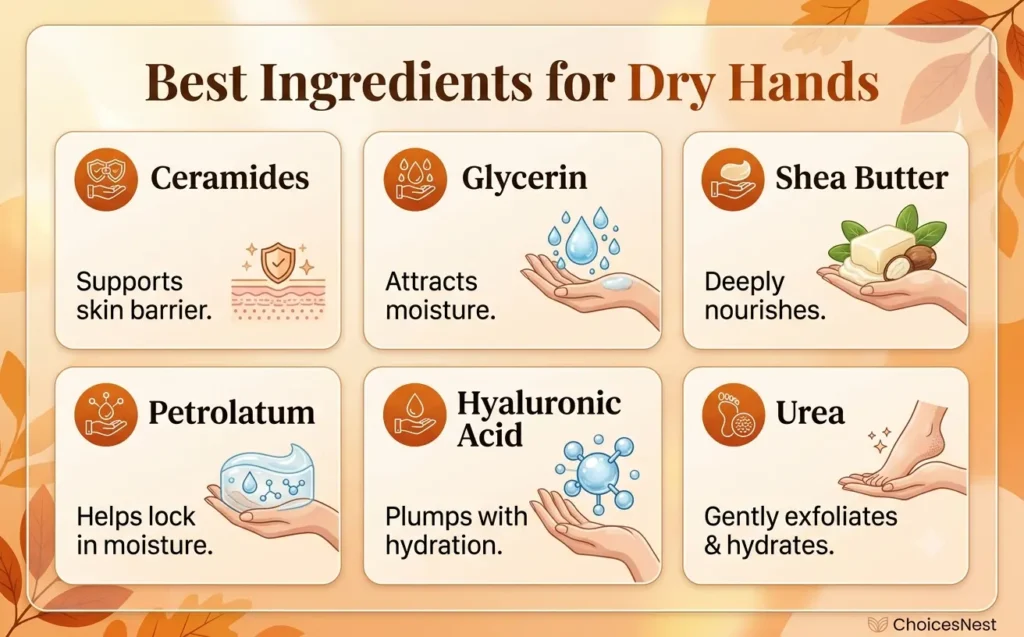
No single ingredient is automatically “best.” The ideal choice depends on your skin, how dry your hands are, and whether you prefer a lightweight or richer texture.
⭐ 7 Best Hand Cream Types for Dry Hands
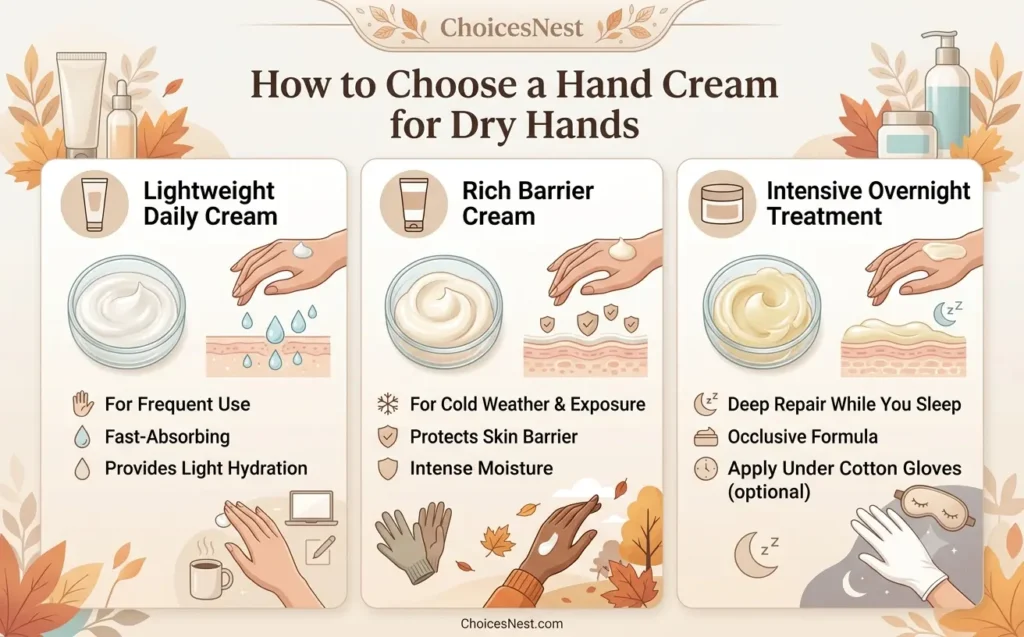
1. 🧴 Best Overall: Barrier-Restoring Hand Cream
If your hands are consistently dry, a barrier-focused hand cream is an excellent place to start.
Look for formulas containing ingredients such as ceramides, glycerin, and emollients.
These products are designed to provide hydration while helping support the skin barrier.
Best for:
- Regularly dry hands
- Cooler weather
- Frequent hand washing
- Everyday use
What to look for
Choose a formula that feels moisturizing without being so heavy that you avoid using it.
🛒 Explore Barrier Hand Creams on Amazon
2. 💧 Best for Dehydrated Hands: Hydrating Hand Cream
Sometimes your hands aren’t extremely rough—they simply feel tight and dehydrated.
A hydrating formula containing glycerin or hyaluronic acid may be a good option.
These ingredients help attract and retain moisture, making the skin feel more comfortable.
Best for:
- Mild dryness
- Tight-feeling skin
- Daytime use
- People who dislike greasy creams
🛒Browse Hydrating Hand Creams on Amazon
3. 🧈 Best for Very Dry Hands: Rich Hand Cream
If lightweight lotions disappear almost immediately after application, you may benefit from a richer formula.
Ingredients such as shea butter, petrolatum, and other emollients can provide a more substantial moisturizing layer.
Best for:
- Very dry hands
- Cold weather
- Rough knuckles
- Nighttime use
🛒 Shop Rich Hand Creams on Amazon
4. 🌿 Best for Sensitive Hands: Fragrance-Free Hand Cream
If your hands become dry, itchy, or irritated easily, a fragrance-free formula can be a sensible choice.
Fragrance isn’t automatically bad for everyone, but people with sensitive skin may prefer simpler formulas with fewer potential irritants.
Look for products labeled fragrance-free rather than simply “unscented,” because those terms aren’t necessarily interchangeable.
Best for:
- Sensitive skin
- Easily irritated hands
- Frequent hand washing
- People who dislike strong scents
What to look for
Consider a fragrance-free cream containing ingredients such as glycerin, ceramides, petrolatum, or other moisturizing agents.
🛒 Browse Fragrance-Free Hand Creams on Amazon
5. 🛡️ Best for Frequent Hand Washing: Protective Barrier Cream
If you’re constantly washing your hands, ordinary moisturizer may not always feel sufficient.
Frequent washing can repeatedly remove some of the skin’s surface oils, making it harder for your hands to stay comfortable.
A barrier-focused hand cream can help provide a protective moisturizing layer between washes.
Best for:
- Frequent hand washers
- Healthcare and service workers
- Parents
- People using hand sanitizer regularly
- Cold-weather hand care
Simple strategy
Don’t wait until your hands become extremely dry.
Apply cream after washing and drying your hands, particularly when you notice tightness.
🛒 Compare Protective Hand Creams on Amazon
6. 🌙 Best for Overnight Care: Intensive Hand Cream
Nighttime is an excellent opportunity to use a richer hand cream.
Because you’re not constantly washing your hands, touching objects, or working with your hands while asleep, a thicker formula can remain on the skin longer.
For particularly dry hands, some people also like wearing soft cotton gloves over their moisturizer at night.
Best for:
- Very dry hands
- Rough knuckles
- Winter dryness
- Overnight skincare routines
How to use it
Apply a generous layer before bed, concentrating on particularly dry areas such as the knuckles and backs of the hands.
7. 💰 Best Budget-Friendly Option: Simple Moisturizing Cream
You don’t necessarily need an expensive hand cream to care for dry hands.
A basic moisturizer containing effective ingredients such as glycerin, petrolatum, ceramides, or other emollients can be perfectly useful.
In fact, a reasonably priced cream that you use consistently can be more practical than an expensive product that you only apply occasionally. Best moisturizers for dry skin
Best for:
- Everyday hand care
- Students
- Families
- Budget-conscious shoppers
- Keeping one cream at home and another in your bag
🛒 Find Affordable Hand Creams on Amazon
📊 Which Hand Cream Is Right for You?
Here’s a quick comparison to make choosing easier.
| Hand Cream Type | Best For | Texture | Best Time | Key Ingredients to Consider |
|---|---|---|---|---|
| Barrier-restoring | Regular dryness | Medium-rich | Day & night | Ceramides, glycerin |
| Hydrating | Mild dehydration | Lightweight | Daytime | Glycerin, hyaluronic acid |
| Rich cream | Very dry hands | Thick | Night/cold weather | Shea butter, petrolatum |
| Fragrance-free | Sensitive skin | Varies | Day & night | Simple moisturizing formula |
| Protective barrier | Frequent washing | Medium-rich | After washing | Occlusive/emollient ingredients |
| Overnight treatment | Rough, dry hands | Very rich | Before bed | Petrolatum, shea butter |
| Budget-friendly | Everyday use | Varies | Anytime | Glycerin, emollients |
Important: These categories overlap. A single product can be fragrance-free, rich, barrier-supporting, and suitable for overnight use at the same time.
🧐 How to Choose the Best Hand Cream for Your Needs
Instead of automatically choosing the product with the highest rating or most expensive packaging, consider these five questions.
1. How dry are your hands?
For mild dryness, a lightweight cream may be enough.
For severe roughness, a richer formula may be more comfortable.
2. Do you have sensitive skin?
If your hands react easily to skincare products, consider fragrance-free options.
3. Do you wash your hands frequently?
If yes, choose something you can comfortably reapply throughout the day.
4. Do you hate greasy textures?
A product can be highly moisturizing without being extremely greasy. Look for a lighter daytime formula and reserve richer creams for nighttime.
5. Will you actually use it?
This sounds simple, but it’s important.
The “best” hand cream is ultimately one that fits your routine well enough that you’ll use it consistently.
🖐️ 5-Step Hand-Care Routine for Dry Hands
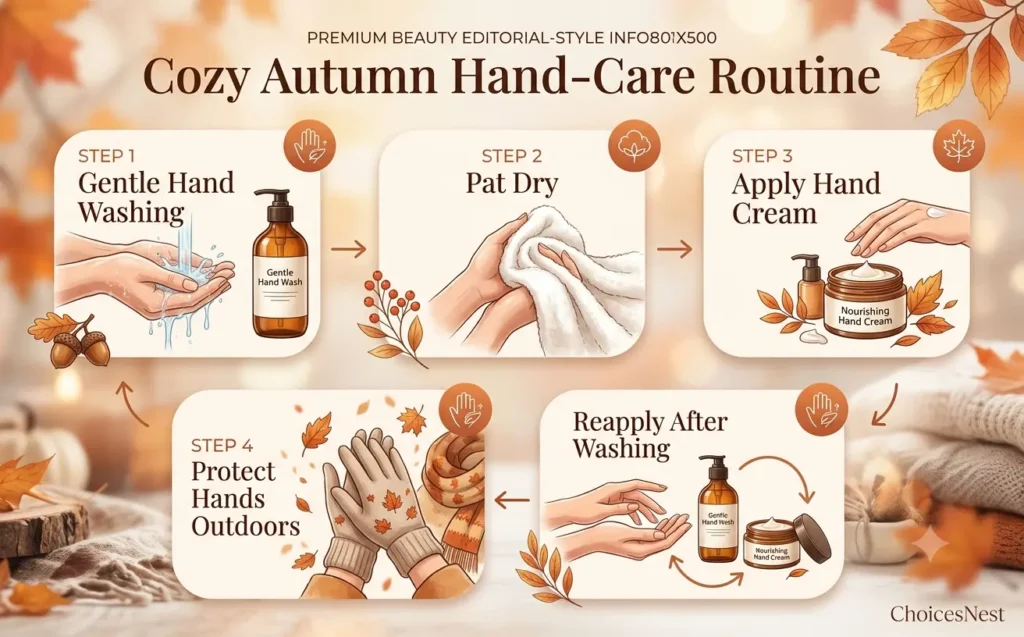
A good hand cream works best when it’s part of a consistent routine.
Step 1: Wash With Lukewarm Water
Very hot water may strip natural oils from your skin.
Use comfortably warm or lukewarm water instead. Fall skincare checklist
Step 2: Choose a Gentle Cleanser
If your hands are frequently dry, consider using a gentle cleanser rather than repeatedly exposing them to harsh cleansing products.
Step 3: Pat Your Hands Dry
Don’t aggressively rub your hands with a towel.
Gently pat them dry while leaving a small amount of moisture on the skin.
Step 4: Apply Hand Cream
Apply moisturizer soon after washing.
Pay particular attention to:
- Knuckles
- Fingertips
- Backs of hands
- Areas around the nails
Step 5: Reapply Throughout the Day
One application in the morning may not be enough if you wash your hands frequently.
Keep a small tube in your:
- Handbag
- Desk
- Car
- Bathroom
- Work area
That makes consistent application much easier.
✅ Quick Hand-Care Checklist
Keep this simple checklist in mind as the weather gets cooler:
| ✔ Habit | Why It Helps |
|---|---|
| Use lukewarm water | Avoids excessive heat exposure |
| Choose a gentle cleanser | Helps reduce unnecessary dryness |
| Moisturize after washing | Replenishes moisture |
| Reapply during the day | Helps maintain hydration |
| Use richer cream at night | Supports overnight moisturization |
| Protect hands from cold wind | Reduces environmental exposure |
| Consider gloves outdoors | Provides physical protection |
| Don’t over-exfoliate | Helps avoid unnecessary irritation |
| Keep hand cream nearby | Makes consistency easier |
| Continue SPF on exposed hands | Helps protect against UV exposure |
🛒 Recommended Shopping Strategy
Rather than buying several products at once, start with one daytime hand cream and one richer nighttime option.
For daytime:
Choose something:
- Comfortable
- Fast or moderately absorbing
- Easy to reapply
- Suitable for your skin sensitivity
For nighttime:
Choose something:
- Richer
- More occlusive
- Comfortable enough to leave on overnight
This two-product approach can be simpler and more practical than maintaining a complicated hand-care routine.
🛍️ How We Recommend Choosing a Hand Cream
When comparing hand creams, don’t focus on one ingredient or the number of stars alone. A better approach is to consider your dryness level, skin sensitivity, preferred texture, and how often you’ll apply the product.
| Your Main Concern | What to Look For | Ideal Product Type |
|---|---|---|
| Mild dryness | Glycerin, hyaluronic acid | Lightweight hydrating cream |
| Very dry hands | Shea butter, petrolatum, rich emollients | Rich hand cream |
| Sensitive hands | Fragrance-free, simple formula | Fragrance-free cream |
| Frequent hand washing | Barrier-supporting ingredients | Protective hand cream |
| Rough knuckles | Rich moisturizers, urea | Intensive treatment |
| Nighttime dryness | Thicker, more occlusive formula | Overnight hand cream |
| Everyday budget care | Simple moisturizing ingredients | Affordable daily cream |
💡 Our Practical Recommendation
You don’t necessarily need seven different hand creams.
For most people, a two-product strategy is more practical:
Daytime: A comfortable, easy-to-reapply hand cream.
Nighttime: A richer formula that provides more substantial moisturization while you sleep.
This gives you flexibility without turning hand care into a complicated routine.
❓ Frequently Asked Questions
How often should I apply hand cream?
Apply hand cream whenever your hands feel dry or tight, and especially after washing them. People who wash their hands frequently may need to reapply several times throughout the day.
What ingredients are best for very dry hands?
Look for moisturizing and barrier-supporting ingredients such as glycerin, ceramides, petrolatum, shea butter, squalane, and urea. The best combination depends on your skin and how dry or rough it is.
Should I use hand cream after every hand wash?
If your hands become dry easily, applying moisturizer after washing can be helpful. Keep a small tube near your sink or in your bag so you don’t have to remember to look for it later.
Is a thick hand cream better than a lightweight lotion?
Not necessarily. Rich creams can be useful for very dry hands, particularly at night, while lightweight formulas may be more convenient during the day.
The best product is one that provides enough moisture and that you will actually use consistently.
Can I use facial moisturizer on my hands?
Yes, generally you can use a facial moisturizer on your hands. However, hand creams are often formulated with textures and ingredients specifically suited to frequent hand washing and the thicker skin found on the hands.
Should I apply hand cream before bed?
Yes. Nighttime can be a convenient opportunity to use a richer hand cream because you won’t immediately wash it off or need to touch as many surfaces.
Why are my knuckles especially dry?
The knuckles are frequently exposed to washing, friction, cold air, and movement. They can therefore become noticeably rough or dry when environmental conditions become harsher.
Apply moisturizer carefully around the knuckles and other areas that tend to become rough.
Can hand cream prevent cracked hands?
Regular moisturizing can help reduce dryness and support the skin barrier, which may help prevent some cracking associated with dry skin. However, severely cracked, painful, bleeding, or persistent skin problems may require professional evaluation.
Do I still need sunscreen on my hands?
Yes. The backs of your hands can receive UV exposure throughout the year. When they’re exposed outdoors, applying a broad-spectrum sunscreen can help protect against UV-related skin damage.