How to Decorate With Indoor Plants: Introduction
Indoor plants can completely change the feeling of a room. A simple plant can add color, texture, height, and a natural element to spaces that might otherwise feel plain. But decorating with plants isn’t simply about placing a plant wherever you find an empty corner.
The pot, height, location, grouping, and surrounding furniture all affect the final look.
Whether you have a large living room, a small apartment, or just one sunny windowsill, you can use plants as part of your overall decorating style.
If you’re decorating a compact living room, our Small Living Room Decorating Ideas guide has more ways to use furniture, lighting, and available space effectively.
For more ideas specifically designed for compact bedrooms, see our Small Bedroom Decorating Ideas guide.
If you enjoy seasonal decorating, explore our Fall & Holiday Home Decor Ideas for simple ways to refresh your home throughout the season.
For another seasonal styling project, see our Halloween Home Decor Ideas for easy ways to add festive accents without overwhelming your home.
Here are 10 easy indoor plant decor ideas to help make your home feel fresher, warmer, and more inviting.
Important: Choose plants according to your home’s light conditions and care requirements. A beautiful plant won’t stay decorative for long if its environment doesn’t suit it.
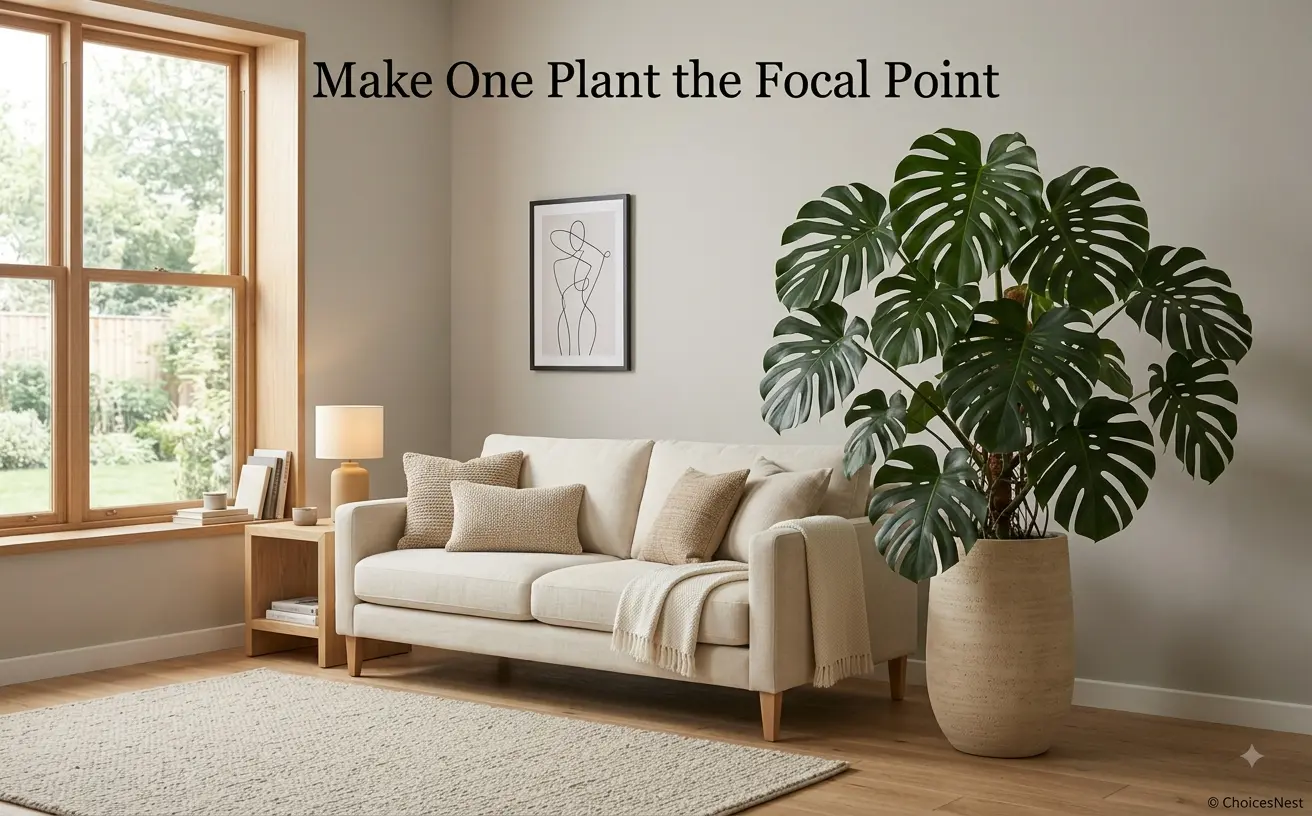
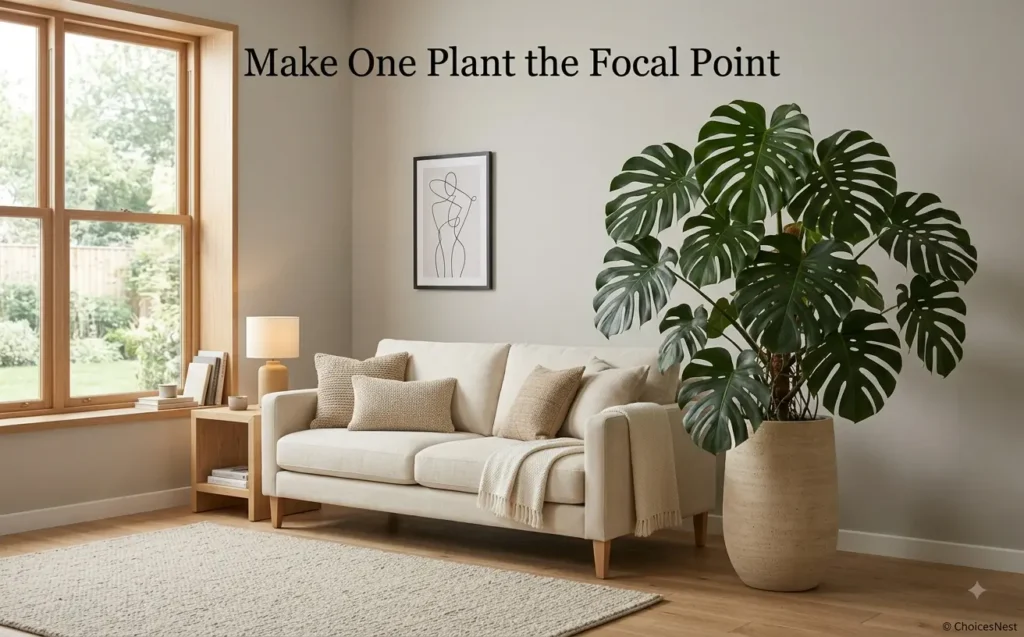
1. Use One Large Plant as a Focal Point
One large indoor plant can have more impact than several tiny plants scattered around a room. A tall plant works particularly well in an empty corner beside:
- A sofa
- TV console
- Bookshelf
- Window
- Armchair
- Entryway furniture
Plants with a naturally tall or upright form can add vertical interest and help an otherwise empty corner feel intentional.
📊 Large Plant vs. Small Plants
| Approach | Best For | Visual Effect |
|---|---|---|
| One large plant | Empty corners | Strong focal point |
| 2–3 medium plants | Shelves/stands | Balanced |
| Several small plants | Windowsills | Layered |
| Mixed sizes | Large rooms | Dynamic |
💡 Styling Tip
Don’t squeeze a large plant tightly between furniture. Give it some breathing room so the leaves can become part of the room’s visual composition.
Amazon Associate Disclosure: As an Amazon Associate, I earn from qualifying purchases. If you purchase a product through links on this page, I may earn a small commission at no additional cost to you.
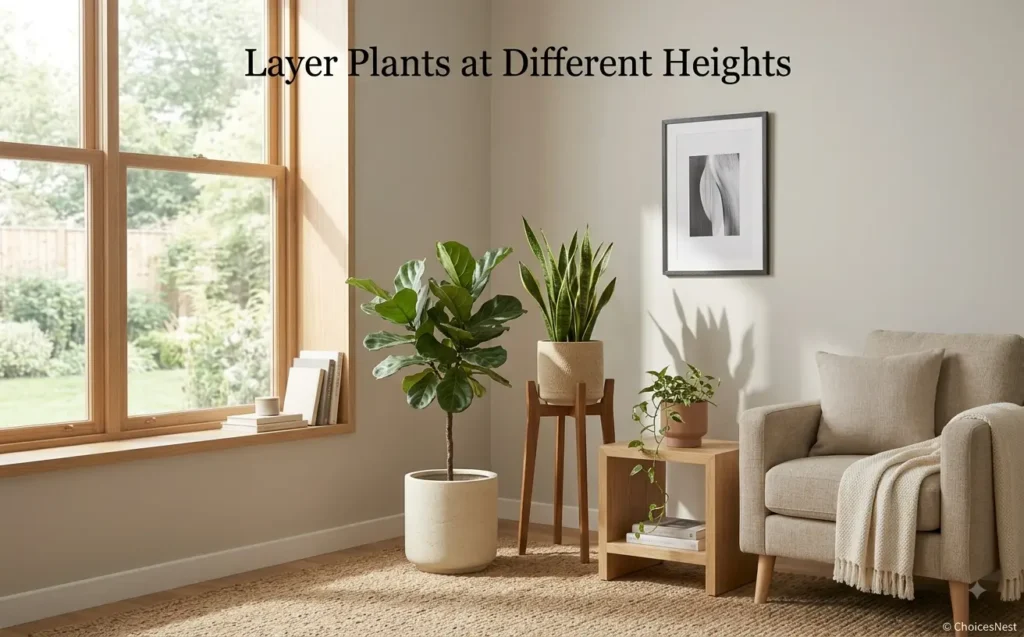
2. Group Plants at Different Heights
If you have several smaller plants, avoid placing them all at exactly the same height. Instead, create visual layers. For example:
Floor plant → plant stand → tabletop plant
This creates more depth and makes the arrangement feel intentional.
You can achieve different heights with:
- Plant stands
- Stools
- Shelves
- Side tables
- Hanging planters
- Different-sized pots
🎯 Simple Rule
Choose three different heights rather than placing three plants side-by-side on the same surface. This can make even a small collection look more professionally styled.
3. Style Your Windowsill
A windowsill can become a natural display area for smaller plants. Choose compact varieties that suit the available light and arrange them without blocking the window completely.
You can combine:
- Small leafy plants
- Trailing plants
- Small ceramic pots
- One decorative object
- A simple glass vase
☀️ Light Matters
Before placing a plant on a windowsill, check whether it needs bright direct light, indirect light, or lower light. The prettiest arrangement won’t work if the plants aren’t receiving suitable conditions. For pet owners, it’s also worth checking whether a particular plant is considered toxic to cats or dogs before bringing it home.
📊 Quick Plant Placement Guide
| Location | What to Consider |
|---|---|
| Sunny window | Bright-light requirements |
| Bedroom | Available natural light |
| Dark corner | Choose suitable low-light plants |
| Bathroom | Humidity + available light |
| Shelf | Plant size + weight |
| Entryway | Traffic + temperature |
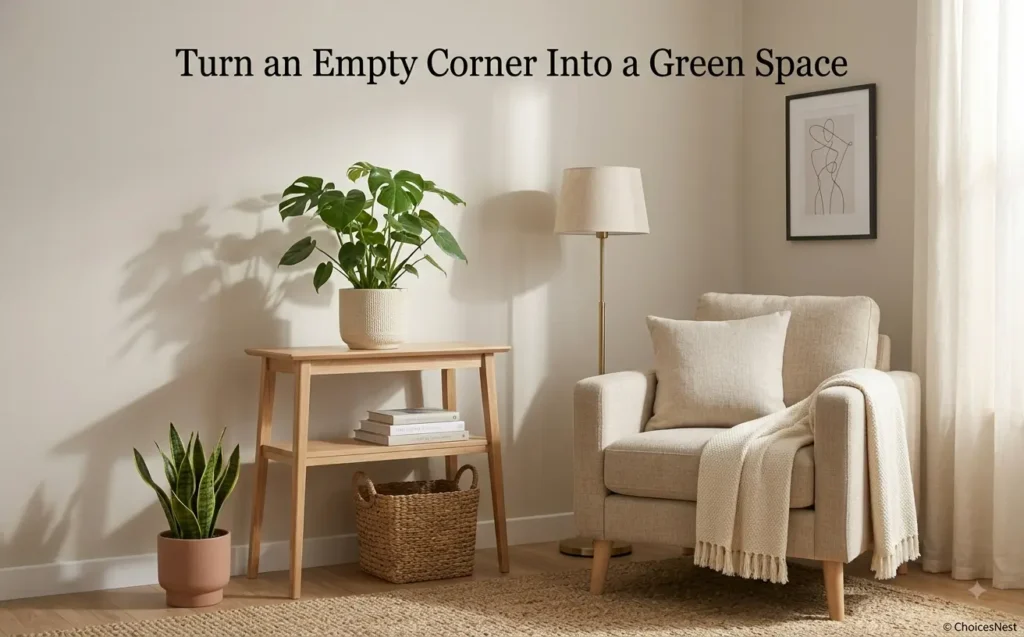
4. Create a Small Green Corner
You don’t need an entire indoor garden to create a natural atmosphere. Choose one underused corner and turn it into a small green zone.
For example:
Plant + plant stand + basket + small stool
can create a simple decorative arrangement. This works particularly well beside:
- A reading chair
- Empty wall
- Window
- Balcony door
- Bedroom dresser
Keep the surrounding area relatively simple so the plants remain the visual focus.
🌿 5. Match Your Planters to Your Decor
The plant is only one part of the visual. The planter matters too.
A beautiful plant can look disconnected from the room if its container clashes with the surrounding decor. For a cohesive look, coordinate planters with your existing colors and materials.
📊 Planter Style Guide
| Planter | Best Interior Style |
|---|---|
| Cream ceramic | Minimal / neutral |
| Terracotta | Rustic / natural |
| Matte black | Modern |
| Woven basket | Cozy / boho |
| Wooden planter | Organic |
| Textured stone | Contemporary |
You don’t need identical pots throughout the home. Instead, choose related colors or materials so the plants feel connected to the rest of your decor.
💰 Budget Tip
If you already own attractive containers, use decorative outer baskets or cachepots instead of replacing every plant pot.
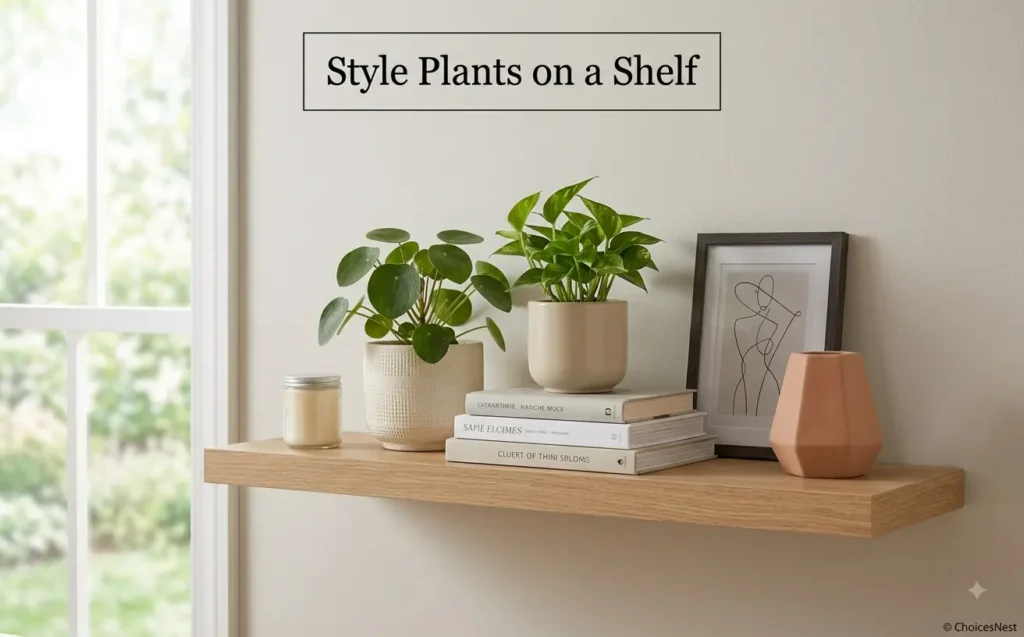
📚 6. Turn a Shelf Into a Green Display
Shelves are an easy way to incorporate plants without taking up valuable floor space. Instead of filling an entire shelf with plants, mix greenery with your existing decor.
Try combining:
- Small plants
- Books
- Ceramic objects
- Small framed artwork
- Candles
- Decorative boxes
The greenery softens harder materials such as wood, metal, and glass.
💡 Styling Tip
Don’t put every plant at the same depth. Move some items slightly forward or backward to create a more natural layered arrangement. For a narrow shelf, one or two small plants may be enough.
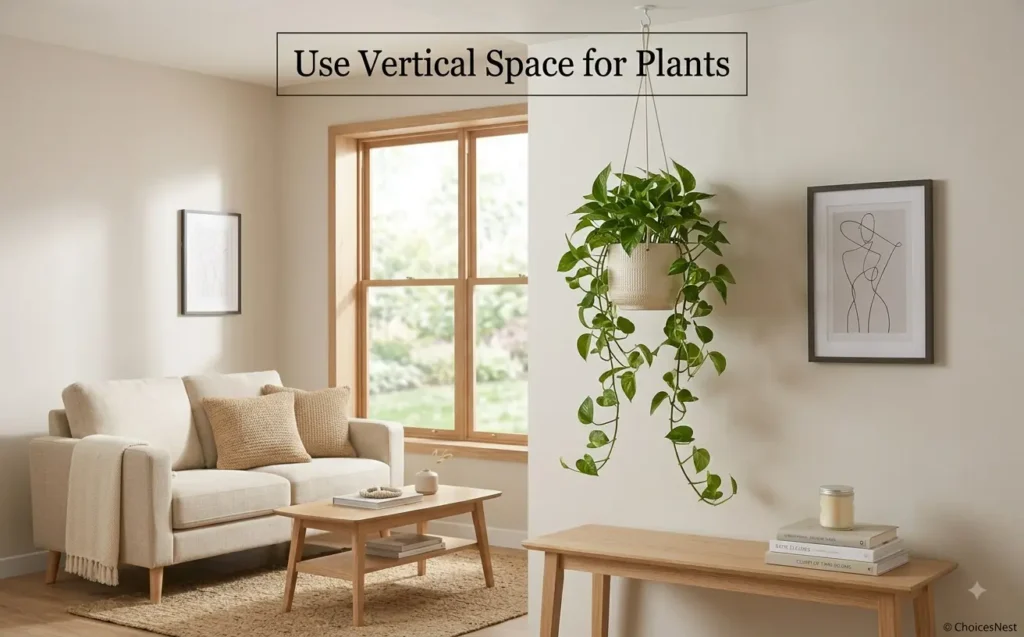
🌱 7. Use Hanging Plants to Save Floor Space
Hanging plants can be especially useful when floor space is limited. A hanging planter can add greenery at eye level or slightly above it without taking up a table, shelf, or corner.
Good locations can include:
- Near a bright window
- Kitchen corner
- Empty wall area
- Balcony doorway
- Open shelving area
However, make sure the hanging location is secure and appropriate for the plant’s light requirements.
🏠 Small-Space Advantage
If your room already has furniture occupying most of the floor, use vertical space instead. This can make the room feel greener without making the floor look crowded.
⚠️ Practical Tip
Avoid hanging plants where people regularly walk underneath them. Choose a secure installation method and make sure the planter is appropriate for the mounting surface and weight.
🛏️ 8. Add Plants to Your Bedroom Carefully
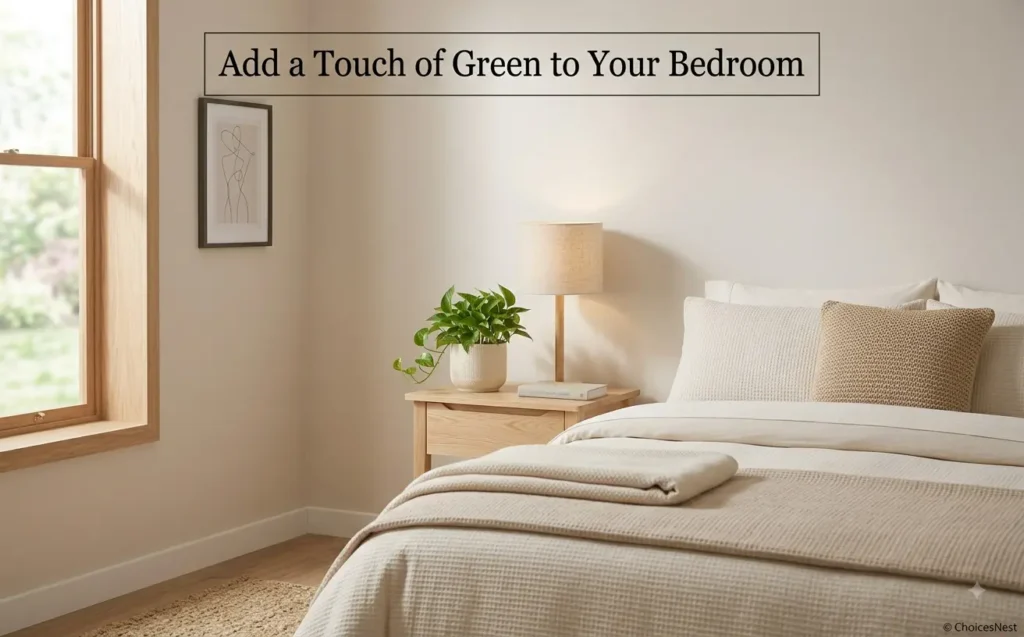
A small plant can make a bedroom feel softer and more connected to nature. You don’t need several plants. One carefully positioned plant can be enough.
Consider placing one on:
- A dresser
- Bedside table
- Window ledge
- Small plant stand
- Empty bedroom corner
Choose plants according to your bedroom’s light and temperature conditions.
🌿 Keep It Simple
Bedrooms generally benefit from a calmer visual arrangement. Instead of creating a large plant collection, combine:
One plant + neutral planter + simple surrounding decor
This keeps the space relaxing rather than visually busy.
🌿 Choosing the Right Plant Display for Your Space
Not every decorating method works equally well in every room.
| Your Space | Best Plant Decor Approach |
|---|---|
| Small apartment | Hanging plant or narrow stand |
| Large living room | One statement plant |
| Bedroom | One small tabletop plant |
| Empty corner | Tall plant + stand |
| Shelving | Small plants + decor |
| Sunny windowsill | Compact light-loving plants |
| Busy room | One simple plant |
The goal isn’t to maximize the number of plants. It’s to make greenery work with your existing furniture and layout.
💰 Budget-Friendly Plant Decorating
You don’t have to buy expensive planters or furniture to create attractive plant displays. Before shopping, look around your home.
You may already have:
- Wooden stools
- Baskets
- Small tables
- Ceramic containers
- Books
- Trays
Some of these can become plant-display accessories.
Smart approach:
Buy the plant first → assess its size → choose the display → then buy accessories if needed.
This prevents purchasing a decorative stand or planter that doesn’t actually work with the plant or available space.
🛒 Natural Amazon product categories
This article also gives us several natural product categories that we can find on Amazon:
| Article Section | Relevant Products |
|---|---|
| Large focal plant | Large decorative planters |
| Plant heights | Plant stands |
| Windowsill | Small ceramic pots |
| Shelf styling | Small planters |
| Hanging plants | Hanging planters & hooks |
| Bedroom | Small decorative planters |
| Budget decor | Baskets & plant stands |
We should keep affiliate recommendations relevant and selective rather than adding links to every item mentioned.
9. Use Plants to Soften Hard Surfaces
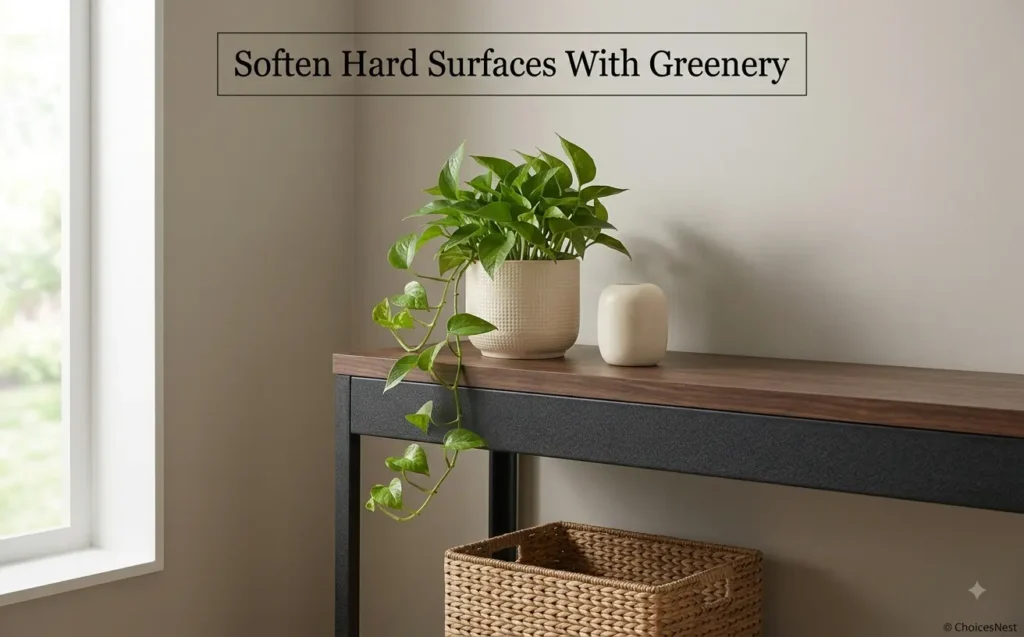
Indoor plants can make materials such as wood, metal, glass, and stone feel warmer. For example, a simple wooden console can look more inviting when paired with a leafy plant.
You can also soften:
- Metal shelving
- Glass tables
- Wooden cabinets
- Stone countertops
- Neutral bookcases
💡 Simple Styling Formula
Hard surface + greenery + natural texture
For example:
Wooden console + ceramic planter + woven basket
This creates contrast without requiring lots of decorative objects.
🌿 10. Create a Consistent Plant Style Throughout Your Home
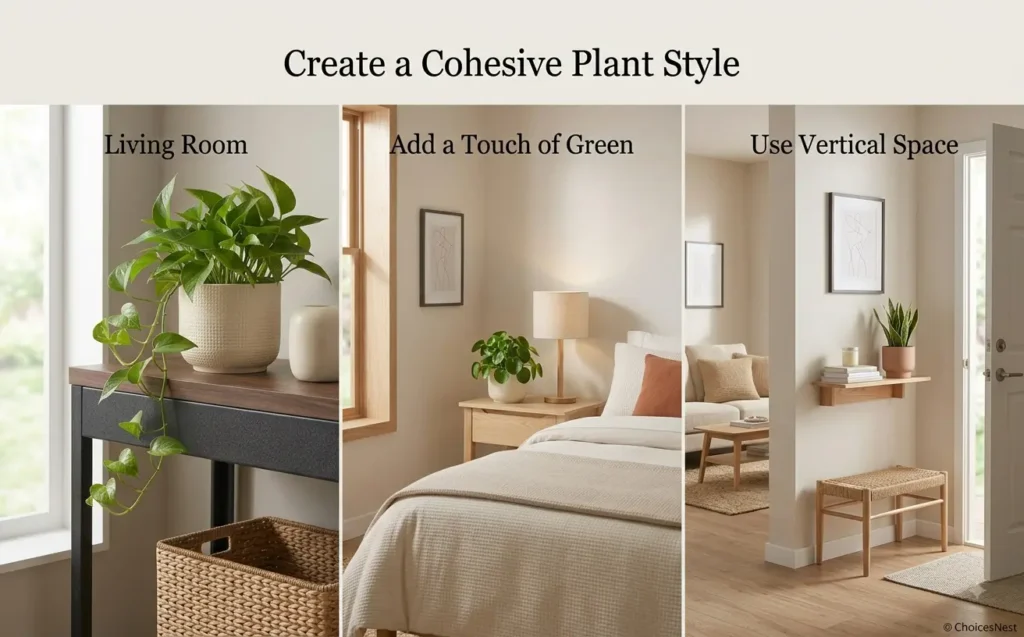
If you have plants in several rooms, they don’t need to look identical. But creating a visual connection between them can make your home feel more cohesive.
You might repeat:
- Similar planter colors
- Natural materials
- Similar shades of green
- Wooden plant stands
- Woven baskets
- Simple ceramic containers
For example, cream ceramic planters could appear in your living room and bedroom, while natural wood stands provide another repeated element.
📊 Create a Cohesive Plant Theme
| Repeat | Example |
|---|---|
| Color | Cream + terracotta |
| Material | Ceramic + wood |
| Texture | Woven + natural |
| Plant style | Mostly leafy greenery |
| Display | Similar stand designs |
You don’t need a perfectly matching collection. The goal is simply to make the rooms feel connected.
📋 Quick Indoor Plant Decor Checklist
Before adding plants to your home, consider these points:
| ✓ | Check |
|---|---|
| ☐ | Does the plant suit the available light? |
| ☐ | Is the planter appropriate for the plant size? |
| ☐ | Does the plant fit the room’s scale? |
| ☐ | Is there enough space around it? |
| ☐ | Are heavier planters placed securely? |
| ☐ | Are hanging planters properly supported? |
| ☐ | Have you considered pets and children? |
| ☐ | Do the planter colors complement your decor? |
| ☐ | Are you avoiding unnecessary clutter? |
| ☐ | Can existing furniture be reused as a plant display? |
The goal is intentional greenery, not simply adding as many plants as possible.
🚫 Common Indoor Plant Decorating Mistakes
1. Choosing plants based only on appearance
A beautiful plant won’t thrive if the light or environment isn’t suitable.
2. Using too many plants
A few well-positioned plants can look better than dozens packed together.
3. Ignoring scale
A tiny plant can disappear beside large furniture, while an oversized plant can overwhelm a small room.
4. Choosing planters that clash
The container should complement your home’s colors and materials.
5. Blocking windows or walkways
Decor should never interfere with normal movement or natural light.
6. Forgetting plant safety
If you have pets or children, check whether a plant is potentially toxic before bringing it indoors.
❓ Frequently Asked Questions
How can I decorate my home with indoor plants?
Start with one focal plant, then add smaller plants to shelves, windowsills, tables, or unused corners. Choose containers that complement your existing decor.
How many plants should I have in a room?
There isn’t a fixed number. Start with one or two plants and add more only when they fit naturally within the available space.
Where should indoor plants be placed?
Placement depends on the plant’s light requirements. Windowsills, corners, shelves, plant stands, and tables can all work when the location provides suitable conditions.
How can I decorate with plants in a small apartment?
Use vertical space. Hanging planters, narrow plant stands, shelves, and windowsills can add greenery without using much floor space.
Should indoor plant pots match my home decor?
They don’t need to match exactly. Coordinating colors, textures, or materials can create a more cohesive appearance.