
Why Is My Hair Falling Out: Finding more hair than usual on your pillow, in the shower, or caught in your hairbrush can be worrying. But seeing some shed hairs does not automatically mean that you are experiencing hair loss. People normally shed around 50 to 100 hairs per day, and this is usually not noticeable because new hairs are growing at the same time.
The situation becomes more important to investigate when you notice changes such as gradual thinning, a widening part, a receding hairline, bald patches, or noticeably more shedding than usual. Hair loss can happen gradually or suddenly, and the possible causes range from hereditary pattern hair loss and temporary shedding after stress to hormonal changes, illness, medications, nutritional problems, and damaging hair practices.
Hair loss can appear gradually or suddenly, and it may have different causes, including heredity, hormonal changes, medical conditions, medications, significant stress, and certain hair-care practices. For a broader overview of common causes and signs, see the Mayo Clinic’s guide to hair loss symptoms and causes.
One of the most important things to understand is that “hair falling out” is not a single condition. Hair shedding, gradual thinning, hair breakage, and patchy hair loss can have different causes—and the right approach depends on identifying what is actually happening.
Important: This article provides general educational information and cannot diagnose the cause of hair loss. Sudden, patchy, persistent, or distressing hair loss should be discussed with a qualified healthcare professional or dermatologist.
Is It Hair Shedding, Hair Thinning, or Hair Breakage?
Before looking at possible causes, it helps to understand these terms.
Hair Shedding
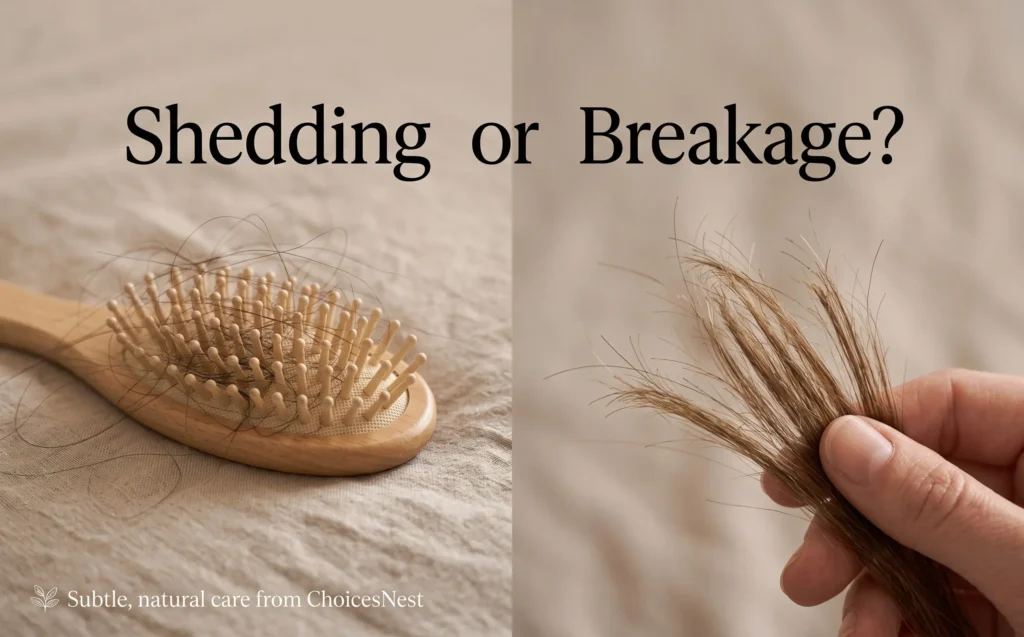
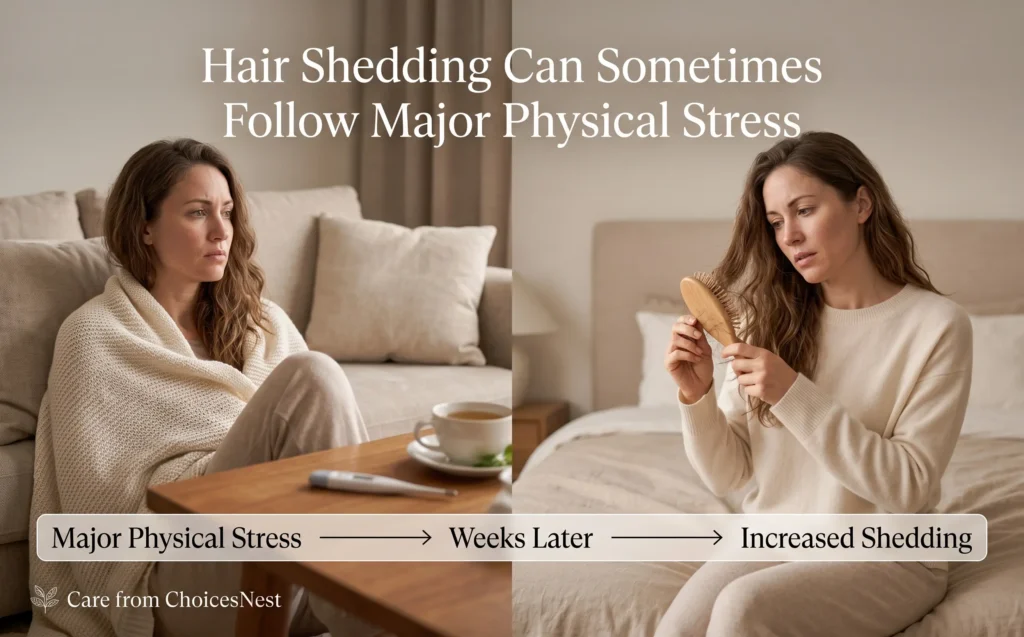
Hair shedding generally means that more hairs than usual are coming out from the scalp. Temporary increased shedding can occur after significant physical or emotional stress, illness, surgery, childbirth, major weight loss, or certain medication changes. In many cases, this type of shedding may be temporary.
Hair Thinning
Hair thinning usually means the hair is becoming less dense over time.
You may notice:
- A wider-looking part
- More visible scalp
- A thinner ponytail
- Gradual thinning around certain areas
- A receding hairline
Hereditary hair loss is one possible cause of gradual thinning.
Hair Breakage
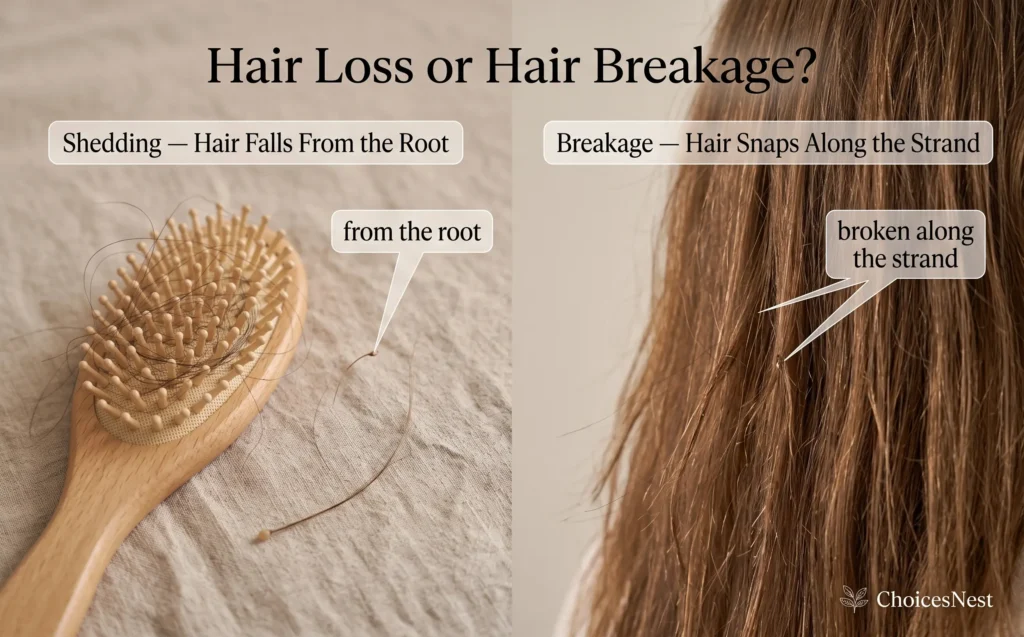
Hair breakage is slightly different because the hair strand can break along its length rather than falling out from the root. Frequent heat styling, harsh treatments, excessive pulling, and rough handling can damage the hair and contribute to breakage.
Understanding the difference matters because a product designed to improve the appearance of damaged hair or reduce breakage is not necessarily a treatment for every cause of hair loss. Some treatments, such as minoxidil, may help certain types of hair loss, but shampoos, oils, serums, and supplements cannot fix every cause of shedding or thinning.
1. Hereditary Hair Loss
One of the Most Common Causes of Gradual Thinning
Family history is one of the most common reasons for gradual hair thinning. Hereditary hair loss, also called androgenetic alopecia, can affect both men and women. It generally develops gradually and often follows recognizable patterns.
For example:
- Men may notice a receding hairline or thinning around the top of the scalp.
- Women may notice an increasingly wider part or reduced hair density around the top of the scalp.
The process can happen gradually, which means it may take time before the change becomes obvious.
Signs to Watch For
You may want to pay attention if you notice:
- Gradual thinning over time
- A widening part
- A receding hairline
- Increasing scalp visibility
- A family history of similar hair loss
Important Note
Because hereditary hair loss has a different underlying cause from temporary shedding or hair breakage, simply switching shampoos or adding a hair oil may not address the problem. Some evidence-based treatments may help certain people, but treatment should be based on the specific type and cause of hair loss. Early evaluation can be useful because treatment for some forms of hair loss tends to be more effective when started early.
2. Physical or Emotional Stress
Stress Can Trigger Temporary Increased Shedding
A significant physical or emotional stressor can sometimes trigger noticeable hair shedding.
Examples may include:
- A major illness
- Surgery
- High fever
- Significant emotional stress
- Major weight loss
- Other major physical stress
In this situation, people may notice increased shedding when washing, brushing, or handling their hair. This type of hair loss can cause overall thinning and is often temporary, although the exact experience and recovery timeline can vary.
Signs to Watch For
Consider whether increased shedding began after a significant event or physical stressor.
You might notice:
- More hair in the shower or brush
- Increased shedding across the scalp rather than one specific bald area
- Overall reduced volume
If shedding is sudden, severe, or persistent, it is still worth discussing with a healthcare professional because identifying the cause is important.
3. Hormonal Changes
Hormonal changes can also affect the hair growth cycle. Changes related to pregnancy, childbirth, menopause, and thyroid problems are among the factors that can be associated with hair loss or increased shedding. For some people, noticeable shedding may occur several months after childbirth. Other hormonal or medical issues can contribute to ongoing thinning or shedding.
Signs to Watch For
Hair changes may be worth discussing with a healthcare professional if they occur alongside other changes or if the shedding is persistent. A proper evaluation may include discussing your health history and, when appropriate, testing for possible underlying causes such as hormone-related or other medical conditions.
How to prevent dry, frizzy hair in winter: Hair loss and hair damage are not always the same thing. If your main concern is rough, dry, or damaged hair rather than shedding from the scalp, you may also find our guide to how to prevent dry, frizzy hair in winter helpful.
4. Nutritional Deficiencies or Inadequate Nutrition
Your Hair Needs Adequate Nutrition Too
Hair growth can be affected when the body is not getting enough of certain nutrients or when there is an underlying nutritional deficiency. For example, deficiencies in nutrients such as iron and inadequate protein intake can be associated with hair loss. However, taking supplements without knowing whether you actually have a deficiency is not necessarily helpful and may sometimes be harmful. A balanced diet is important, but if significant hair shedding is accompanied by other symptoms or there is concern about a nutritional deficiency, it may be appropriate to discuss this with a qualified healthcare professional.
Signs to Watch For
Consider whether your increased hair shedding may coincide with:
- Significant dietary changes
- Rapid or major weight loss
- A highly restrictive diet
- Poor appetite or inadequate food intake
- Other symptoms that may suggest an underlying health issue
Important Note
This does not mean that every person experiencing hair loss simply needs a vitamin or supplement. Hair loss has many possible causes. If a nutritional deficiency is suspected, identifying the actual issue is more useful than randomly taking multiple supplements.
5. Medications or Medical Treatments
Some medications and medical treatments can contribute to hair shedding or hair loss. Depending on the medication or treatment, hair changes may occur temporarily or persist while the underlying factor is present. Because there are many possible causes, it is important not to stop a prescribed medication simply because you suspect it may be affecting your hair.
Signs to Watch For
Pay attention if increased shedding began:
- After starting a new medication
- Following a significant medical treatment
- After a change in medication dosage
- Around the same time as another major health change
Important Note
If you suspect that a medication may be contributing to hair loss, speak with the healthcare professional who prescribed it. Do not stop or change prescribed medication without professional guidance.
6. Tight Hairstyles and Repeated Pulling
Constant Tension Can Damage the Hair and Scalp
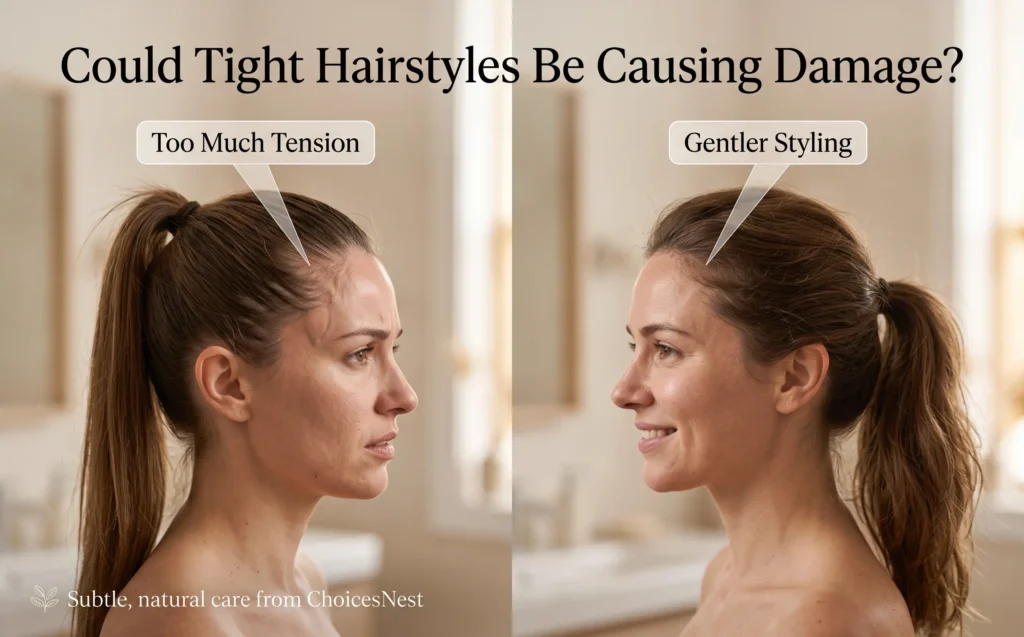
Frequently wearing hairstyles that pull tightly on the hair can place repeated tension on the hair follicles.
Examples may include:
- Very tight ponytails
- Tight buns
- Braids that pull strongly on the scalp
- Extensions or hairstyles that create constant tension
Over time, repeated pulling can contribute to a type of hair loss known as traction alopecia. The earlier the tension is reduced, the better the chance of preventing further damage. Long-term or severe traction can potentially cause permanent damage to hair follicles.
Signs to Watch For
Look for:
- Hair thinning around the hairline
- Broken hairs around areas under tension
- Scalp discomfort after styling
- Headaches or tenderness from tight hairstyles
- Gradual thinning in the same repeatedly pulled areas
Simple Tip
Your hairstyle should not regularly cause pain or strong scalp tension. If removing a ponytail feels like a relief, or your scalp frequently feels sore after styling, that hairstyle may be too tight.
7. Hair Damage and Harsh Styling Practices
Sometimes what looks like hair loss may actually be hair breakage. Frequent heat styling, bleaching, chemical treatments, aggressive brushing, and rough towel-drying can weaken the hair shaft and cause strands to break. This is different from hair shedding from the root.
You may not necessarily see a large number of full-length hairs falling out. Instead, you might notice:
- Shorter broken hairs
- Uneven hair lengths
- Split ends
- Reduced fullness
- Hair that snaps easily during brushing or styling
Common Causes of Breakage
Hair damage may be more likely when you frequently:
- Use high heat without protection
- Bleach or chemically process your hair
- Brush aggressively, especially when tangled
- Pull wet hair roughly
- Frequently use tight hairstyles
- Overuse harsh styling tools
Simple Tip
If your main concern is breakage rather than shedding from the scalp, your approach should focus more on reducing physical and chemical damage. Gentler detangling, reducing unnecessary heat, using conditioning products, and avoiding repeated pulling may help reduce further breakage.
How to protect your hair from sun damage and dust? Hair damage can also be caused by environmental exposure and daily habits. If your hair is regularly exposed to strong sunlight, dust, and other outdoor conditions, explore our guide on how to protect your hair from sun damage and dust for additional practical tips.
🛒 A Product Option for Weak, Dry or Breakage-Prone Hair
If your main concern is hair breakage, dryness, split ends, or damage from styling, a strengthening hair treatment may be a useful addition to a gentle hair-care routine.
Mielle Organics Rosemary Mint Scalp & Hair Strengthening Oil
This popular hair oil is designed for scalp and hair care and contains ingredients including rosemary and biotin. It may be a suitable option for people looking to add moisture and support to dry, damaged, or breakage-prone hair.
However, it is important to remember that a hair oil is not a universal treatment for hair loss. If your hair is shedding because of an underlying medical condition, hormonal changes, hereditary hair loss, medication, or another internal cause, a cosmetic hair product may not address the underlying reason.
Best for:
- Dry or damaged hair
- Breakage-prone strands
- Split-end-prone hair
- Adding an oil treatment to a hair-care routine
8. Illness, High Fever, Surgery, or Major Physical Stress
Your Body Can React to Major Physical Changes
A significant physical stressor can sometimes lead to increased hair shedding.
Examples include:
- A serious illness
- High fever
- Major surgery
- Significant physical stress
- Rapid weight loss
Increased shedding may not always happen immediately. Some people notice changes in their hair weeks or months after the triggering event. This type of shedding can be temporary, but the experience varies depending on the individual and the underlying cause.
Signs to Watch For
You may notice:
- More hair than usual in your brush or shower
- Increased shedding across the scalp
- Reduced overall hair volume
- Shedding that began after a major illness or stressful physical event
If shedding is severe, persistent, or accompanied by other concerning symptoms, professional evaluation can help identify possible causes.
9. Scalp Conditions or Inflammation
Your Scalp Health Can Matter Too
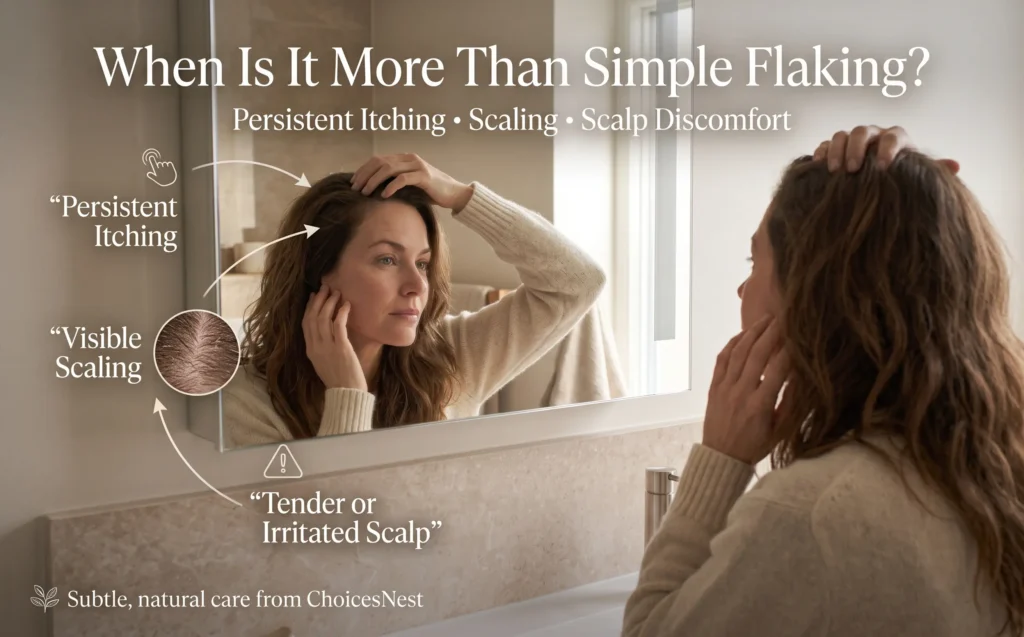
Some scalp conditions can affect the scalp and may contribute to itching, scaling, inflammation, or hair changes. For example, persistent scalp problems may involve:
- Noticeable scaling
- Itching
- Redness
- Tenderness
- Thick buildup
- Persistent flakes
Not all scalp flakes are simply caused by dry skin. Dandruff, irritation, product buildup, and other scalp conditions can produce similar-looking symptoms. If your scalp is persistently itchy, painful, inflamed, or develops thick scaling, it is important to identify the underlying cause rather than repeatedly switching between random products.
Signs to Watch For
Pay attention if hair shedding or thinning occurs alongside:
- Persistent itching
- Redness
- Pain or tenderness
- Thick scales
- Bald patches
- Ongoing scalp irritation
These signs may warrant evaluation by a qualified healthcare professional or dermatologist.
Dry, flaky scalp in winter: If your hair concerns are accompanied by visible flakes, dryness, or scalp discomfort, our guide to dry, flaky scalp in winter explores several possible causes and simple care approaches. For readers looking for product options, you can also explore our roundup of the best scalp treatments for dry, flaky scalp.
10. Age-Related Changes
Hair can naturally change with age. Some people may gradually notice:
- Reduced hair density
- Finer-looking strands
- Slower hair growth
- Changes in hair texture
- More visible scalp over time
Age-related changes can overlap with hereditary hair loss and other factors, which is another reason why gradual thinning should not automatically be attributed to a single cause.
Signs to Watch For
You may notice gradual changes rather than sudden hair loss, such as:
- A slowly widening part
- Reduced overall density
- Hair appearing finer than before
- Less volume over time
If the change is sudden or accompanied by bald patches, scalp symptoms, or rapid shedding, it is worth discussing with a qualified healthcare professional.
🚨 Why Is My Hair Falling Out: Signs Your Hair Shedding May Need More Attention
Some hair shedding is normal, but consider seeking professional advice if you notice:
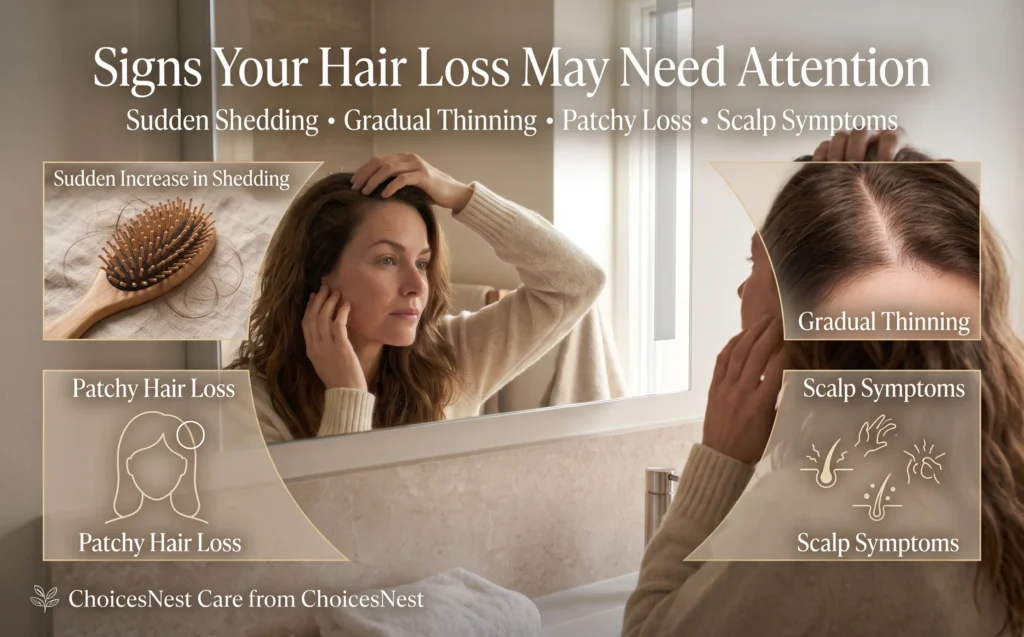
- Sudden or rapid hair loss
- Bald or patchy areas
- A rapidly widening part
- A noticeably receding hairline
- Significant thinning over a short period
- Hair loss accompanied by itching, pain, redness, or thick scaling
- Hair loss that is causing significant concern or distress
A healthcare professional or dermatologist can help determine whether your hair changes are related to hereditary hair loss, temporary shedding, a scalp condition, medication, nutritional issues, or another underlying factor. Because different types of hair loss can have different causes and treatments, identifying the underlying reason is an important first step. The American Academy of Dermatology’s guide to diagnosing and treating hair loss explains how dermatologists evaluate hair loss and why treatment depends on finding the cause.
When Should You See a Dermatologist or Healthcare Professional?
Hair shedding can have many possible causes, and some are temporary while others may benefit from earlier evaluation. Consider seeking professional advice if you experience:
- Sudden or patchy hair loss
- Significant or persistent shedding
- Rapid thinning
- Pain, itching, redness, or significant scaling
- Hair changes that began alongside other health symptoms
- Hair loss that is causing significant emotional distress
A professional evaluation may involve discussing your health history, medications, recent illnesses, diet, family history, and hair-care practices.
The key point is simple:
The best approach depends on identifying the cause.
Randomly buying multiple shampoos, oils, supplements, or serums may not address the reason your hair is changing.
Can Hair Loss Be Prevented?
Not every type of hair loss can be prevented. For example, hereditary hair loss and certain medical causes are different from hair breakage caused by repeated heat, chemical processing, or tight hairstyles. However, gentle hair-care habits may help reduce unnecessary damage and breakage.
Helpful habits may include:
- Avoiding excessively tight hairstyles
- Handling wet hair gently
- Reducing unnecessary high-heat styling
- Avoiding harsh chemical processing when possible
- Using conditioning products appropriate for your hair
- Avoiding aggressive brushing or pulling
The goal should be to reduce avoidable damage, while seeking professional advice when there are signs of an underlying cause.
Frequently Asked Questions
Is it normal to lose hair every day?
Yes. Some daily hair shedding is normal. Seeing occasional hairs in your brush, shower, or on your pillow does not automatically mean that you are experiencing abnormal hair loss. However, a noticeable increase in shedding, gradual thinning, bald patches, or other changes may be worth investigating.
Why is my hair suddenly falling out more than usual?
Increased shedding can sometimes occur after significant physical or emotional stress, illness, major weight loss, hormonal changes, medication changes, or other factors. Because sudden shedding can have different causes, persistent or significant changes should be discussed with a qualified healthcare professional.
Is hair shedding the same as hair breakage?
No. Hair shedding generally involves hairs coming out from the scalp, while hair breakage happens when the hair shaft snaps somewhere along its length. Signs such as shorter broken hairs, uneven lengths, and split ends may suggest breakage rather than increased shedding from the root.
Can stress cause hair loss?
Significant physical or emotional stress can sometimes contribute to increased hair shedding. However, hair loss can have multiple causes, so stress should not automatically be assumed to be the only explanation.
Can shampoo stop hair loss?
A shampoo may help with cleansing, scalp care, or certain scalp conditions, but it cannot be expected to treat every cause of hair loss. The effectiveness of any product depends on the underlying reason for the shedding or thinning.
Final Thoughts
Seeing more hair than usual in your shower, brush, or on your pillow can be concerning, but hair falling out does not always mean the same thing. The cause may involve normal shedding, temporary stress-related changes, hereditary thinning, hormonal changes, nutrition, medications, scalp problems, repeated pulling, or damage and breakage. That is why the most useful first step is not automatically buying a “hair fall cure.”
Instead, look at the pattern:
- Is the shedding sudden or gradual?
- Is your hair thinning over time?
- Are you seeing shorter broken strands?
- Did the change happen after a major illness or stressful event?
- Are there scalp symptoms such as itching, scaling, or discomfort?
Understanding these differences can help you choose more appropriate next steps. For gradual, persistent, sudden, or patchy hair loss—or hair changes accompanied by significant scalp symptoms—professional advice can help identify the underlying cause.