
Disclosure: As an Amazon Associate, I earn from qualifying purchases. If you purchase through links on this page, I may earn a small commission at no additional cost to you.
Dry Skin vs Dehydrated Skin: Introduction
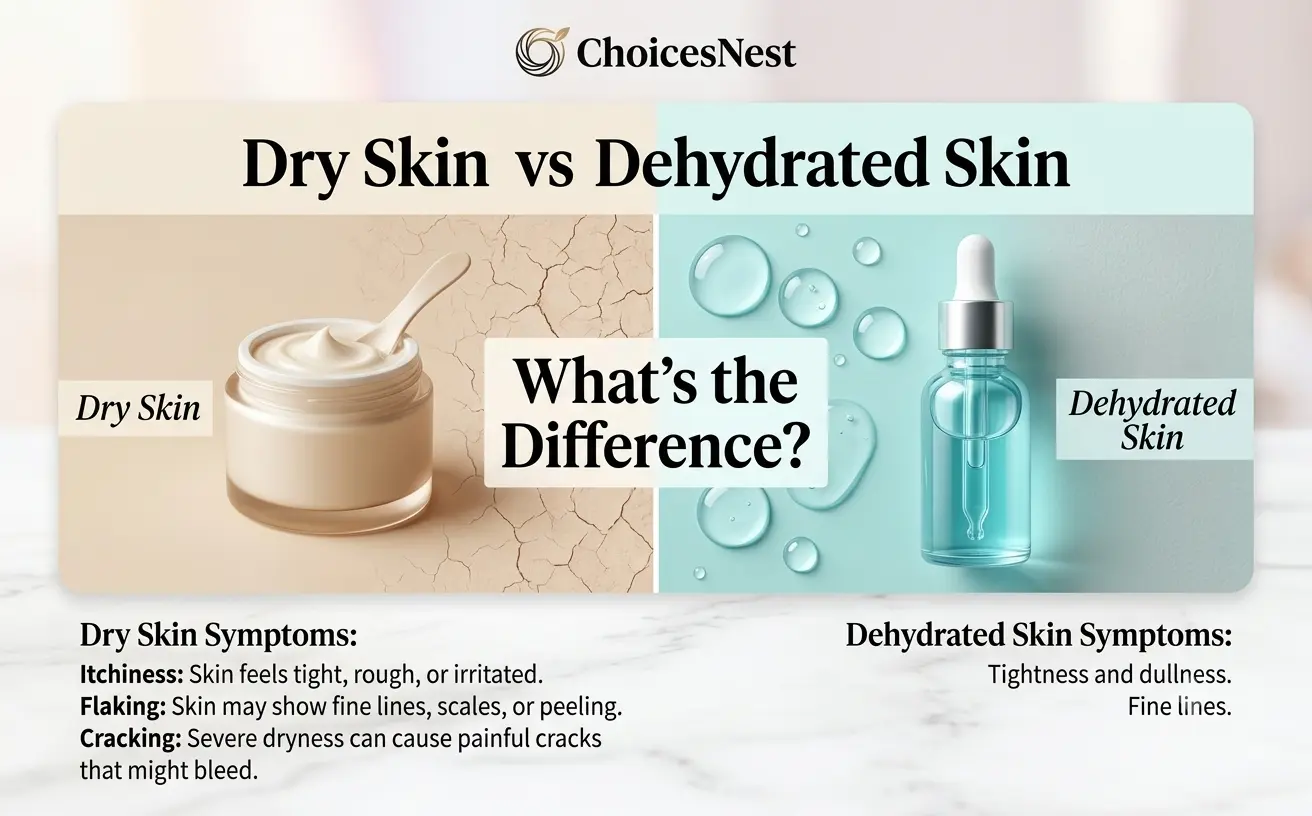
Many people use the terms dry skin and dehydrated skin interchangeably, but they are not the same. Although both conditions can make your skin feel uncomfortable and look dull, they have different causes and require different skincare approaches.
Dry skin is a skin type, meaning it naturally produces less oil. Dehydrated skin, on the other hand, is a temporary skin condition caused by a lack of water in the skin. This means even someone with oily skin can experience dehydration.
Understanding the difference is important because using the wrong products may not solve the problem. In this guide, we’ll compare dry skin and dehydrated skin, explain how to identify each condition, and share simple tips to restore healthier-looking skin.
What Is Dry Skin?
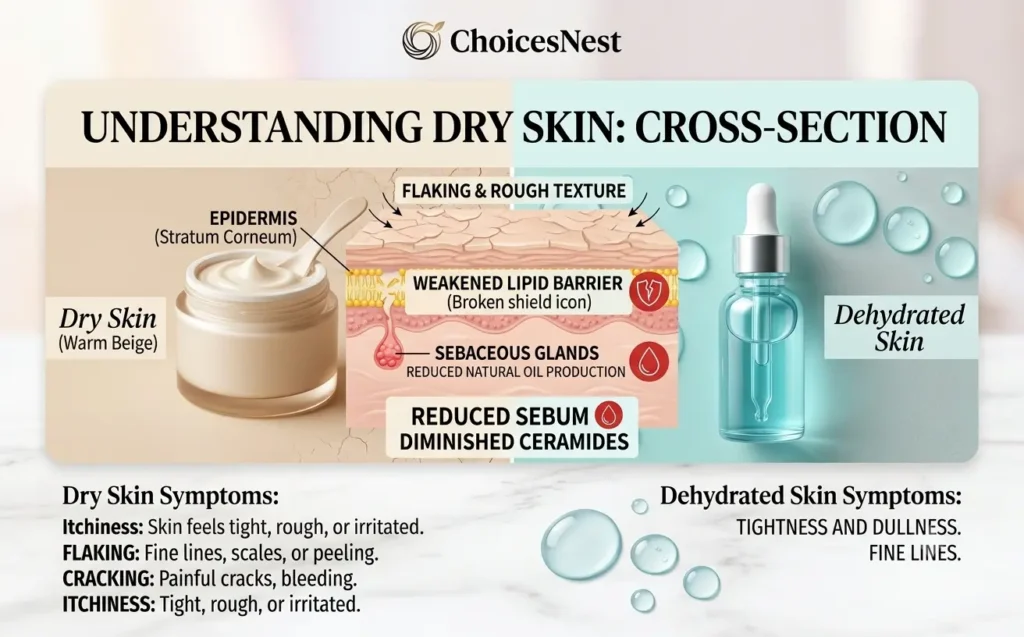
Dry skin is a skin type that produces less sebum (natural oil) than normal skin. These natural oils help protect the skin barrier, reduce moisture loss, and keep the skin feeling soft and comfortable.
People with dry skin often experience:
- Rough texture
- Flaking or peeling
- Tightness throughout the day
- Itching
- Increased sensitivity during cold or dry weather
Because dry skin lacks oil, it usually benefits from richer creams and moisturizers that help reinforce the skin barrier.
Dry skin is often influenced by genetics, although environmental conditions and age can make it more noticeable.
What Is Dehydrated Skin?
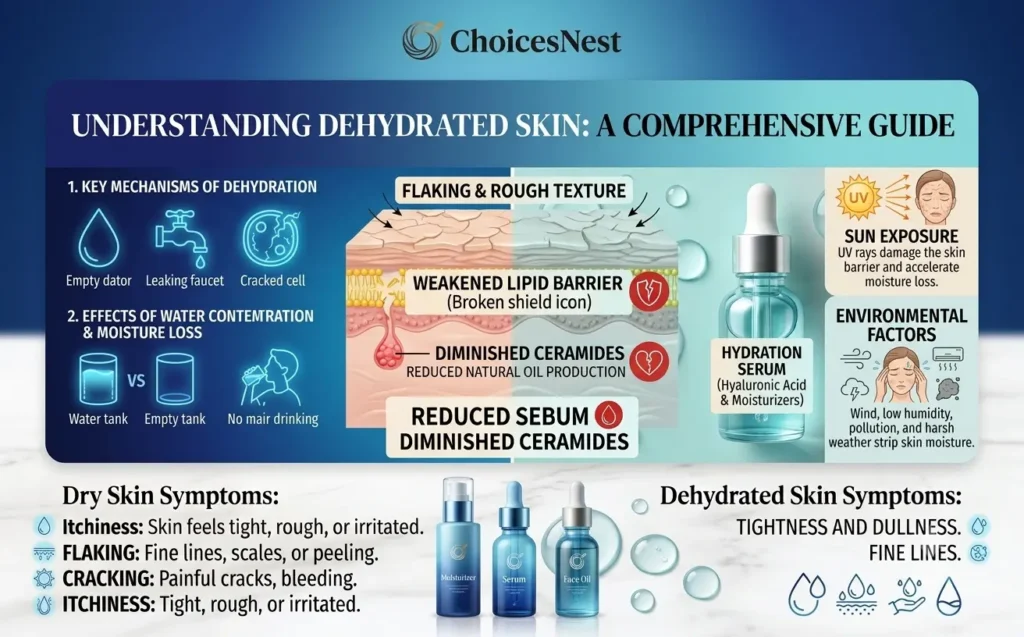
Unlike dry skin, dehydrated skin is not a skin type—it is a condition caused by insufficient water in the skin. It can affect anyone, including people with oily, combination, or normal skin.
Common factors that contribute to dehydrated skin include:
- Hot weather
- Excessive sun exposure
- Air conditioning
- Harsh cleansers
- Over-exfoliation
- Not using moisturizer
- Insufficient fluid intake
Dehydrated skin often appears dull and tired while feeling tight or uncomfortable. Fine lines may also become more noticeable because the skin temporarily loses some of its plump appearance.
The good news is that dehydrated skin usually improves with consistent hydration and a balanced skincare routine.
📊 Dry Skin vs Dehydrated Skin: Quick Comparison Table
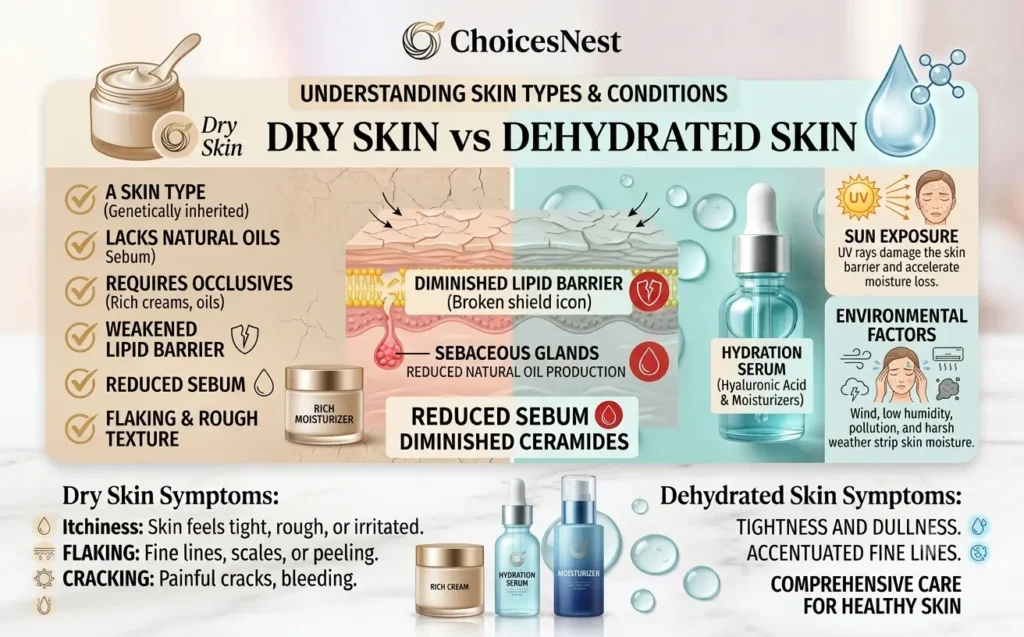
| Feature | Dry Skin | Dehydrated Skin |
|---|---|---|
| What is it? | A permanent skin type | A temporary skin condition |
| Main Cause | Lack of natural oil (sebum) | Lack of water (hydration) |
| Can oily skin have it? | ❌ No | ✅ Yes |
| Common Symptoms | Flaking, roughness, itching | Tightness, dullness, fine lines |
| Best Ingredients | Ceramides, Shea Butter, Squalane | Hyaluronic Acid, Glycerin, Panthenol |
| Primary Goal | Restore oils and strengthen the skin barrier | Replenish water and reduce moisture loss |
Key Differences
Although both conditions can make your skin feel dry or uncomfortable, the underlying causes are very different.
Dry skin needs products that replenish natural oils and strengthen the skin barrier. Rich moisturizers, ceramides, and nourishing ingredients are often the best choice.
Dehydrated skin, however, needs water-binding ingredients such as hyaluronic acid and glycerin, followed by a moisturizer to help lock that hydration into the skin.
Knowing whether your skin lacks oil or water allows you to build a routine that addresses the real problem instead of simply treating the symptoms.
🔍 Symptoms Comparison
Although dry skin and dehydrated skin can appear similar at first glance, paying attention to how your skin looks and feels can help you identify the real issue.
Common Symptoms of Dry Skin
- Rough or flaky patches
- Peeling skin
- Itching
- Persistent tightness
- Cracked skin during cold or dry weather
- Skin often feels dry even after applying lightweight lotion
Dry skin usually needs richer moisturizers that replace missing oils and strengthen the skin barrier.
Common Symptoms of Dehydrated Skin
- Tight feeling after cleansing
- Dull complexion
- Fine lines appear more noticeable
- Skin feels both oily and tight
- Increased sensitivity
- Makeup doesn’t apply smoothly
Dehydrated skin generally improves with products that increase water content while helping the skin retain moisture.
🧪 How to Tell Which One You Have
One of the easiest ways to distinguish between dry and dehydrated skin is to observe how your skin behaves throughout the day.
You may have Dry Skin if:
✔ Your skin feels rough almost every day.
✔ You regularly experience flaking or peeling.
✔ Rich moisturizers make your skin feel comfortable.
✔ Your skin rarely becomes oily.
You may have Dehydrated Skin if:
✔ Your skin suddenly feels tight.
✔ Fine lines appear temporarily.
✔ Your face becomes oily but still feels uncomfortable.
✔ Hydrating serums noticeably improve your skin.
Can You Have Both?
Yes.
Some people naturally have dry skin and also experience dehydration due to hot weather, excessive sun exposure, or an inconsistent skincare routine. In these cases, the best approach is to combine hydrating products with barrier-supporting moisturizers.
🌿 How to Treat Dry Skin
If your skin naturally lacks oil, the goal is to strengthen and protect your skin barrier while preventing moisture loss.
Choose a Gentle Cream Cleanser
Avoid harsh cleansers that leave your skin feeling squeaky clean. Cream-based cleansers are often more comfortable for dry skin because they cleanse without removing too much natural oil. If you’re looking for product recommendations, explore our guide to the best face washes for dry skin, featuring gentle cleansing options that can help clean your skin without leaving it feeling tight or stripped.
Use Rich Moisturizers
Look for moisturizers containing ingredients such as:
- Ceramides
- Shea Butter
- Squalane
- Glycerin
These ingredients help replenish the skin barrier and reduce moisture loss.
Avoid Over-Exfoliating
Exfoliating too frequently can damage an already weakened skin barrier. Gentle exfoliation once or twice a week is often enough for many people with dry skin.
Protect Your Skin Daily
Sun exposure can make dry skin feel even more uncomfortable. Applying a broad-spectrum sunscreen every morning helps reduce UV-related damage while supporting healthier-looking skin.
💧 How to Treat Dehydrated Skin
If your skin lacks water rather than oil, your routine should focus on increasing hydration and preventing water loss.
Apply Hyaluronic Acid to Damp Skin
Hyaluronic acid attracts water to the skin. Applying it immediately after cleansing while your face is still slightly damp helps maximize hydration.
Follow With Moisturizer
A moisturizer helps seal hydration into the skin and reduces transepidermal water loss throughout the day.
Drink Enough Water
Hydration starts from within. Drinking enough fluids supports your body’s normal functions and complements a healthy skincare routine.
Keep Your Routine Simple
Using too many active ingredients at once can overwhelm dehydrated skin. Focus on gentle cleansing, hydration, moisturizing, and sunscreen until your skin feels balanced again.
⭐ Common Summer Skincare Myths
Summer brings plenty of skincare advice, but not all of it is accurate. Believing these myths can make both dry and dehydrated skin harder to manage.
❌ Myth 1: Oily Skin Doesn’t Need Moisturizer
Even oily skin benefits from proper hydration. Skipping moisturizer can sometimes leave the skin feeling dehydrated, which may encourage it to produce even more oil.
❌ Myth 2: Dry Skin and Dehydrated Skin Are the Same Thing
This is one of the biggest misconceptions in skincare. Dry skin lacks natural oils, while dehydrated skin lacks water. Understanding this difference helps you choose products that target the real problem.
❌ Myth 3: Cloudy Days Don’t Require Sunscreen
Ultraviolet rays can still reach your skin through clouds. Daily sunscreen remains an important step regardless of the weather.
❌ Myth 4: Drinking More Water Alone Will Fix Your Skin
Drinking water supports overall hydration, but your skin also needs topical products that help attract and retain moisture while strengthening the skin barrier.
✅ Quick Summer Skincare Checklist
Follow these simple habits to help maintain healthier, more comfortable skin during warmer months:
✔ Cleanse your face gently morning and evening.
✔ Apply a hydrating serum after cleansing.
✔ Use a moisturizer that suits your skin type.
✔ Wear a broad-spectrum sunscreen with SPF 30 or higher.
✔ Reapply sunscreen during prolonged outdoor activities according to the product instructions.
✔ Stay hydrated throughout the day.
✔ Wear sunglasses and protective clothing when spending extended time in the sun.
✔ Avoid introducing multiple new skincare products at the same time.
Small, consistent habits often have the greatest impact on your skin’s long-term health.
👨⚕️ Dermatologist Tips
Dermatologists generally recommend identifying the underlying cause of your skin concerns before changing your skincare routine. Since dry skin and dehydrated skin require different approaches, understanding whether your skin lacks oil or water can help you choose products more effectively.
For most people, a simple routine consisting of a gentle cleanser, an appropriate moisturizer, daily sunscreen, and hydration-focused products (when needed) is often more beneficial than using numerous active ingredients. If your skin remains persistently dry, irritated, or uncomfortable despite consistent care, consult a board-certified dermatologist for personalized advice.
🛒 Recommended Products
Find the Right Products for Your Skin
Choosing products that match your skin’s needs is one of the most important steps toward healthier skin. Whether your skin lacks natural oils, needs more hydration, or you’re still unsure which category you fall into, the product suggestions below can help you build a simple and effective routine.
🧴 If You Have Dry Skin
🧼 Gentle Cream Cleanser
Cream cleansers help remove dirt and impurities while preserving your skin’s natural oils. They’re often more comfortable for people who experience persistent dryness or flaking.
🛒 Button: Compare Cream Cleansers on Amazon
🧴 Ceramide Moisturizer
Ceramides help strengthen the skin barrier and reduce moisture loss. A rich moisturizer containing ceramides can leave dry skin feeling softer and more comfortable. If your body skin also becomes dry during hot weather, explore our guide to the best body lotions for dry summer skin, featuring moisturizing options that can help keep your skin soft, comfortable, and hydrated.
🛒 Button: Shop Ceramide Moisturizers on Amazon
🌙 Nourishing Night Cream
Night creams are designed to provide extra hydration while your skin naturally repairs itself during sleep. They’re especially helpful if your skin feels very dry after cleansing.
🛒 Button: Browse Night Creams on Amazon
💧 If You Have Dehydrated Skin
🧼 Hydrating Gentle Cleanser
Choose a cleanser that removes dirt and sunscreen without stripping away moisture. A gentle formula helps prepare your skin for hydrating products.
🛒 Button: Explore Hydrating Cleansers on Amazon
💧 Hyaluronic Acid Serum
Hyaluronic acid attracts water to the skin and helps improve hydration. Applying it to slightly damp skin before moisturizer can help your skin feel smoother and more refreshed.
🛒 Button: Compare Hyaluronic Acid Serums on Amazon
🧴 Lightweight Daily Moisturizer
Even oily skin benefits from moisturizer. Lightweight formulas help lock in hydration without leaving the skin feeling greasy.
🛒 Button: Find Lightweight Moisturizers on Amazon
☀️ Daily Broad-Spectrum Sunscreen
Sun exposure can increase moisture loss, making dehydration worse. Daily sunscreen helps protect your skin while supporting a healthy skin barrier.
🛒 Button: Shop Daily Sunscreens on Amazon
🌿 Not Sure Which One You Have?
If you’re still uncertain whether your skin is dry or dehydrated, start with gentle, beginner-friendly products suitable for most skin types. As you learn how your skin responds, you can gradually adjust your routine.
🧼 Gentle Face Wash
🛒 Button: Browse Gentle Face Washes on Amazon
💙 Beginner Hydration Essentials
🛒 Button: Explore Beginner Skincare Sets on Amazon
Frequently Asked Questions
Can dry skin become dehydrated?
Yes. A person with naturally dry skin can also experience dehydration, especially during hot weather, after excessive sun exposure, or when using harsh skincare products.
Can oily skin be dehydrated?
Absolutely. Oily skin can still lack water even if it produces excess oil. In fact, dehydration may sometimes trigger increased oil production.
Which ingredients are best for dry skin?
Ceramides, shea butter, squalane, glycerin, and nourishing moisturizers are commonly used to support the skin barrier and reduce moisture loss.
Which ingredients are best for dehydrated skin?
Hydrating ingredients such as hyaluronic acid, glycerin, panthenol, and aloe vera are commonly used to increase water content and improve skin hydration.
How long does it take to notice improvement?
With a consistent skincare routine, many people notice healthier-looking skin within a few weeks. Results vary depending on individual skin type, environment, and daily habits.
🔗 Related Articles
Understanding your skin is the first step toward choosing the right products. Continue learning with these detailed guides to build a complete skincare routine and find products that match your skin’s unique needs.
- The Ultimate Daily Skincare Routine (2026): Best Morning & Night Guide for Healthy Skin
- 7 Signs Your Skin Is Dehydrated: Learn How to Fix It Naturally
- 7 Best Hyaluronic Acid Serums (2026): Top Picks for Hydrated & Glowing Skin
- Best Face Washes for Every Skin Type (2026)
- Best Moisturizers for Oily Skin (2026)
- Best Sunscreens for Summer (2026)
- SPF 30 vs SPF 50: Which Sunscreen Is Better?
- How to Choose the Right Sunscreen for Your Skin Type
🌟 Final Takeaway
Although dry skin and dehydrated skin may look similar, understanding the difference makes it much easier to choose products that actually address your skin’s needs. Dry skin lacks natural oils and generally benefits from richer moisturizers that strengthen the skin barrier. Dehydrated skin, on the other hand, lacks water and usually responds best to hydrating ingredients like hyaluronic acid combined with a suitable moisturizer.
The most effective skincare routine doesn’t have to be complicated. Gentle cleansing, daily hydration, moisturizing, and consistent sun protection are the foundation of healthy skin for most people. Rather than chasing trends or using too many products at once, focus on building a routine that matches your skin type and maintaining it consistently.
Over time, these simple habits can help improve your skin’s comfort, appearance, and overall health, making it easier to enjoy smoother, healthier-looking skin throughout the year.