
Disclosure: As an Amazon Associate, I earn from qualifying purchases. If you purchase through links on this page, I may earn a small commission at no additional cost to you.
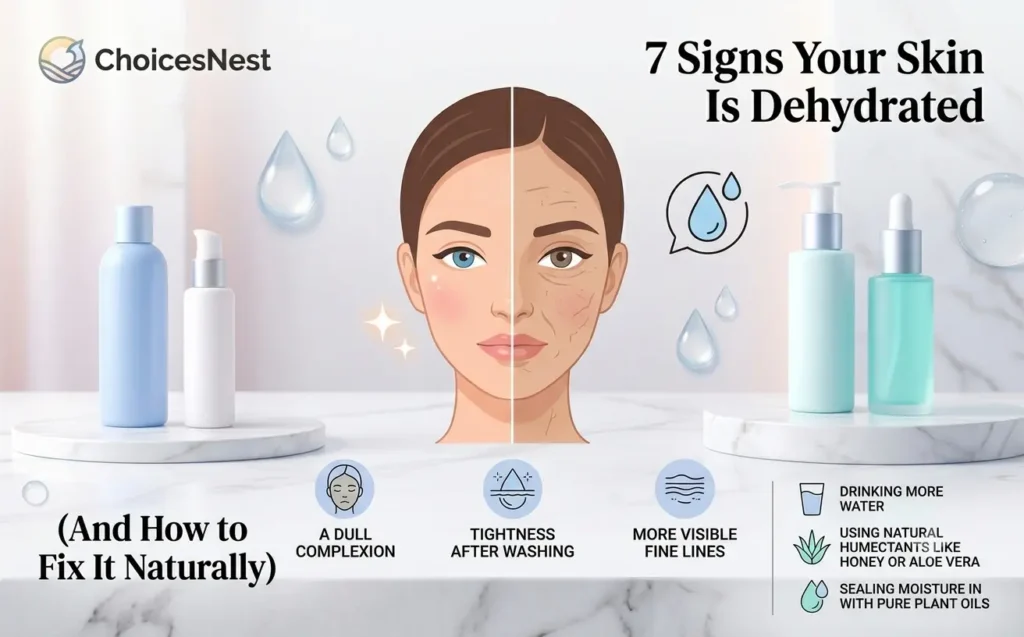
7 Signs Your Skin Is Dehydrated: Introduction
Many people assume their skin is dry when it actually suffers from dehydration. Although the two conditions may look similar, they are not the same. Dry skin is a skin type that naturally produces less oil, while dehydrated skin is a temporary condition caused by a lack of water in the skin.
Dehydrated skin can affect anyone—including people with oily or combination skin. Common causes include excessive sun exposure, hot weather, harsh skincare products, air conditioning, and not drinking enough water. When your skin lacks adequate hydration, it may appear dull, feel tight, and become more sensitive than usual.
Fortunately, dehydrated skin can often be improved with the right daily habits and a consistent skincare routine. In this guide, we’ll explore seven common signs that your skin may be dehydrated and share practical tips to help restore moisture naturally.
Why Skin Becomes Dehydrated
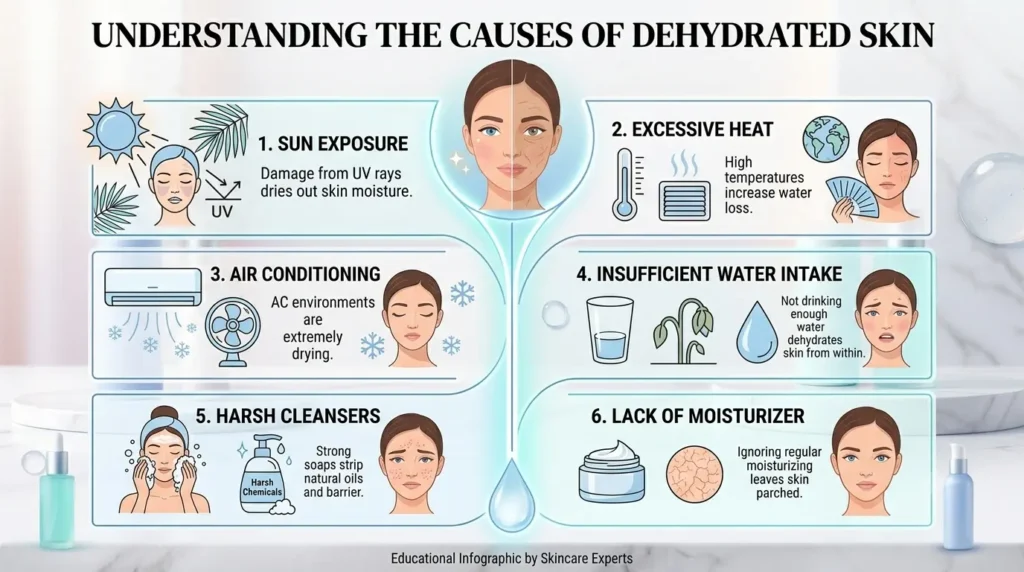
Your skin loses water every day through a natural process called transepidermal water loss (TEWL). During summer, this moisture loss often increases due to higher temperatures, prolonged sun exposure, sweating, and frequent washing.
Several everyday habits can also contribute to dehydrated skin, including:
- Spending long hours in the sun without adequate protection.
- Using harsh cleansers that strip away the skin’s protective barrier.
- Forgetting to apply moisturizer after cleansing.
- Drinking too little water throughout the day.
- Staying in air-conditioned environments for extended periods.
- Using too many active skincare ingredients at once.
The good news is that recognizing the early warning signs allows you to make simple adjustments before dehydration affects your skin’s overall health and appearance.
7 Signs Your Skin Is Dehydrated
💧 1. Your Skin Feels Tight After Cleansing
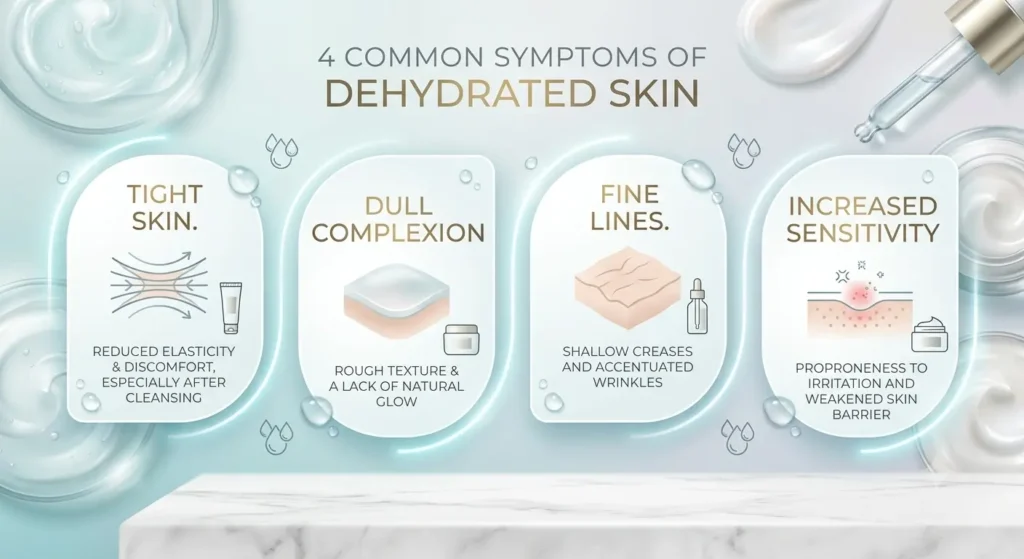
One of the earliest signs of dehydrated skin is a tight or uncomfortable feeling shortly after washing your face. If your skin feels stretched instead of soft and comfortable, it may be lacking water rather than natural oils.
How to Fix It
Switch to a gentle, hydrating cleanser and apply a hyaluronic acid serum followed by a moisturizer while your skin is still slightly damp. This helps reduce moisture loss and supports the skin barrier.
✨ 2. Your Complexion Looks Dull and Tired
Healthy, hydrated skin reflects light naturally, giving it a fresh and radiant appearance. When skin becomes dehydrated, it often looks flat, rough, and lacking in brightness—even if it isn’t oily or dry.
How to Fix It
Use hydrating skincare products consistently, avoid over-exfoliating, and protect your skin daily with sunscreen. Drinking enough water and maintaining a balanced skincare routine can also improve your skin’s natural glow over time.
🌿 3. Fine Lines Become More Noticeable
Temporary dehydration can make fine lines appear deeper than they actually are. This happens because water helps maintain the skin’s plump appearance. Once hydration levels improve, these lines often become less noticeable.
How to Fix It
Look for products containing hyaluronic acid, ceramides, and glycerin. These ingredients help attract and retain moisture, giving the skin a smoother, healthier appearance.
🌸 4. Your Skin Becomes More Sensitive
If your favorite skincare products suddenly begin causing mild irritation or discomfort, dehydration may have weakened your skin’s protective barrier. This can leave your skin feeling more reactive to everyday environmental factors.
How to Fix It
Simplify your skincare routine for a few days. Focus on gentle cleansing, hydration, and moisturizing while avoiding unnecessary exfoliation or introducing multiple new products at once.
🌿 5. Your Makeup Looks Patchy or Doesn’t Last
Have you ever applied foundation only to notice that it clings to dry patches or looks uneven after a few hours? Dehydrated skin often struggles to hold makeup smoothly because it lacks sufficient moisture. Instead of creating a flawless finish, makeup may settle into fine lines or appear flaky throughout the day.
How to Fix It
Prepare your skin before applying makeup by using a hydrating serum followed by a lightweight moisturizer. Allow each product to absorb fully before applying primer or foundation. This creates a smoother surface and helps makeup last longer.
💦 6. Your Skin Feels Oily but Still Feels Dry
Many people assume oily skin can’t be dehydrated, but this is a common misconception. When your skin lacks water, it may compensate by producing more oil. As a result, your face can appear shiny while still feeling tight, rough, or uncomfortable.
How to Fix It
Avoid harsh cleansers that strip away natural moisture. Instead, use a gentle cleanser and lightweight hydrating products designed for oily or combination skin. Keeping your skin properly hydrated can actually help balance oil production over time.
🌞 7. Your Skin Doesn’t Bounce Back Quickly
A simple way to check for dehydration is to gently pinch a small area of skin on your cheek. Healthy, well-hydrated skin usually returns to its normal position almost immediately. If it takes longer than usual or feels less elastic, your skin may need more hydration.
While this isn’t a medical diagnosis, it can be a useful reminder to pay closer attention to your hydration habits and skincare routine.
How to Fix It
Focus on consistent hydration every day rather than looking for an overnight solution. Drink enough water, apply hydrating skincare products morning and evening, and protect your skin from excessive sun exposure.
💙 How to Fix Dehydrated Skin Naturally
The good news is that dehydrated skin often improves with a few simple lifestyle and skincare changes. Consistency is much more important than using expensive products.
Here are some practical ways to restore your skin’s hydration:
✅ Drink Enough Water
Staying hydrated supports your overall health and helps your body function properly. While drinking water alone won’t instantly hydrate your skin, it is an important part of maintaining healthy hydration levels.
✅ Use a Gentle Cleanser
Avoid cleansers that leave your skin feeling tight or squeaky clean. Instead, choose a gentle, hydrating cleanser that removes dirt and excess oil without damaging your skin barrier.
✅ Apply a Hydrating Serum
A hyaluronic acid serum works best when applied to slightly damp skin. It helps attract moisture to the skin, leaving it feeling smoother and more comfortable.
✅ Lock Everything In With Moisturizer
A moisturizer helps reduce moisture loss by supporting your skin’s natural barrier. Choose a formula that suits your skin type—lightweight for oily skin or richer creams for dry skin.
✅ Wear Sunscreen Every Day
Sun exposure increases moisture loss and can weaken your skin barrier. Applying a broad-spectrum sunscreen every morning helps protect your skin from UV damage while supporting long-term skin health.
✅ Be Patient
Healthy skin doesn’t improve overnight. Following a simple routine consistently for several weeks is more effective than constantly switching between products.
⭐ Common Summer Skincare Myths
Summer is full of skincare advice, but not all of it is accurate. Believing common myths can actually make dehydrated skin worse.
❌ Myth 1: Oily Skin Doesn’t Need Moisturizer
Even oily skin needs hydration. Skipping moisturizer can sometimes encourage the skin to produce even more oil to compensate for water loss. A lightweight, oil-free moisturizer is often a better solution.
❌ Myth 2: Cloudy Days Don’t Require Sunscreen
Up to 80% of UV rays can still reach your skin through clouds. Daily sunscreen is recommended even when the weather isn’t sunny, especially if you’re spending time outdoors.
❌ Myth 3: Higher SPF Means You Only Apply It Once
A higher SPF does not mean all-day protection. Sunscreen effectiveness decreases over time, especially with sweating, swimming, or towel drying. Always follow the product’s instructions regarding reapplication during prolonged outdoor exposure.
❌ Myth 4: Drinking Water Alone Will Fix Dehydrated Skin
Drinking water supports your body’s hydration, but healthy skin also depends on a well-maintained skin barrier. A combination of hydration, moisturizer, sunscreen, and gentle skincare usually provides the best results.
✅ Quick Summer Skincare Checklist
Before heading outside, use this simple checklist to help keep your skin healthy and hydrated throughout the summer:
✔ Apply a broad-spectrum SPF 30+ sunscreen
✔ Reapply sunscreen during extended outdoor activities
✔ Drink enough water throughout the day
✔ Use a lightweight moisturizer suitable for your skin type
✔ Wear UV-protective sunglasses and a wide-brim hat when possible
✔ Cleanse your face gently twice a day
✔ Apply a hydrating serum after cleansing
✔ Avoid over-exfoliating during hot weather
Small daily habits like these can make a noticeable difference in maintaining healthy, comfortable skin all summer long.
👨⚕️ Dermatologist Tips
Dermatologists generally recommend keeping your skincare routine simple and consistent, especially when your skin feels dehydrated. Rather than introducing multiple new products at once, focus on gentle cleansing, daily hydration, moisturizing, and broad-spectrum sun protection.
It’s also important to pay attention to how your skin responds. If dehydration persists despite a consistent routine, or if you experience severe irritation, redness, or discomfort, consider consulting a board-certified dermatologist for personalized advice. A professional can help identify underlying skin conditions and recommend products suited to your specific needs.
🛒 Recommended Products
Build a Hydration-Focused Skincare Routine
If your skin feels tight, dull, or uncomfortable, choosing the right products can help restore moisture and support your skin barrier. The product categories below are commonly used in hydrating skincare routines. Compare different options on Amazon to find products that suit your skin type and preferences.
🧼 Gentle Hydrating Cleanser
A gentle cleanser removes dirt, sunscreen, and excess oil without stripping away your skin’s natural moisture barrier. Cleansing with a mild formula helps prepare your skin for hydrating products while reducing the risk of irritation.
🛒 Button: Compare Gentle Hydrating Cleansers on Amazon
💧 Hyaluronic Acid Serum
Hyaluronic acid is one of the most popular hydrating skincare ingredients because it attracts and holds moisture within the skin. Applying it after cleansing can help your skin feel softer, smoother, and more comfortable.
🛒 Button: Shop Top Hyaluronic Acid Serums on Amazon
🧴 Ceramide Moisturizer
Ceramides help strengthen the skin’s natural barrier and reduce moisture loss. A moisturizer containing ceramides can be especially beneficial if your skin often feels tight or sensitive after cleansing.
🛒 Button: Browse Ceramide Moisturizers on Amazon
☀️ Hydrating Daily Sunscreen
Daily sunscreen not only protects your skin from harmful UV rays but also helps prevent additional moisture loss caused by sun exposure. Choose a broad-spectrum SPF 30 or higher formula that feels comfortable for everyday wear.
🛒 Button: Find Hydrating Sunscreens on Amazon
💋 Hydrating Lip Balm
Your lips can also become dehydrated during hot weather. A nourishing lip balm helps reduce dryness and keeps lips soft throughout the day.
🛒 Button: Explore Hydrating Lip Balms on Amazon
Signs Your Skin Is Dehydrated: Frequently Asked Questions
Can oily skin become dehydrated?
Yes. Oily skin can still lack water even if it produces excess oil. In fact, dehydration may cause the skin to produce even more oil in an attempt to compensate for moisture loss.
What’s the difference between dry skin and dehydrated skin?
Dry skin is a skin type that naturally produces less oil, while dehydrated skin is a temporary condition caused by insufficient water in the skin. People with any skin type—including oily skin—can experience dehydration.
How long does it take to improve dehydrated skin?
Many people notice improvements within a few weeks of following a consistent skincare routine. Results vary depending on your skin type, environment, and daily habits.
Should I use hyaluronic acid every day?
For many people, hyaluronic acid can be used daily as part of both morning and evening skincare routines. Follow the product’s instructions and choose products that suit your skin type.
Can drinking more water alone fix dehydrated skin?
Drinking enough water supports overall health, but healthy skin also depends on proper skincare. A combination of hydration, moisturizer, sunscreen, and gentle cleansing generally provides the best results.
🔗 Related Articles
Continue improving your skincare routine with these helpful guides. Whether you’re looking to boost hydration, choose the right sunscreen, or build a simple daily routine, these articles provide practical advice and product recommendations.
- The Ultimate Daily Skincare Routine (2026): Best Morning & Night Guide for Healthy Skin
- 7 Best Hyaluronic Acid Serums (2026): Top Picks for Hydrated & Glowing Skin
- 7 Summer Skincare Mistakes That Are Damaging Your Skin (And How to Avoid Them)
- Best Moisturizers for Oily Skin (2026)
- Best Vitamin C Serums for Glowing Skin (2026)
- Best Sunscreens for Summer (2026)
- SPF 30 vs SPF 50: Which Sunscreen Is Better?
- How to Choose the Right Sunscreen for Your Skin Type
🌟 Final Takeaway
Dehydrated skin is a common condition that can affect anyone, regardless of whether their skin is dry, oily, combination, or sensitive. Fortunately, recognizing the early warning signs—such as tightness, dullness, increased sensitivity, or more noticeable fine lines—allows you to take action before your skin becomes increasingly uncomfortable.
The foundation of healthy, hydrated skin doesn’t require an overly complicated routine. Using a gentle cleanser, applying a hydrating serum, sealing in moisture with a suitable moisturizer, and protecting your skin daily with sunscreen can make a significant difference over time. Consistency is far more important than using numerous products.
By making small, sustainable changes to your daily skincare habits and choosing products that match your skin’s needs, you can support a stronger skin barrier, maintain better hydration, and enjoy healthier-looking skin throughout every season.